
Getting on the First Page of Google: A Financial Advisor’s Guide to SEO Success
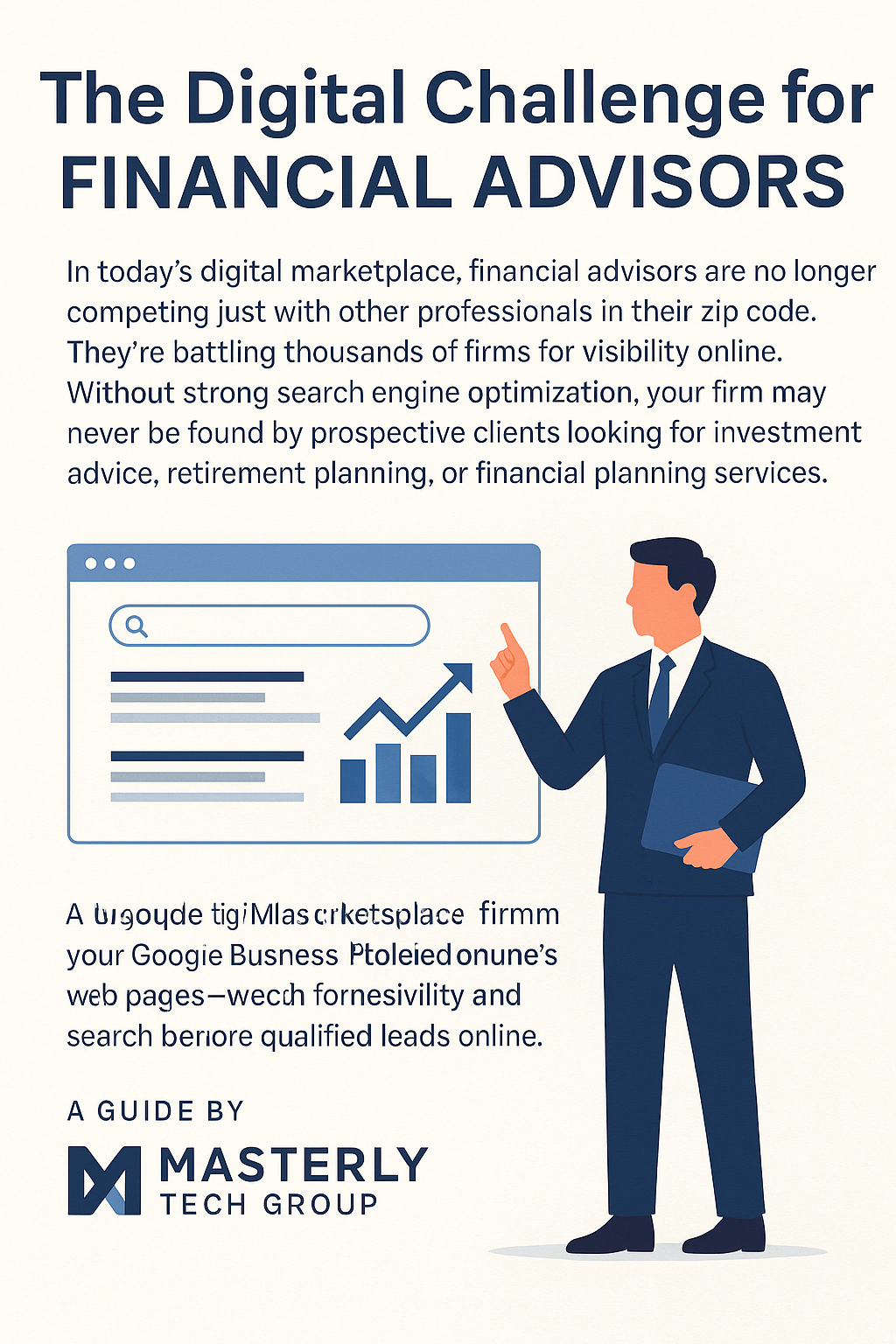
The Digital Challenge for Financial Advisors
In today's digital marketplace, financial advisors are no longer competing just with other professionals in their zip code. They're battling thousands of firms for visibility online. Without strong search engine optimization, your firm may never be found by prospective clients looking for investment advice, retirement planning, or financial planning services.
If you're not appearing on the first page of search engine results pages, you may as well not exist. This guide by Masterly Tech Group outlines clear SEO strategies to help financial professionals boost their visibility and generate more qualified leads online.
Understanding SEO for Financial Advisors
SEO for financial advisors is more than inserting keywords into a blog post. It involves aligning your entire digital footprint—from your Google Business Profile to your web pages—with the interests and search behaviors of your ideal clients.
When done right, seo for financial success is a sustainable way to attract potential clients without relying solely on paid ads or referrals.
Why SEO Is Essential in the Financial Services Industry
The financial services industry is heavily regulated and competitive. Effective search engine optimization helps you build trust and position yourself as an expert by consistently providing valuable content that ranks on search engines.
High search engine rankings translate to more search results visibility, which drives traffic and builds credibility.
Getting Started: Keyword Research Essentials
Before optimizing your content, you need to understand the search terms your prospects use. This is where keyword research tools come into play.
Focus on:
- Relevant keywords like "fee only financial advisor near me"
- Long tail keywords such as "how to choose a financial advisor for retirement planning"
- Keywords with lower search volume but high intent
Tools like Google Search Console, Google Analytics, and other free tools offer valuable insights into what your audience is searching for.
Optimizing On-Page SEO Elements
Every detail on your web pages affects your ability to rank higher on search engine results pages. Make sure to:
- Include the right keywords in your page title
- Optimize meta descriptions with benefits and call-to-actions
- Use headers (H1, H2, H3) to organize high quality content
These small steps make your site more attractive to both users and search engines.
Creating High Quality Content That Converts
Creating content is central to SEO. The goal isn’t just traffic—it’s engagement and conversion.
Content ideas for financial advisors include:
- Educational blog posts on investment advice or retirement planning
- Explainer articles targeting specific keywords
- Case studies and guides on wealth management strategies
Make sure your content answers real questions that financial planners often hear.
Building Authority with Quality Backlinks
Search engines view quality backlinks from authoritative websites as votes of confidence. This means other websites linking to your content can significantly improve your SEO rankings.
Effective link-building tactics:
- Guest posting on finance or digital marketing blogs
- Getting listed in local business listings
- Citing and being cited by financial services seo directories
Avoid buying links. Focus on building genuine relationships in your niche.
The Power of Local SEO
For most financial advisory firms, local search is critical. Showing up in local search results for queries like "financial advisor near me" makes your firm discoverable to ready-to-convert clients.
Boost local SEO by:
- Keeping your Google Business Profile accurate and active
- Earning local reviews
- Embedding your location in your content and meta description
Local SEO for financial advisors helps you become the go-to option in your community.
Technical SEO: The Silent Ranking Factor
Technical SEO involves the back-end of your website. While invisible to users, it greatly impacts search engine rankings.
Key areas to monitor:
- Mobile responsiveness for mobile devices
- Fast page loading speed
- Secure HTTPS protocol
- Properly structured data
A site audit by an SEO consultant can identify and fix common technical errors.
Tracking and Measuring SEO Performance
Without analytics, you're flying blind. Use Google Analytics and Google Search Console to track:
- Keyword rankings
- Organic traffic
- Bounce rates
- Conversion goals
Analyzing these metrics will tell you what’s working and what needs refinement.
The Role of Digital Marketing in Your SEO Strategy
SEO doesn't exist in a vacuum. It's part of a larger marketing strategy. Combine SEO with:
- Email newsletters
- Video marketing
- Social media outreach
This multi-channel approach supports your financial advisor business and amplifies your seo efforts.
Common SEO Mistakes Financial Advisors Make
Avoid these pitfalls:
- Keyword stuffing
- Ignoring mobile design
- Failing to update stale content
- Using duplicate page titles
These mistakes can tank your search engine optimization and make it harder for financial advisory practice to stand out.
Finding the Right SEO Services
Working with professionals can accelerate your success. Look for seo services that understand the financial services seo space and have a track record of results.
Questions to ask before hiring:
- Do they understand compliance regulations?
- How do they measure results?
- What industries have they worked with?
Choose an SEO partner who can serve as a long-term asset to your firm’s online growth.
SEO Is a Long Game With Big Rewards
Building a strong firm's online presence through SEO takes time. But once established, it becomes a sustainable lead source that doesn’t rely on constant ad spend.
With the right mix of seo strategies, high quality content, and regular optimization, financial advisors seo can outperform competitors and dominate the first page of google searches.
Content That Builds Trust and Converts for Financial Planners
For financial planners, building trust online starts with creating high quality content that educates, informs, and resonates with their target audience. This means going beyond surface-level blog posts and diving into detailed guides, FAQs, and real-world financial scenarios. Not only does this help you rank higher in search results, but it also establishes your credibility with both Google and prospective clients. By focusing on relevance and clarity, financial advisors can convert casual visitors into engaged leads and long-term clients. Solid content is more than marketing—it’s a competitive advantage.
Unlocking Growth with Specific Keywords and Targeted Search Intent
When building an SEO strategy, it’s tempting to chase high-traffic phrases—but targeting specific keywords with lower search volume can often yield better results for financial advisors. These niche terms attract users who are further along in the decision-making process and more likely to convert. For example, “retirement planning for federal employees” may have fewer searches, but those users know exactly what they need. Optimizing for these focused queries allows you to stand out in less competitive spaces while still reaching your ideal clients. It's a smarter, more strategic way to grow your visibility and your client list.
Creating High Quality Content That Speaks to Financial Planners’ Clients
One of the most effective ways for financial planners to improve their online visibility is by creating high quality content that directly addresses their clients' most pressing concerns. Whether it's retirement strategies, tax planning, or investment education, this content positions you as a trusted advisor and increases engagement. Quality content not only attracts traffic but keeps visitors on your site longer, boosting SEO performance. It also provides opportunities to incorporate keywords naturally and gain backlinks from reputable sites. For financial professionals aiming to build authority and connect with more prospective clients, consistent content creation is a vital component of long-term digital success.
Boosting SEO Rankings by Leveraging Smart Links and Smarter Strategy
To improve your SEO rankings, your site must earn credibility not just with Google, but with other websites in your industry. Gaining backlinks from trusted sources signals authority and can drastically improve your visibility. However, not all keywords are equal—understanding keyword difficulty ensures you're focusing your marketing efforts on attainable, high-value search terms. By targeting the right opportunities and earning strategic external links, financial advisors can rise above competitors and gain sustained exposure in search results.
Creating Content That Converts Visitors Into Clients
For financial advisors, creating content isn’t just about filling a blog—it’s about educating, building trust, and prompting action. When you craft articles, guides, or videos that answer your audience’s questions, you’re not just improving SEO—you’re positioning yourself as the go-to expert. Effective content should speak directly to your ideal client’s needs, using their language and addressing their pain points. By consistently creating content that is both informative and optimized, you’ll steadily climb in rankings while generating warm, qualified leads who are ready to take the next step.
Why Valuable Content Beats Paid Ads in the Long Run
Many financial professionals turn to paid ads hoping for quick visibility, but long-term growth depends on publishing valuable content that builds trust and authority. Unlike temporary ad placements, strategic content improves your keyword rankings organically, attracting traffic without constant spending. A seasoned SEO consultant can help you identify opportunities to create educational and engaging resources that speak directly to your audience's needs. For financial advisors aiming to grow sustainably, combining targeted SEO with valuable content offers far greater returns than relying solely on advertising.
Using Long Tail Keywords to Fuel a Smarter Marketing Strategy
For financial advisors, targeting broad terms like “financial planning” can be highly competitive and less effective. Instead, focusing on long tail keywords—more specific phrases like “retirement planning for self-employed professionals”—can drive more qualified traffic. These search phrases often reflect a higher intent to act and are easier to rank for. Incorporating them into your marketing strategy ensures your SEO efforts are aligned with what your ideal clients are actively seeking. This approach not only increases visibility but also boosts conversions by connecting with users at the decision-making stage.
Aligning Search Terms with On-Page SEO Precision
Success in SEO starts with speaking your audience’s language. Understanding the exact search terms your potential clients are typing into Google allows you to tailor your content for greater visibility. But discovery alone isn’t enough—those terms must be integrated into your on page SEO strategy. This includes placing them naturally in your page titles, headers, meta descriptions, and body content. When done right, aligning search terms with proper on page SEO enhances both user experience and search engine indexing, helping you climb higher on the results page and capture more qualified leads.
Balancing Search Volume with Strategic Intent
Not all keywords are created equal. A term with high search volume might attract clicks, but it doesn’t always lead to conversions. That’s why smart financial advisors use keyword research tools to evaluate both popularity and intent. The goal is to find terms that your ideal clients are actively using—terms that signal they’re looking for your exact services. By combining search volume data with client behavior insights, you can build an SEO strategy that’s not just visible, but effective.
Targeting Relevant Keywords for Maximum Impact
To attract the right audience, financial advisors must focus on relevant keywords that align with their services and their clients' search intent. These are the phrases potential clients are already using when looking for help with financial planning, retirement advice, or wealth management. Selecting and consistently using these relevant keywords in your content helps ensure you’re not just getting traffic—you’re getting the right traffic. This precision boosts engagement, improves your conversion rates, and reinforces your authority in the financial services space.
Strengthening Your SEO Strategy with Smart Tools and Smart Links
Climbing the ranks on Google isn’t just about content—it’s about strategic execution. Understanding keyword difficulty helps financial advisors prioritize which terms offer the best balance of relevance and ranking potential. Leveraging the right online tools can guide these decisions, making your marketing efforts more efficient and data-driven. But one of the most powerful elements of SEO success is securing high quality backlinks—links from reputable sites that signal authority to search engines. Combined, these elements create a robust SEO foundation that pushes your content higher in search results and drives better visibility among prospective clients.
Elevating Your Online Visibility with SEO for Financial Planner Success
SEO for financial planner visibility isn’t just about showing up in searches—it’s about showing up for the right audience, at the right time. Whether you're targeting individuals nearing retirement or small business owners needing financial guidance, SEO helps position your services exactly where your prospects are looking. By optimizing your site structure, refining content, and targeting the most relevant keywords, financial planners can rise above local competitors. A consistent SEO for accountants strategy builds authority, trust, and leads—making it one of the smartest investments for long-term practice growth.
Choosing the Right Financial Advisor SEO Keywords for Growth
Your visibility on search engines starts with selecting the most effective financial advisor SEO keywords—terms that reflect what your ideal clients are actually searching for. These might include phrases like “fiduciary retirement planner near me” or “fee-only financial advisor for business owners.” The key is to find keywords that balance intent, relevance, and competition. By focusing on these high-converting terms, you can increase your rankings, drive more qualified traffic, and support your firm’s broader digital marketing goals. The right keywords don’t just attract clicks—they attract clients.
What Makes SEO for Financial Services Unique and Profitable
Implementing SEO for financial services requires a specialized approach that balances compliance with persuasive digital strategy. Unlike generic SEO, it demands a deep understanding of industry regulations, financial jargon, and client trust factors. Whether you offer retirement planning, investment advice, or wealth management, your content must be both informative and discoverable. A tailored SEO strategy ensures your firm ranks for the right terms, engages qualified prospects, and builds long-term authority online. With the right execution, SEO becomes one of the most cost-effective ways to grow your financial practice.
Mastering Financial Advisor Local SEO to Dominate Your Area
If you're not showing up when someone searches “financial advisor near me,” you're missing out on ready-to-convert leads. Financial advisor local SEO focuses on improving your visibility within your geographic market by optimizing your Google Business Profile, collecting local reviews, and embedding location-based keywords into your site. These efforts ensure your firm ranks higher in local search results, putting you directly in front of prospective clients who are actively seeking nearby financial planning help. For advisors who rely on trust and face-to-face relationships, local SEO isn’t optional—it’s essential.
Turning Low-Volume Keywords into High-Value Leads
Not all SEO success comes from broad visibility—sometimes, the most effective approach is zeroing in on specific keywords with lower search volume but strong intent. These terms may not attract thousands of clicks, but they often bring in users who are actively searching for the exact financial services you offer. For financial advisors, this means capturing highly targeted traffic that converts. By strategically building content around these focused terms, you can outmaneuver competitors chasing generic keywords and attract motivated, ready-to-act clients.
How SEO for Financial Advisors Drives Consistent Client Growth
In an industry built on trust and expertise, SEO for financial advisors plays a pivotal role in attracting and converting new clients. It ensures your services appear in front of the right audience at the exact moment they’re searching for help with financial planning, retirement strategies, or investment management. Unlike paid ads that stop the moment you cut the budget, SEO delivers sustainable visibility and long-term ROI. With a tailored strategy, financial advisors can build credibility, improve rankings, and create a reliable stream of qualified leads through organic search.
Why Ranking in Search Engine Results Is Crucial for Financial Advisors
For financial advisors aiming to grow their client base, appearing in top search engine results is no longer optional—it’s essential. Today’s prospects begin their search for financial services online, and if your website isn’t on the first page of Google, you’re missing valuable opportunities. High-ranking results boost your visibility, credibility, and lead conversion rates. By using smart SEO strategies like keyword optimization, backlink building, and local SEO tactics, you can climb the rankings and stay competitive. Investing in your digital presence now ensures long-term growth and trust in a crowded market.
Mastering SEO for Financial Advisors: How Search Engine Optimization Drives Visibility and Trust
In today’s digital-first world, mastering SEO for financial advisors is key to staying competitive. Through strategic search engine optimization, advisors can boost their rankings in local and national searches, helping potential clients find them before the competition. SEO goes beyond keywords—it includes optimizing your website’s speed, structure, content, and credibility. When done right, SEO for financial advisors creates lasting online authority and positions your brand as a trusted solution. With consistent effort and the right tools, search engine optimization can transform your digital presence into a steady stream of high-quality leads.
How SEO Strengthens Your Financial Planning Practice Through Better Search Results
For firms focused on financial planning, visibility in Google’s search results can make or break growth efforts. Most consumers search online before choosing a financial advisor, which means appearing prominently in those search results is essential. By aligning your content strategy with common financial planning queries—like retirement strategies, tax optimization, or investment advice—you can attract highly targeted prospects. Optimized websites that speak directly to client concerns often rank higher and build more trust. Strong SEO ensures your practice shows up consistently in top search results, positioning you as a reliable authority in the world of financial planning.
Let Masterly Tech Group Help You Dominate Search Results
Are you ready to rise above the competition and get noticed by your ideal clients? Masterly Tech Group specializes in SEO for financial advisors, helping you grow your financial advisor business through results-driven seo services tailored to your firm.
We understand the unique needs of the financial services industry, and we know what it takes to turn seo efforts into measurable success.
Contact us at (888) 209-4055 to book a free consultation. Let our team answer your questions and help you launch an SEO plan that drives more traffic, more leads, and more business.