
Don’t Let a Bad Website Cost You Roofing Leads—Get Optimized Now

October 15, 2025


A Poor Roofing Website Could Be Costing You Thousands in Missed Leads

Most roofing companies don’t realize how many potential clients they lose daily because their websites aren’t optimized. In today’s roofing industry, your online presence is often your first impression—and a bad one can drive customers straight to competitors. A poorly designed roofing website with slow load times, unclear calls to action, and missing SEO elements can destroy your digital credibility. Every day that your website isn’t performing at its best means fewer inquiries, fewer contracts, and more missed revenue opportunities.


The Connection Between Poor Design and Lost Roofing Leads

When your roofing business website looks outdated or fails to guide visitors smoothly, your qualified leads drop fast. Potential customers judge credibility in seconds, and an unresponsive design signals unprofessionalism. Without a site optimized for search engine visibility and user experience, your roofing services might never reach the right target audience. Google prioritizes modern, mobile-friendly pages that deliver value—and if your site doesn’t meet these standards, you’re invisible in search engine results pages.


How Roofing SEO Services Transform Struggling Websites

Expert roofing SEO services bridge the gap between visibility and conversions. With a strong seo strategy, roofing contractors can rank higher for relevant keywords like “roof repair near me” or “metal roofing installation.” Professional seo companies help roofing businesses identify the gaps in content, speed, and keyword targeting. Through on-page optimization, technical SEO, and consistent link building, your site becomes both user-friendly and Google-ready. Over time, this approach not only boosts website traffic but also ensures steady lead generation.


Roofing SEO: The Secret to Turning Clicks Into Calls

A powerful roofing SEO campaign turns a passive visitor into an active customer. By focusing on local SEO, roofing contractors can attract homeowners searching for roof repairs or installations within their city. Strategies like google business profile optimization, customer online reviews, and google maps visibility ensure your roofing services dominate local search results. When done right, your roofing marketing presence becomes impossible to ignore—creating more leads, more calls, and measurable growth for your roofing business.


The Importance of Google Business Profile for Roofing Contractors

A well-optimized google business profile helps your roofing company appear in local listings before your competition. It connects you with new customers actively searching for roofing help. A verified, complete, and keyword-rich profile improves trust and helps you rank higher in google search results. Many roofing seo companies underestimate the power of local listings, but the truth is—they can be a game changer for roofing businesses aiming to dominate their local market.


Technical SEO and the Foundation of an Optimized Roofing Website

Behind every top-performing roofing website is clean code, fast loading times, and proper technical SEO. Roofing contractors often overlook technical errors like broken links, duplicate meta descriptions, or poor mobile responsiveness. Fixing these issues helps search engine optimization tools understand your content better and boosts ranking potential. When paired with digital marketing strategies, your site becomes a conversion machine that attracts homeowners around the clock.


Local SEO: Where Roofing Leads Begin

Local SEO helps your business stand out when someone searches for “roof repair” or “roofing installation” nearby. By combining local keyword research with google business profile optimization, your brand appears in local packs and maps listings. Roofing companies that invest in local SEO dominate their communities, converting online traffic into real-world calls and consultations. A strong local SEO presence positions your company as the go-to expert in your area, bringing more leads straight to your phone.


Roofing Marketing Agency Support You Can Trust

Working with a professional roofing marketing agency saves you time and ensures results. Experienced seo agencies understand how to tailor digital marketing and roofing SEO services to fit your region, competition, and goals. They handle every step—from site audits to content creation—so you can focus on managing your team and closing jobs. Choosing an agency that specializes in roofing marketing pros ensures your campaign speaks directly to homeowners who need your roofing services now.


SEO for Roofing: Beyond Basic Optimization

SEO for roofing isn’t just about keywords; it’s about building credibility. From strong backlinks to valuable blog content, roofing companies must demonstrate authority to Google and clients. Combining on page SEO and seo copywriting ensures your website answers customer questions before they even pick up the phone. The right seo process transforms your site into an educational, conversion-driven hub for roofing expertise.


The Role of Digital Marketing in the Roofing Industry

Modern digital marketing connects you directly to your audience through search, email, and social media platforms. A complete campaign integrates paid advertising, local service ads, and consistent social media marketing to reach potential customers across multiple channels. Roofing marketing is most effective when every digital element—ads, landing pages, and posts—works together. That’s how roofing contractors build online trust and long-term brand recognition.


Roofing Marketing That Builds Real Connections

Unlike traditional flyers or door knocking, roofing marketing through SEO and social media builds relationships before the first phone call. When homeowners see your brand in multiple places—Google, Facebook, and online directories—they remember you. A well-rounded digital marketing plan boosts your social media presence, establishes your reputation, and makes your roofing services online the natural choice for new projects.


The Power of Reputation Management in Roofing

Your digital reputation can make or break your business. Consistent reputation management ensures every satisfied client’s review strengthens your online credibility. When roofing contractors maintain good online reviews, Google rewards them with higher rankings and better visibility. Responding quickly, encouraging testimonials, and addressing negative comments professionally all boost trust in your roofing company brand.


Profit Roofing Systems: A Model for Online Success

Successful brands like Profit Roofing Systems prove that combining SEO, design, and performance tracking creates predictable success. Their method blends digital marketing services, technical SEO, and strong branding to deliver measurable ROI. When you follow proven frameworks from roofing seo webmasters or leading seo agencies, your roofing business gains the authority needed to compete nationally while dominating local searches.


Turning Roofing Websites Into Lead-Generating Machines

A modern roofing website should do more than display pictures—it should convert. That means using service pages that address local needs, strategic link building, and landing pages designed for speed. Combined with roofing SEO, you’ll attract qualified leads who are ready to hire. If your site doesn’t have clear calls-to-action, mobile optimization, and strong search engine optimization, you’re likely losing customers without realizing it.


How Google Ads and Paid Campaigns Boost Visibility

While SEO builds long-term growth, google ads and paid advertising offer fast traction. Running ads alongside roofing SEO services enhances visibility for seasonal promotions or emergency roofing needs. With a managed budget and precise targeting, these ads capture homeowners at the exact moment they’re ready to buy. Integrating PPC with organic SEO gives your roofing business the best of both worlds—immediate exposure and sustainable growth.


The Impact of Social Media on Roofing Businesses

Your social media channels are extensions of your brand. Consistent social media management drives awareness, shares client success stories, and encourages referrals. Platforms like Facebook and Instagram also improve your online visibility, helping roofing contractors connect directly with their audience. By sharing high-quality images of roofing services, you build trust and stay top of mind for homeowners considering roof replacements or repairs.


SEO Campaigns That Deliver Measurable Roofing Results

A strong seo campaign includes keyword research, on-site optimization, and continuous tracking. Roofing companies that track analytics gain insight into which digital marketing tools deliver the best ROI. Monitoring conversions, website traffic, and call leads ensures your digital marketing efforts remain profitable. A data-driven seo campaign ensures every click counts and every visit moves a homeowner closer to a call.


Standing Out in a Competitive Local Market

Every city has multiple roofing companies competing for the same leads. Standing out requires mastering local seo and optimizing your google business profile. Use relevant keywords tied to your service areas and showcase high-quality photos of completed projects. By appearing at the top of local search results, you position your roofing business as the community’s trusted solution.


The ROI of Partnering With Roofing SEO Experts

Partnering with a professional seo agency ensures your campaigns are effective, scalable, and results-driven. These seo agencies specialize in seo for roofing, giving you insider strategies for ranking in competitive markets. They know how to balance link building, reputation management, and technical audits to create steady growth. In a crowded digital space, working with professionals can mean the difference between stagnation and expansion.


Stop Relying on DIY SEO and Start Seeing Real Results

Many roofing contractors attempt DIY SEO, but inconsistent tactics and lack of expertise limit results. Without proper seo knowledge, you risk wasting your marketing budget and losing out on profitable leads. Instead, partnering with dedicated roofing SEO companies ensures your strategy aligns with proven digital marketing systems. Don’t gamble with guesswork—invest in methods that actually generate leads.


Building a Future-Proof Roofing Marketing Strategy

Roofing contractors need to think long-term. A sustainable roofing marketing plan combines SEO, social media, digital marketing, and content creation. Future-proof strategies adapt to Google algorithm updates and shifts in homeowner behavior. By working with experienced marketing agencies, you ensure your brand stays ahead of competitors and continues to capture high-value leads year after year.
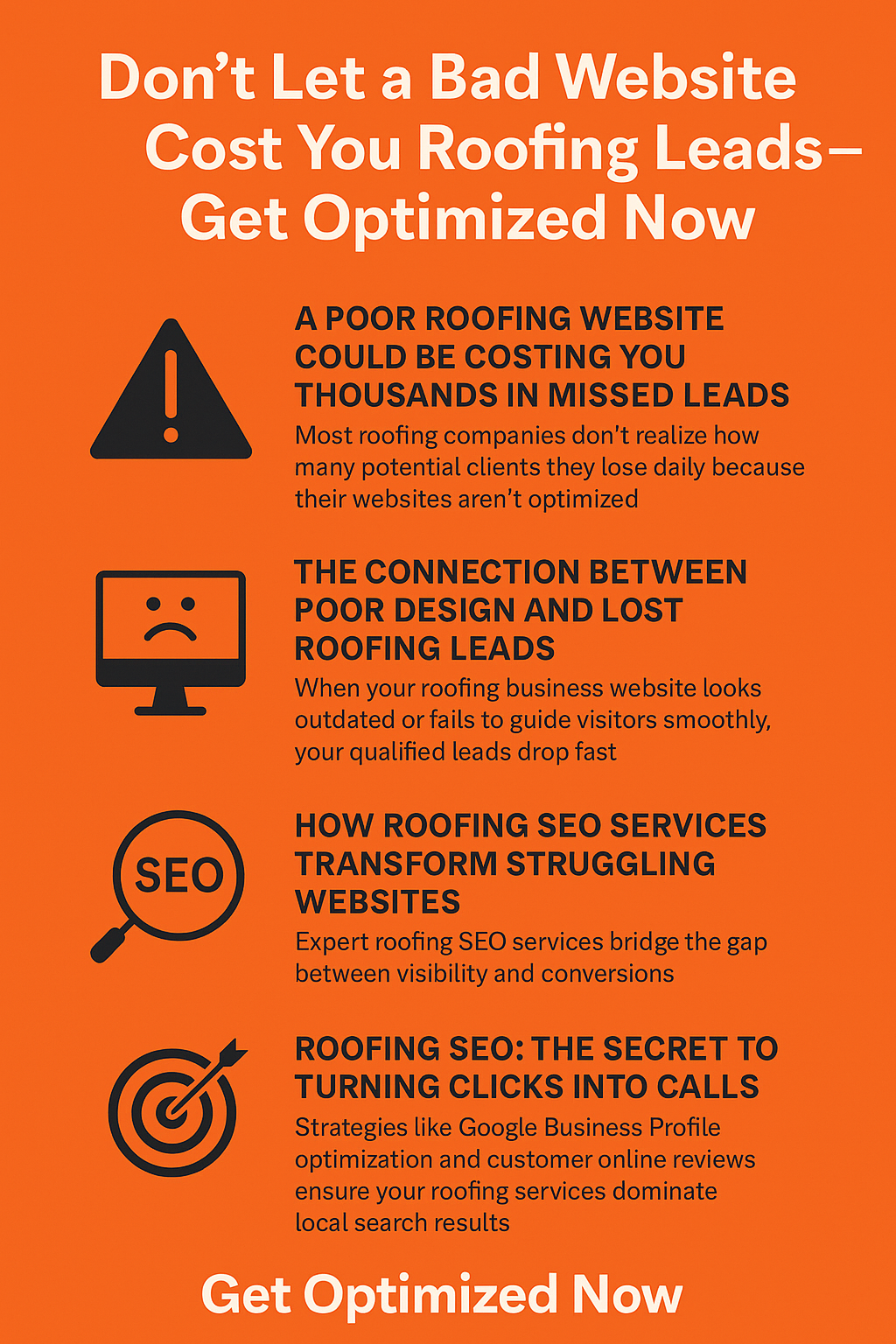
Don’t Let a Bad Website Cost You Roofing Leads—Get Optimized Now.” The image contains four black icons with matching black section headers and text: a warning triangle representing lost leads, a sad computer icon symbolizing poor design, a magnifying glass labeled “SEO” for optimization, and a target icon for turning clicks into calls. Each section briefly explains how unoptimized roofing websites lose customers and how roofing SEO services improve visibility, design, and conversions. The bottom text says “Get Optimized Now.


Maximizing Visibility Through Google Local Service Ads and Roofer SEO

For roofing professionals aiming to dominate their market, combining Google Local Service Ads with powerful roofer SEO is a game-changing approach. These tools ensure your company website reaches homeowners searching through relevant search queries like “emergency roof repair” or “high quality roofing installation.” By investing in targeted online marketing and focused local SEO efforts, your brand becomes visible where it matters most—at the top of search results and in local maps.


Strong seo efforts also mean optimizing content with strategic roofing keywords, crafting informative marketing materials, and improving the overall performance of your site. When executed correctly, this integrated strategy builds credibility, attracts qualified leads, and turns casual visitors into paying customers. With a consistent, results-driven approach, your roofing business can outshine competitors and secure its place as a trusted authority in the local market.


Turning Clicks Into Clients With Roofing SEO Webmasters

If your roofing website isn’t converting visitors into calls, it’s time to work with experienced roofing SEO webmasters who understand the roofing market and the urgency of getting results. These experts optimize your online presence so potential customers can find and trust your business faster. Unlike generic SEO companies, roofing-specific professionals know how to design and execute strategies that attract local homeowners searching for immediate roofing help. Partnering with skilled SEO agencies ensures your digital marketing efforts deliver measurable returns by improving visibility, reputation, and lead flow. Encouraging satisfied clients to leave positive online reviews further boosts credibility—helping your roofing business stand out and dominate local search results.


Take Control of Your Roofing Business Growth

If your roofing website isn’t producing the calls and leads it should, it’s time to take action. At our agency, we specialize in roofing SEO services that help roofing companies dominate their local market and attract steady, qualified leads. Our team of experts creates conversion-focused websites, optimizes your google business profile, and implements customized seo campaigns tailored to your goals.


Let us show you how strategic roofing marketing can transform your roofing business into a lead-generating powerhouse. Contact us at (888) 209-4055 today for a free consultation, and let’s create a plan to boost your online visibility, rank higher, and grow faster than your competitors.

(888) 209-4055

GA4 dashboard showing website measurement, events, conversions, and business KPIs.
August 21, 2026
GA4 improves website measurement with Google Analytics 4 events, conversions, analytics implementation, marketing reporting, and meaningful business KPIs today.
Local SEO audit checklist for better local rankings.
August 21, 2026
Local SEO audit reviews Google Business Profile, local citations, location pages, reviews, and local rankings to uncover issues hurting local search visibility.
Conversion tracking dashboard for leads, calls, forms, and qualified lead reporting.
August 21, 2026
Conversion tracking connects lead tracking, calls, forms, and conversion events with attribution, marketing measurement, and accurate qualified lead reporting.
Website monitoring dashboard for uptime, website health, and conversions.
August 21, 2026
Website monitoring protects website health with uptime checks, broken link detection, form monitoring, index monitoring, and reliable conversion monitoring.
Small business CRM software dashboard for lead and client management.
August 21, 2026
CRM software for small business strengthens customer relationship management with lead management, sales pipelines, CRM integrations, and client workflows.
August 21, 2026
Your business may have analytics software, advertising platforms, forms, landing pages, call tracking, email campaigns, and other marketing tools connected to the same website. But can you trust what they are measuring? A form submission may appear as a lead in one system but not another. A button click may be tracked twice. An old marketing tag may still be running months after a campaign ends. A new tool may be added without anyone checking how it affects the existing measurement setup. Adding another platform rarely fixes this problem. Businesses and marketing teams often need a clearer measurement structure first. Google Tag Manager is a tag management system that helps businesses organize how measurement and marketing tags are managed on a website through a web interface instead of managing every tag directly in the site’s code. For businesses, the value is not simply having Google Tag Manager installed. The real value comes from deciding what should be measured, how events should be defined, how a measurement plan should be structured, and how the tracking environment should be governed. That includes how Google Tag Manager works in practice, which tags belong on the site, how privacy and consent should be handled, and when professional GTM support is worth bringing in. Without that structure, more tools often mean less reliable data: duplicate tracking, inconsistent reports, weak accountability, and decisions based on measurement that is incomplete or wrong. Masterly Tech helps businesses think through that measurement structure before more marketing tools create more tracking complexity. Google Tag Manager Should Start With Business Questions A business does not need to track every possible interaction. It needs to track the interactions that help explain what visitors are doing and whether important business actions are happening. Before adding mor e marketing tags, a company should be able to answer questions such as: Which website actions represent meaningful engagement? Which actions represent a lead or another important business outcome? Which marketing systems need particular information? Are multiple platforms tracking the same action? Who decides when a new tag should be added? Who checks whether tracking still works after website changes? These questions move the conversation away from collecting more data and toward collecting more useful data. What Google Tag Manager Actually Manages Google Tag Manager organizes measurement through several core components, including tags, triggers, variables, and the data layer. A tag can send information to another system, while a trigger determines when that tag should fire. Variables provide values that tags and triggers can use. For example, a business may want to measure when someone submits a particular form. The form submission is the action. A trigger can listen for the relevant event, and a configured tag can send the appropriate measurement information to its destination when the defined conditions are met. Google notes that GTM triggers can respond to events such as form submissions, clicks, and page views. The technical configuration matters, but the business decision comes first: Should this action be tracked, what should it mean, and where should the information go? That is the foundation of us eful tag management. Better Website Tracking Starts With a Measurement Plan A common mistake is building tracking around available tools instead of business priorities. A company installs a new platform. The platform requests a tag. Someone adds it. Then another platform is added. Then another campaign. Over time, the website may collect an assortment of tags and events without a clear measurement strategy behind them. Professio nal website tracking should work in the opposite direction. Start With Important User Actions A service business might care about actions such as: Completing a qualified inquiry form Requesting a consultation Clicking an important contact option Reaching a meaningful stage in a lead process Completing another defined business action An ecommerce business may have a different set of priorities. The important point is that measurement should reflect what matters to the organization. Decide What Each Event Means Two teams can use the word "conversion" while referring to very different actions. One person may consider any form submission a conversion. Another may reserve that term for a qualified lead or Purchase. If event definitions are unclear, reports can become misleading even when the underlying technology works correctly. A sound GTM plan establishes clearer definitions before those definitions are implemented. Analytics Events Should Reflect Real User Behavior Analytics events allow businesses to measure actions that happen on web pages. But more events do not automatically produce better insight. A business might technically be able to measure every scroll, click, video interaction, menu selection, and page element. That does not mean every interaction deserves equal attention. The better question is whether the event contributes useful information. For example, tracking a visitor clicking a key contact button may provide meaningful information about intent. Tracking dozens of minor interface interactions may create noise if nobody uses those events to make decisions. The measurement plan should separate useful signals from unnecessary activity. Conversion Events Need Clear Definitions Conversion events deserve particular attention because businesses may use them to judge marketing performance. If a conver sion fires twice, reports can overstate results. If it fails to fire, marketing may appear less effective than it really is. If several unrelated actions use the same conversion definition, teams may misunderstand what their reports actually represent. Google Tag Manager can provide the infrastructure for deploying and controlling measurement tags, but GTM cannot decide what your organization should consider a meaningful conversion. That requires business context. Masterly Tech approaches tracking from that perspective: define what matters first, then determine how the measurement environment should support it. Marketing Tags Need Ownership Every new marketing platform can introduce another request for website access or tracking code. Without governance, websites can accumulate tags long after the original reason for adding them has disappeared. That can create questions nobody can easily answer: Who added this? What does it measure? Which platform receives the data? Does the company still use that platform? Would removing the tag affect another system? This is wh y tracking governance m atters. In google tag manager, clear ownership can improve collaboration between marketing teams and IT. Who can make changes, including different access levels for team members and contractors Tracking Governance Creates Accountability A basic governance approach can establish ownership around: What tags are approved Why they exist Which events they use Who can make changes How changes are reviewed How configurations are documented When old tags should be evaluated How tracking is tested after website changes The purpose is not to make marketing slower. It is to reduce uncertainty. Google Tag Manager Can Reduce Direct Tag Changes to Website Code Without a tag management solution, multiple tags may be added by directly editing site code. A Tag Management Solution lets teams manage tags through one interface instead of repeatedly editing code snippets. Google explains that Tag Manager allows tags and their firing behavior to be configured and published through its interface instead. The GTM container snippet is a piece of javascript code placed on every page of a website. GTM can support Google tags, third-party tags, and custom tags depending on the implementat ion. This can make ongoing tag management more organized and reduce the risk of broken HTML code, but it does not eliminate the need for technical oversight. A poorly planned GTM container c an become just as confusing as a poorly managed collection of website scripts. The goal should not be to move clutter from the website code into GTM. The goal should be a cleaner measurement system. The Data Layer Can Create a More Stable Measurement Foundation More advanced website tracking may require information that is not available through a simple page load or URL. Google Tag Manager's data layer provides a structured way for information to be made available to tags, triggers, and variables. Google recommends a well-organized data layer as a best practice in relevant implementations because it can support a more organized data model and simplify troubleshooting. For a business, this matters when important measurement depends on information such as transaction details, content categories, user interactions, specific information, contextual information, or other structured website data. The exact implementation should depend on the website and measurement requirements rather than using the same setup everywhere. Tracking Should Account for Consent and Privacy Requirements Measurement planning should not treat consent as an afterthought. Privacy planning increasingly affects browser-based tracking and first party data collection. Google provides consent mode functionality that allows Google tags and SDKs to adjust their behavior based on a user's consent choices. Google also makes clear that businesses remain responsible for obtaining consent where required and ensuring tags respect those choices. The correct setup depends on the business, technologies, jurisdictions, and applicable requirements, and data governance should align tagging choices with consent, privacy requirements, and first party data use. For that reason , tracking governance should include appropriate review of privacy and consent requirements rather than assuming that installing GTM itself makes a website compliant. Technical configuration should support the organization's approved privacy approach, not replace it. Server side tagging can improve performance and security by moving some tagging activity to the cloud, but it still requires proper governance. NAdding More Marketing Tools Can Make Bad Tracking Worse Suppose a business already has inconsistent event names, duplicate conversions, unclear tag ownership, and incomplete documentation. The marketing team then adds another advertising platform, a new CRM integration, and another reporting tool. The company now has more technology. It does not necessarily have better information. Each additional platform can depend on the same underlying website actions. If those actions are not defined consistently, new tools can multiply existing measurement problems. That is why businesses should consider the tracking foundation before expanding the marketing stack. A Practical Framework for Business Tag Management Before expanding a GTM environment, businesses can evaluate four areas. 1. Business Actions Identify which website interactions actually matter to the organization. 2. Event Definitions Define what those interactions mean and how they should be named. 3. Tag Destinations Determine which approved marketing or analytics systems need the information. 4. Governance Establish who owns the setup, who can change it, how it is tested, how version control is handled, and how it is documented. This framework ke eps Google Tag Manager connecte d to business measurement instead of treating it as an isolated technical tool. When Professional Google Tag Manager Support Makes Sense Some businesses have simple measurement requirements and a small number of tags. Others have multiple advertising channels, lead forms, marketing systems, conversion points, and teams making changes to the website. Professional support becomes especially useful when: Teams do not trust existing reports Conversion definitions are inconsistent Nobody knows what some existing tags do Multiple systems depend on the same website actions New marketing platforms are being added Tracking breaks when the website changes There is no clear process for testing or approving tags, even though GTM includes Preview Mode and tools for easier testing and debugging of tags As setups grow more complex, implementation resources and documentation become more important too. These situations point to a measurement-management problem, not simply a missing tag. Masterly Tech Helps Businesses Build a Cleaner Tracking Foundation Masterly Tech helps businesses eva luate their digital measurement needs before adding unnecessary complexity. The objective is to create a clearer relationship between important website actions, analytics events, conversion events, marketing systems, and the tags that support them. Depending on the agreed project scope, that may involve evaluating tracking requirements, planning event structures, reviewing GTM needs, or coordinating technical implementation. For businesses looking at their broader website performance and digital infrastructure, the most relevant existing Masterly Tech service or authority page should be linked here rather than creating another internal article that competes for Google Tag Manager intent. Recommended internal link: Link to the most relevant existing Masterly Tech website optimization or related technical service page using descriptive anchor text such as website optimization services, provided that page accurately reflects the current service offering. The goal is straightforward: know what needs to be measured be fore adding more tools that depend on that measurement.
Robots.txt file for search engine crawl access and control.
August 20, 2026
Learn how robots.txt controls crawl access using disallow and sitemap directives, guides search engine crawlers, and supports noindex and effective crawl control.
Website uptime monitoring for downtime alerts and reliability.
August 20, 2026
Website uptime monitoring tracks availability, downtime alerts, website outages, SSL monitoring, incident response, and website reliability to reduce disruptions.
Website analytics dashboard showing qualified traffic and conversions.
August 20, 2026
Website analytics connect website metrics, traffic sources, conversion events, landing pages, user paths, and qualified traffic in one analytics dashboard.
Landing page optimization for conversions, forms, and calls to action.
August 20, 2026
Landing page optimization improves conversions with stronger calls to action, form optimization, message match, social proof, page speed, and conversion tracking.