
How Dental SEO Can Help You Get More Patients from Google
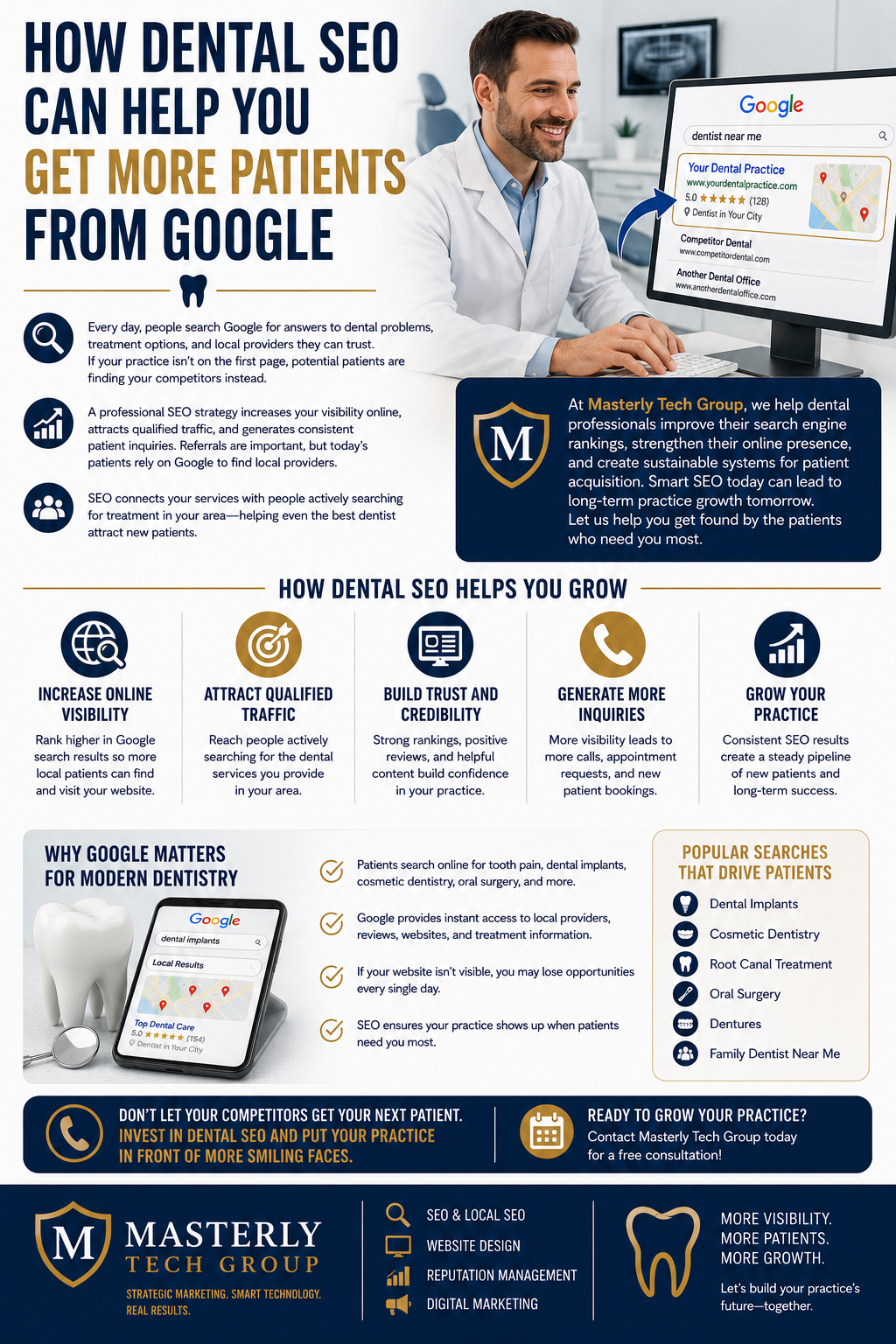
Every day, people search Google for answers to dental problems, treatment options, and local providers they can trust. Whether someone is looking for dental implants, root canals, cosmetic dentistry, oral surgery, dentures, or a family dentist, their journey often begins with a search engine. The question is simple: when potential patients search online, does your dental practice appear on the first page of results, or are they finding your competitors instead?
Many dentists invest heavily in equipment, staff training, and patient experience, yet overlook one of the most powerful growth tools available today. A professional SEO strategy can help a dental practice become more visible online, attract qualified traffic, and generate consistent patient inquiries. While referrals remain important, today's patients increasingly rely on Google to help them discover local providers before they ever make a phone call.
The reality is that even the best dentist may struggle to attract new patients if potential visitors cannot find their website. Search engine optimization bridges the gap between excellent dental care and online visibility. It helps connect your services with people actively searching for treatment in your area.
At Masterly Tech Group, we help dental professionals improve their search engine rankings, strengthen their online presence, and create sustainable systems for patient acquisition. Understanding how SEO works can help dental practices make smarter marketing decisions and position themselves for long-term growth.
Why Google Matters for Modern Dentistry
The internet has changed the way patients choose healthcare providers. Instead of relying solely on recommendations from friends and family, many patients now begin their search online.
When someone experiences tooth pain, needs oral surgery, wants porcelain veneers, or is considering cosmetic dentistry, they often turn to Google first. Search engines provide immediate access to local providers, reviews, websites, and treatment information.
If your dental website is not visible in search results, you may be losing opportunities every day without realizing it.
Understanding Dental SEO
SEO stands for search engine optimization. It is the process of improving a website so that it ranks higher in search engine results.
When SEO is implemented properly, your website becomes more visible when people search for dental services in your area. This increased visibility often leads to more website traffic, more appointment requests, and more new patients.
Unlike short-term advertising methods, SEO focuses on creating long-term growth by improving your website's authority and relevance.
How Search Engines Decide Rankings
Google uses complex algorithms to determine which websites appear in search results.
These algorithms evaluate numerous factors, including:
- Website quality
- Content relevance
- User experience
- Mobile performance
- Backlinks
- Local business information
- Page speed
The goal is to provide users with the most relevant answer to their search query.
Why Higher Rankings Matter
Most users never scroll beyond the first page of Google results.
When your dental practice ranks near the top, your website receives significantly more visibility than lower-ranked competitors. Higher rankings increase the likelihood that potential patients will click your website rather than someone else's.
This visibility creates opportunities to generate new leads without relying exclusively on paid advertising.
The Connection Between SEO and Patient Acquisition
Every dental marketing consultant understands that visibility drives patient acquisition.
When your website appears in front of individuals actively searching for services, you attract visitors who already have a need. These visitors are often much more likely to become patients compared to people who encounter random advertisements.
SEO helps connect your practice with individuals who are already looking for treatment.
Attracting New Patients Through Search
One of the primary goals of SEO is generating new patients consistently.
Instead of waiting for referrals, SEO helps your practice appear in front of people searching for services such as:
- Dental implants
- Root canals
- Dentures
- Cosmetic dentistry
- Oral surgery
- Family dental care
The more visibility your website gains, the more opportunities you have to attract patients.
Why Local SEO Matters for Dentists
Most dental patients search for providers near their home or workplace.
Local SEO focuses on improving visibility within specific geographic areas. If someone searches for a dentist in West Palm Beach, West Palm Beach FL, or another location, local SEO helps ensure your practice appears prominently.
This strategy is especially important because dental services are typically location-based.
Becoming Visible in Your Community
Patients want convenience.
When a practice is conveniently located and visible in local search results, potential patients are more likely to schedule an appointment. Appearing in local searches helps build trust because users perceive highly ranked businesses as established and credible.
This local visibility becomes a valuable competitive advantage.
How Website Optimization Supports Growth
Your website serves as the foundation of your SEO efforts.
A well-optimized website makes it easier for search engines to comprehend your offerings, location, and level of experience. It also improves the user experience for visitors exploring treatment options.
When SEO and website optimization work together, the result is stronger rankings and better conversion rates.
Why Content Matters for Dental SEO
Google prioritizes websites that provide helpful information.
Educational content helps answer patient questions while demonstrating expertise. Articles about dental implants, oral surgeon services, cosmetic dentistry procedures, and dental care can help improve visibility while building trust.
Quality content positions your practice as a valuable resource.
Building Trust Before the First Appointment
Many patients research extensively before scheduling an appointment.
They want to understand procedures, costs, recovery times, and treatment options. Providing informative content allows potential patients to gain knowledge before visiting your office.
This trust-building process often increases the likelihood of conversions.
SEO Helps Patients Discover Your Services
Many practices offer a wide range of services but fail to communicate them effectively online.
SEO helps search engines understand what your practice provides. Whether you focus on cosmetic dentistry, dental implants, root canals, dentures, or oral surgery, optimized content helps attract relevant traffic.
The more clearly your services are presented, the easier it becomes for patients to discover them.
The Importance of Keyword Research
Keyword research identifies the phrases patients use when searching online.
For example, potential patients may search for:
- Dentist near me
- Dental implants
- Oral surgeon
- Cosmetic dentistry
- Root canals
- Family dentist
Targeting these keywords helps improve search visibility.
Understanding Search Intent
Not all searches have the same purpose.
Some users are seeking information, while others are ready to schedule treatment immediately. Effective SEO strategies focus on understanding search intent and creating content that addresses user needs.
Matching content with intent improves both rankings and conversion rates.
How Technical SEO Supports Rankings
Technical SEO focuses on the behind-the-scenes elements of your website.
These include:
- Mobile responsiveness
- Secure browsing
- Site speed
- Structured data
- Crawlability
Technical improvements help search engines access and understand your content more effectively.
Why Mobile Optimization Is Essential
Many patients conduct searches on their phones.
A website that performs poorly on mobile devices creates frustration and drives visitors away. Mobile optimization improves usability and supports stronger rankings.
Google prioritizes mobile-friendly websites because they provide a better experience.
Improving User Experience
Search engines want users to have positive experiences.
If visitors struggle to navigate your website, find information, or contact your office, rankings may suffer. User-friendly design improves engagement and helps convert visitors into patients.
A positive experience often begins long before someone arrives at your office.
The Role of Google Business Profiles
Local visibility depends heavily on Google Business Profiles.
An optimized profile helps your practice appear in local map results. This increases exposure when patients search for nearby providers.
Accurate information also improves trust and credibility.
Online Reviews Influence Decisions
Patients often read reviews before making healthcare decisions.
Positive reviews can strengthen your reputation and improve conversion rates. Encouraging satisfied patients to leave feedback helps support both SEO and patient acquisition efforts.
Strong reviews often reinforce the professionalism of your practice.
Why Authority Matters
Google rewards websites it considers authoritative.
Authority develops over time through quality content, positive user engagement, and reputable backlinks. The stronger your authority, the more likely your website is to rank competitively.
Authority creates long-term advantages that continue generating traffic.
Backlinks and Their Value
Backlinks are links from other websites pointing to your website.
These links act as signals of credibility. When reputable websites reference your content, search engines view your website as more trustworthy.
Quality backlinks often contribute significantly to ranking improvements.
SEO Versus Google Ads
Many practices wonder whether they should invest in SEO or Google Ads.
Google Ads can generate traffic quickly, but visibility disappears once campaigns stop. SEO takes longer to develop but provides sustainable growth over time.
The most successful dental marketing company strategies often combine both approaches.
The Long-Term Value of SEO
SEO is an investment in future growth.
Unlike temporary advertising campaigns, SEO continues generating traffic after content is published and rankings improve. Over time, this creates a steady stream of patient inquiries.
The cumulative effect often produces significant returns.
Generating New Leads Consistently
Many practices struggle with inconsistent lead generation.
SEO helps create a system that generates new leads month after month. By increasing visibility for relevant searches, practices can maintain a more predictable flow of inquiries.
Consistency supports long-term growth.
Converting Traffic Into Patients
Traffic alone is not enough.
Visitors must be encouraged to take action. Effective websites include clear communication, strong calls to action, and user-friendly appointment request systems.
The goal is turning traffic into patients.
Why Front Desk Performance Matters
Even the best SEO campaign requires strong internal systems.
When prospective patients call your office, the front desk plays a critical role in converting inquiries into appointments. Friendly communication and prompt responses improve conversion rates.
Every interaction influences the patient experience.
Building a Strong Brand Online
SEO supports brand development as well as rankings.
Repeated visibility in search results helps patients recognize and trust your practice. Over time, this strengthens brand awareness and increases credibility.
A recognizable brand often attracts more inquiries.
Supporting Cosmetic Dentistry Growth
Cosmetic dentistry is highly competitive.
Patients seeking porcelain veneers, whitening, and smile enhancements frequently conduct extensive online research. SEO helps ensure your practice appears during these searches.
Greater visibility often translates into more consultations.
Helping Patients Find Dental Implants
Dental implants represent a significant treatment category.
Individuals researching implants typically compare multiple providers before making a decision. Strong SEO helps position your practice in front of these high-value prospects.
Visibility creates opportunities for growth.
Promoting Oral Surgery Services
Patients seeking oral surgery often require treatment quickly.
Appearing prominently in search results helps your practice connect with individuals who need immediate assistance. This is especially important for oral surgeon practices competing in crowded markets.
Timely visibility can drive valuable inquiries.
Reaching Families Searching for Care
Family-oriented dental care remains one of the most common search categories.
Parents frequently search online when looking for a trusted dentist for their family. SEO helps ensure your practice appears when these searches occur.
Family patients often become long-term patients.
Educating Patients Through Content
Educational content provides value while supporting rankings.
Topics may include:
- Root canals
- Dentures
- Oral surgery recovery
- Dental care tips
- Cosmetic procedures
Helpful content positions your practice as a trusted authority.
Why Consistency Matters
SEO success rarely happens overnight.
Consistent content creation, website updates, and optimization efforts produce gradual improvements. Over time, these efforts accumulate and strengthen rankings.
Patience often leads to substantial rewards.
Understanding the SEO Process
The SEO process involves multiple stages.
These typically include research, optimization, content development, technical improvements, and performance monitoring. Each component contributes to overall success.
A strategic process delivers stronger results than isolated tactics.
Measuring Success
Effective SEO relies on measurable outcomes.
Metrics may include:
- Website traffic
- Search rankings
- Leads
- Appointment requests
- Conversion rates
Tracking performance helps determine what is working.
Why Many Practices Struggle With SEO
Dentists are experts in patient care, not search engine optimization.
Managing SEO internally often becomes difficult because it requires specialized knowledge, ongoing effort, and technical expertise. Many practices lack the time necessary to execute effective campaigns consistently.
Professional support often accelerates results.
The Advantage of Working With Experts
A dental marketing consultant understands the unique challenges facing dental practices.
Experienced professionals develop customized strategies based on your goals, services, location, and competition. This targeted approach often produces stronger outcomes than generic marketing efforts.
Specialized expertise creates efficiency.
What Makes a Great Dental Marketing Company
The best dental marketing company understands both dentistry and digital marketing.
They focus on measurable growth, transparent communication, and long-term success. Rather than chasing short-term wins, they create systems designed to attract patients consistently.
Partnerships built on trust often deliver the best results.
Why Communication Matters
Successful marketing relationships depend on communication.
Dental practices deserve regular updates, clear reporting, and honest discussions regarding progress. Strong communication helps ensure expectations remain aligned.
Transparency builds confidence.
Creating a Sustainable Growth Strategy
The goal of SEO is not simply increasing traffic.
The objective is creating a sustainable system that supports patient acquisition, strengthens your brand, and helps your practice succeed over time. Strategic planning ensures that growth remains consistent.
Long-term thinking produces better outcomes.
Helping Practices Compete More Effectively
Many dental markets are highly competitive.
Practices that invest in SEO gain an advantage by increasing visibility and attracting qualified traffic. This helps level the playing field against larger competitors with bigger advertising budgets.
Smart strategy often outperforms size alone.
Why Professionalism Matters Online
Patients evaluate professionalism before making contact.
A polished website, strong content, positive reviews, and consistent branding create confidence. Professionalism influences how visitors perceive your practice.
First impressions often begin online.
Building Trust Through Expertise
Patients want confidence in their healthcare decisions.
Demonstrating knowledge, experience, and expertise through content helps establish trust. When potential patients view your practice as credible, they become more comfortable scheduling treatment.
Trust drives conversions.
SEO Helps Practices Succeed
Search engine optimization remains one of the most effective ways to attract patients online.
By improving rankings, increasing traffic, and strengthening visibility, SEO helps practices grow predictably. The connection between search visibility and patient acquisition is clear.
Better rankings often lead directly to more opportunities.
Partner With Masterly Tech Group
At Masterly Tech Group, we understand the challenges dental practices face in today's competitive digital environment. Our team specializes in helping dentists, oral surgeons, cosmetic dentistry providers, and family practices improve their online visibility through customized SEO strategies. We focus on helping clients attract new patients, generate qualified leads, strengthen their brand, and maximize the return on their marketing investment.
Whether your goal is increasing appointments for dental implants, promoting cosmetic dentistry services, attracting more family patients, or building a stronger online presence, our team has the knowledge and experience to help. We take pride in delivering professional service, transparent communication, and measurable results that support long-term growth.
Creating a Professional Website Design That Builds Trust
A dental website should do more than simply provide information. It should create confidence from the moment a visitor arrives on the page. Design elements such as clean layouts, professional photography, and visual details—even features like a spinner white decorative graphic used thoughtfully throughout the site—can contribute to a positive first impression. A well-designed website helps reinforce your brand while encouraging potential patients to continue exploring your services and schedule an appointment.
Showcasing Your Great Team Online
Patients are often looking for more than clinical expertise when choosing a dental provider. They want to know they will be welcomed by a great team that values patient comfort and satisfaction. Featuring team members, office culture, and patient-focused messaging throughout your website helps build trust before the first appointment. SEO can drive traffic to your website, but showcasing a great team helps convert visitors into loyal patients.
Offering Comprehensive Care Under One Roof
Many patients prefer practices that provide multiple services under one roof because it simplifies treatment and improves convenience. Whether a patient needs routine dental care, cosmetic dentistry, oral surgery, dentures, or dental implants, they appreciate having access to comprehensive services in one location. Highlighting these capabilities on your website can improve user experience while helping search engines better understand the full scope of your offerings.
Why Patients Want to Learn About Your Doctors
Trust is one of the most important factors in healthcare marketing. Many prospective patients research doctors online before making a decision about treatment. Providing biographies, credentials, experience, and professional accomplishments helps visitors feel more comfortable with your practice. Strong SEO helps patients find your website, while informative provider profiles help build confidence in your care.
Optimizing Every Contact Form for More Conversions
An effective contact form can play a major role in turning website visitors into new patients. When a form is easy to complete and clearly visible throughout the website, it encourages users to take the next step. Whether someone wants additional information, a consultation, or an appointment, the form should make communication simple. Small improvements in form design can often lead to significant increases in patient inquiries.
Helping Patients Understand How You Treat Dental Concerns
Patients frequently search online because they need answers about a condition or treatment. Educational content that explains how you treat common dental issues helps build trust while improving SEO performance. Whether discussing dental implants, root canals, cosmetic procedures, or oral surgery, informative content positions your practice as a valuable resource. This approach helps patients feel more confident about choosing your office for care.
Explaining Insurance Coverage and Financial Options
Questions about coverage often influence whether a patient schedules treatment. Many visitors want to know what insurance plans you accept and what financial options may be available. Providing clear information about coverage helps reduce uncertainty and encourages prospective patients to take action. Transparency can improve the overall user experience while increasing conversion rates.
Addressing Patient Concerns Through Educational Content
Every patient has a concern when searching for a dental provider, whether it involves cost, discomfort, recovery time, or treatment outcomes. SEO content that addresses these concerns can help visitors feel informed and reassured. When patients find answers directly on your website, they are more likely to trust your expertise. This trust often leads to increased appointment requests and stronger patient relationships.
Making Patient Satisfaction a Priority
Successful dental practices make patient satisfaction a priority in every interaction. From the first website visit to long-term follow-up care, each experience contributes to the patient's perception of your brand. SEO helps bring visitors to your website, but delivering a positive experience encourages them to become loyal patients. Practices that consistently prioritize patient needs often see stronger growth over time.
Improving Lives Through Better Dental Marketing
A healthy smile can positively affect many aspects of a person's life, including confidence, communication, and overall well-being. By helping patients discover the services they need, SEO plays a role in connecting individuals with life-changing dental treatment. Strong online visibility ensures that people searching for help can find your practice when they need it most.
Understanding the Desire Behind Every Search
Every online search reflects a desire for information, solutions, or professional care. A person searching for cosmetic dentistry may desire a more confident smile, while another searching for dental implants may be looking to restore function and comfort. Understanding patient intent allows dental practices to create content that resonates with potential visitors and addresses their specific goals.
Making It Easy to Accept New Patients
One of the goals of SEO is helping practices attract and accept new patients consistently. Once traffic reaches your website, the process should be simple and welcoming. Clear calls to action, appointment request options, and helpful information make it easier for visitors to move forward. Removing barriers often improves conversion rates and patient acquisition results.
Why Compassionate Messaging Matters Online
Patients often feel anxious about dental treatment. Compassionate messaging throughout your website can help ease those concerns and create a more welcoming experience. Language that demonstrates understanding, empathy, and support helps visitors feel comfortable reaching out. Combining compassionate communication with strong SEO creates a powerful foundation for patient engagement.
Providing Complete Information for Better Decision Making
Many patients spend considerable time researching treatment options before making a decision. Providing complete information about procedures, services, costs, and recovery expectations helps users make informed choices. Comprehensive content also improves SEO by giving search engines more context about your services. Better information often leads to greater trust and higher conversion rates.
Demonstrating Your Ability to Deliver Results
Potential patients want confidence in your ability to provide quality care. Showcasing credentials, patient testimonials, before-and-after examples, and educational content helps demonstrate expertise. SEO brings users to your website, but evidence of your ability to achieve positive outcomes helps convert interest into action. Trust remains one of the most important factors in healthcare marketing.
Building Relationships From the Beginning
The patient journey often starts long before an appointment is scheduled. From the beginning, your website should provide helpful information, clear communication, and easy navigation. Creating a positive first experience helps establish trust and encourages visitors to continue engaging with your practice. SEO helps initiate these relationships by increasing visibility when patients are actively searching online.
Protecting Your Online Reputation
Your reputation is one of the most valuable assets your practice possesses. Effective SEO strategies help protect your online presence by ensuring accurate information appears prominently in search results. Positive reviews, informative content, and professional branding all contribute to a stronger reputation. Protecting your brand online helps build long-term credibility and patient trust.
Speaking Directly to the Needs of Patients
Successful dental marketing involves speaking directly to the questions and concerns patients have before seeking treatment. Content should be written in a way that is easy to understand while still providing valuable information. When visitors feel understood, they are more likely to engage with your practice. Effective communication strengthens both SEO performance and patient relationships.
Speaking Directly to the Needs of Patients
Successful dental marketing involves speaking directly to the questions and concerns patients have before seeking treatment. Content should be written in a way that is easy to understand while still providing valuable information. When visitors feel understood, they are more likely to engage with your practice. Effective communication strengthens both SEO performance and patient relationships
Why Passion Makes a Difference in Dental Marketing
Behind every successful dental practice is a passion for helping people improve their health, confidence, and quality of life. That same passion should be reflected in your marketing strategy. Patients are more likely to connect with a practice that genuinely cares about education, communication, and delivering exceptional service. When a website effectively communicates the passion your team has for dentistry, it helps build trust and creates stronger connections with potential patients. Combined with a strategic SEO approach, that passion can help attract more visitors, generate more patient inquiries, and support long-term growth for your practice.
Working With a Dental Marketing Consultant to Accelerate Growth
Many dental practices struggle to find the time and expertise needed to manage effective online marketing campaigns. A professional dental marketing consultant can help identify opportunities to improve search engine rankings, increase website traffic, and generate more patient inquiries. By developing a customized strategy based on your services, competition, and growth goals, a consultant helps ensure your marketing investment delivers measurable results. Having an experienced partner guiding your SEO efforts often allows dentists to focus on patient care while their online presence continues to grow.
Reaching Patients Searching in West Palm Beach
Local search visibility is essential for practices that want to attract patients within their service area. Individuals searching for a dentist in West Palm Beach often compare multiple providers before making a decision. A strong SEO strategy helps your practice appear when potential patients are actively looking for treatment options online. Increased visibility in local search results can lead to more website visits, more appointment requests, and greater patient acquisition opportunities.
Showcasing Your Commitment to Quality Dental Care
Patients want confidence that they will receive exceptional dental care from a provider they can trust. Your website should clearly communicate your services, treatment philosophy, and commitment to patient satisfaction. Educational content, testimonials, and detailed service pages help demonstrate expertise while building credibility with prospective patients. Strong SEO ensures that people searching for quality dental care can find your practice before they find a competitor.
Building Visibility in West Palm Beach FL Search Results
Competition for online visibility can be intense in areas such as West Palm Beach FL. Practices that invest in SEO gain a significant advantage by appearing prominently in local search results when patients are looking for dental services. Whether someone needs dental implants, cosmetic dentistry, oral surgery, or routine preventive care, local optimization helps connect your practice with those searches. Greater visibility often translates directly into increased website traffic and more patient inquiries.
Why Being Conveniently Located Is Not Enough
Being conveniently located can certainly help attract patients, but location alone does not guarantee online visibility. Many potential patients never drive past a practice before discovering it through a Google search. Even if your office is conveniently located in a highly populated area, you still need a strong online presence to compete effectively. SEO helps ensure that when patients search for nearby dental services, your practice has the opportunity to appear at the top of the results and earn their attention.
Let’s Help Your Dental Practice Grow
Your next patient is likely searching online right now. The question is whether they will discover your practice or find a competitor instead. If your website is not generating the traffic, leads, and appointment requests you expect, it may be time to evaluate your current SEO strategy.
Masterly Tech Group is committed to helping dental professionals create stronger online visibility, improve search rankings, and attract more patients from Google. Contact us today at (888) 209-4055 to book a free consultation. We will review your current website, discuss your goals, answer your questions, and provide guidance on how a customized SEO strategy can help your practice grow. The right digital strategy can transform your online presence and create a steady flow of opportunities for years to come.