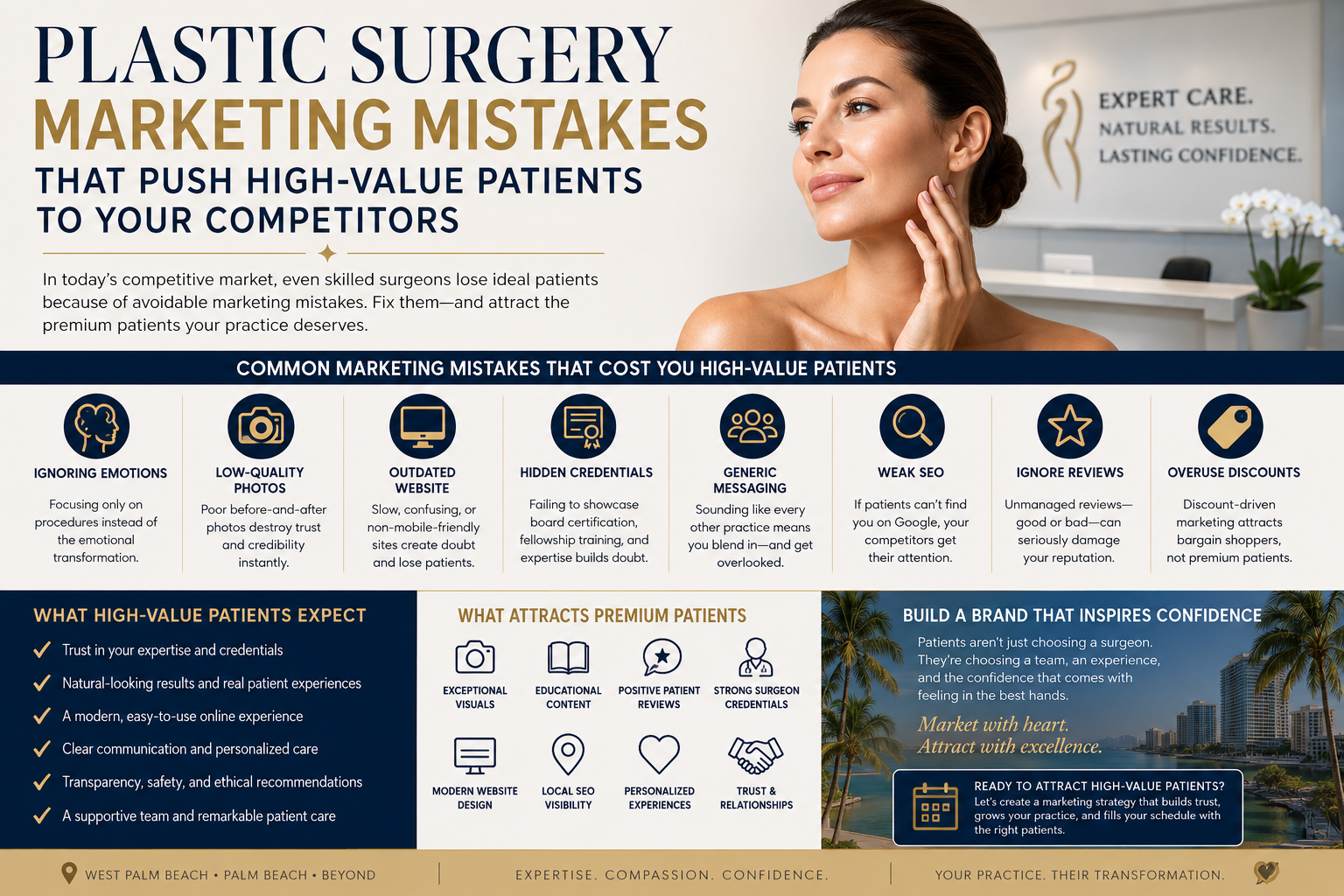
Plastic Surgery Marketing Mistakes That Push High-Value Patients to Your Competitors
Why So Many Plastic Surgery Practices Struggle to Attract Premium Patients
The world of plastic surgery has become more competitive than ever, especially in areas like west palm beach and the surrounding palm beach communities. Patients today are not simply looking for a provider who can perform surgery. They are searching for trust, credibility, comfort, and exceptional results before they ever schedule a consultation. Many practices invest heavily in advertising but still fail to attract the kind of patients they truly want.
High-value patients are different from bargain shoppers. They are willing to invest in cosmetic surgery and advanced procedures when they feel confident in the experience. They research providers carefully, compare online reputations, study before-and-after photos, and pay close attention to branding. If your marketing creates confusion, doubt, or frustration, these patients often move directly to a competitor without ever contacting your office.
In palm beach fl, competition among cosmetic and surgical providers is intense. A practice may have a gifted surgeon with years of medical school training, advanced credentials, and outstanding results, but poor marketing can make even the most talented practice appear outdated or untrustworthy. That disconnect can quietly damage growth month after month.
Patients seeking cosmetic surgery often have emotional reasons behind their decisions. Some want to address sagging skin after weight loss. Others seek a breast lift, tummy tuck, brow lift, or eyelid surgery to restore confidence. Because these decisions are personal, marketing must feel human, compassionate, and professional rather than aggressive or robotic.
Many practices unknowingly create barriers that drive away ideal patients. Small mistakes in branding, communication, website design, or patient interaction can cost thousands of dollars in lost revenue. Over time, those missed opportunities allow competing practices in west palm and palm beach plastic surgery markets to dominate local visibility.
The good news is that most marketing problems can be corrected with the right strategy. Understanding what high-value patients expect is the first step toward building a stronger cosmetic surgery brand. When marketing aligns with patient expectations, practices gain trust faster and attract more qualified leads who are serious about moving forward with surgery.
Ignoring the Emotional Side of Cosmetic Surgery
One of the biggest mistakes in plastic surgery marketing is focusing only on procedures instead of emotions. Patients do not wake up thinking about keywords like breast augmentation or reconstructive surgery. They think about how they want to feel when they look in the mirror.
Many cosmetic surgery websites sound cold and technical. They list procedures without explaining the emotional transformation behind them. A patient considering facial rejuvenation may be worried about aging, career confidence, dating, or self confidence. If the messaging ignores those emotions, the connection never happens.
Patients seeking palm beach plastic surgery often want reassurance that they will still look like themselves after surgery. They want natural results and a more youthful appearance without looking artificial. Marketing that focuses only on technical language can feel impersonal and intimidating.
Practices that succeed in west palm beach typically use messaging that speaks directly to patient concerns. They understand that cosmetic procedures are deeply personal. Patients want to feel understood rather than sold to.
An effective cosmetic surgeon knows that trust starts long before the initial consultation. Marketing should communicate empathy, professionalism, and patient safety from the first interaction. Practices that fail to create this emotional connection often lose patients to competitors with more relatable branding.
Using Low-Quality Before-and-After Photos
In cosmetic surgery, visuals matter. High-value patients expect to see professional photography that reflects the quality of the practice. Unfortunately, many plastic surgeon websites use poor lighting, inconsistent angles, or outdated images that damage credibility immediately.
Patients looking for palm beach plastic services often compare multiple providers online before scheduling a consultation. If one practice displays polished and professional images while another uses blurry or poorly cropped photos, patients naturally trust the stronger presentation.
Before-and-after galleries should showcase exceptional results while remaining authentic. Patients can quickly spot edited or unrealistic photos. They want transparency and realistic expectations. Trust is built through honesty.
A board certified plastic surgeon may deliver incredible surgical outcomes, but weak visual presentation can hide that talent. Marketing should highlight the surgeon’s artistic eye and artistic capabilities through high-quality imagery that reflects natural beauty and patient confidence.
Patients researching procedures like tummy tuck, neck lifts, eyelid lift, or body contouring often spend significant time reviewing galleries. Those images influence whether they continue exploring your practice or leave for another cosmetic surgeon in west palm.
Professional photography also improves social media marketing, website conversions, and paid advertising performance. In competitive palm beach markets, visuals are often the first impression a patient experiences.
Outdated Websites That Create Distrust
A website acts as the digital front door of a cosmetic surgery practice. When a website looks outdated, slow, or confusing, patients often assume the practice itself is outdated. This perception can severely impact conversions.
High-value patients expect modern experiences. They want fast loading pages, mobile-friendly layouts, and easy navigation. Many plastic surgery websites still look like they were built years ago, creating doubt before patients even read the content.
In palm beach fl, patients often research providers on their phones during lunch breaks, while traveling, or late at night. If the site is difficult to use on mobile devices, potential patients leave quickly.
Poor website structure also affects search visibility. Search engines favor websites with organized content, optimized pages, and strong user experiences. A weak website limits visibility in competitive searches related to cosmetic surgery and plastic surgery procedures.
Patients considering surgical procedures want reassurance about patient safety and the entire experience. Websites should clearly explain services, recovery expectations, surgeon credentials, and the support staff involved in care.
A strong palm beach plastic surgery website should also include:
- Easy scheduling for consultation requests
- Educational content about procedures
- Transparent explanations of financing options
- Real patient testimonials
- Professional surgeon biographies
- Information about non surgical procedures and laser treatments
Without these elements, practices lose credibility and high-value patients choose providers with stronger online experiences.
Failing to Showcase Surgeon Credentials Properly
Patients care deeply about qualifications. Unfortunately, many practices bury their surgeon credentials on hidden pages instead of making them a visible part of the brand story.
Patients searching for a board certified plastic surgeon want reassurance that they are working with a highly trained professional. Credentials from the american board, fellowship trained experience, and memberships in the american society of plastic organizations build confidence immediately.
A plastic surgeon dr with advanced education from respected institutions such as johns hopkins or prestigious fellowship trained programs should highlight those accomplishments clearly. Patients associate advanced credentials with patient safety and better surgical outcomes.
In west palm beach, where competition is high, credentials help separate average providers from trusted experts. High-value patients do extensive research before choosing surgery. They want to know who will perform their procedure and why that provider stands out.
Practices often make the mistake of assuming patients automatically understand qualifications. They do not. Marketing should explain why advanced training matters and how it impacts natural looking results.
A cosmetic surgeon west palm beach practice should clearly communicate:
- Board certification status
- Fellowship training
- Specialized expertise
- Years of surgical experience
- Awards and recognitions
- Commitment to latest techniques
Patients are far more likely to book a consultation when they feel confident in the surgeon’s expertise and bedside manner.
Generic Marketing That Looks Like Everyone Else
Many plastic surgery practices use identical marketing language. Phrases like “we care about patients” or “we provide excellent service” appear everywhere. Generic messaging makes practices blend together.
High-value patients are looking for differentiation. They want to know why your palm beach plastic practice is different from the dozens of other options in west palm and palm beach.
Marketing should reflect personality, philosophy, and unique strengths. Some practices specialize in natural results. Others emphasize concierge service, advanced technology, or remarkable patient care. Those distinctions should appear throughout the branding.
Patients often choose providers based on emotional connection as much as qualifications. A practice with a compelling identity creates stronger trust than one using generic language copied from competitors.
Strong branding also improves retention. Attracted patients who feel emotionally connected to the practice are more likely to move forward with surgery and refer friends or family members later.
Weak Search Engine Optimization
Search engine visibility is critical in cosmetic surgery marketing. If patients cannot find your practice online, competitors gain the advantage. Many practices underestimate the importance of local SEO.
Patients searching for plastic surgery in west palm beach often use phrases related to palm beach plastic surgery, cosmetic surgery, facial rejuvenation, tummy tuck, or breast reduction. Without optimized content, practices struggle to appear in search results.
SEO is not simply about stuffing keywords onto a page. Modern optimization focuses on valuable content, patient education, and strong user experience. High-quality content builds authority and trust.
Practices with weak SEO often rely entirely on paid advertising, which becomes expensive over time. Organic visibility creates long-term growth and attracts patients actively searching for procedures.
Effective SEO content should answer common patient concerns about:
- Recovery expectations
- Surgical risks
- Patient safety
- Procedure benefits
- Non surgical treatments
- Cosmetic goals
- Healthy lifestyle maintenance
A well-optimized site positions the practice as a trusted educational resource instead of just another advertisement.
Ignoring Online Reviews and Reputation Management
Reputation management can determine whether a patient schedules a consultation or chooses another provider. Yet many practices fail to monitor reviews consistently.
Patients seeking cosmetic surgery in palm beach often spend hours reading testimonials before contacting a practice. Negative reviews without thoughtful responses create doubt immediately.
High-value patients pay attention to details. They notice whether the entire staff appears compassionate, organized, and professional. Reviews discussing rude support staff, long wait times, or poor communication can drive patients away.
Even the best plastic surgeon may lose patients if the practice ignores online reputation management. Reviews influence trust as much as website design and advertising.
Successful practices encourage satisfied patients to share experiences naturally. They also respond professionally to concerns without becoming defensive.
Patients want reassurance that the entire experience will feel supportive from consultation through recovery. Positive reviews help build that confidence.
Overusing Discounts and Cheap Promotions
One of the fastest ways to damage a cosmetic surgery brand is relying heavily on discounts. Practices that constantly advertise low prices often attract bargain-focused leads instead of high-value patients.
Cosmetic surgery is deeply personal. Patients seeking breast lift, eyelid surgery, or neck lifts are not simply shopping for the cheapest option. They want safety, expertise, and outstanding results.
Excessive promotions can create the impression that a practice lacks demand or quality. High-value patients may assume the provider is inexperienced or struggling financially.
Premium patients expect premium experiences. Marketing should focus on expertise, patient care, and exceptional results rather than aggressive discounts.
That does not mean financing options should be ignored. Flexible financing options can help qualified patients move forward comfortably. The key is presenting those options professionally without making the practice appear discount-driven.
In competitive palm beach markets, premium branding often outperforms price-focused advertising.
Poor Social Media Strategy
Social media plays a major role in cosmetic surgery marketing. Patients often discover providers through Instagram, Facebook, TikTok, or YouTube before visiting the website.
Many practices treat social media like an afterthought. They post inconsistently, use poor-quality visuals, or publish content that lacks educational value.
High-value patients expect professionalism online. They want to see real patient journeys, educational videos, surgeon insights, and authentic interactions. Random promotional posts rarely build trust.
A strong social media strategy for palm beach plastic surgery practices should include:
- Educational procedure explanations
- Recovery guidance
- Patient testimonials
- Behind-the-scenes office content
- Surgeon introductions
- Information about non surgical treatments
- Before-and-after showcases
Patients considering cosmetic surgery often follow providers for weeks or months before scheduling a consultation. Consistent and professional content helps nurture trust over time.
Not Educating Patients Properly
Patients are more informed than ever before. They research procedures extensively before meeting a cosmetic surgeon. Practices that fail to provide educational content lose credibility.
Educational marketing helps patients feel empowered instead of pressured. It demonstrates expertise while reducing fear and confusion.
A patient researching a brow lift or eyelid lift may have concerns about recovery, scarring, or achieving a youthful appearance. Helpful educational content can answer those concerns before the consultation even begins.
Practices that provide strong educational resources position themselves as trusted authorities in aesthetic plastic surgery and plastic and reconstructive surgery.
Educational content can include:
- Blogs
- Procedure guides
- Video explanations
- FAQs
- Recovery timelines
- Patient stories
High-value patients appreciate transparency. When practices educate rather than simply advertise, they build deeper trust.
Failing to Personalize the Consultation Experience
The consultation experience often determines whether a patient moves forward with surgery. Unfortunately, many practices rush the process or make patients feel like numbers.
Patients want personalized attention. They want providers who listen carefully to their aesthetic goals and cosmetic goals rather than pushing unnecessary procedures.
A successful consultation should feel collaborative and informative. Patients should feel heard, respected, and supported throughout the discussion.
Practices in west palm that provide remarkable patient care often outperform larger competitors because they create more meaningful experiences.
Patients also value honesty. If a procedure is not the best procedure for someone’s goals, ethical guidance builds trust. Patients respect providers who prioritize patient safety over sales pressure.
The consultation should reflect the quality of the entire practice experience.
Neglecting Follow-Up Communication
Many practices lose patients simply because they fail to follow up properly after inquiries or consultations. High-value patients expect responsiveness and professionalism.
When a patient contacts a palm beach plastic surgery office, delays in communication create frustration. Slow responses suggest disorganization or lack of attention.
Follow-up communication should feel personal rather than automated. Patients appreciate thoughtful outreach that addresses their concerns and questions.
Effective follow-up can include:
- Recovery information
- Financing explanations
- Procedure education
- Personalized recommendations
- Scheduling assistance
Strong communication helps patients feel comfortable moving forward with surgery.
Overlooking the Importance of Patient Safety Messaging
Patients considering surgery want reassurance about safety more than ever before. Practices that fail to discuss patient safety openly miss a major opportunity to build trust.
Marketing should explain surgical standards, safety protocols, and surgeon qualifications clearly. Patients want confidence that their health is the top priority.
This is especially important for procedures involving anesthesia, multiple procedures, or extensive recovery periods. Honest communication about safety creates credibility.
Practices should also explain how patient safety connects to surgeon experience, surgical facilities, and recovery support.
Forgetting the Power of Storytelling
Storytelling remains one of the most powerful marketing tools in cosmetic surgery. Patients connect emotionally with real experiences.
Stories about restored self confidence, improved comfort after breast reduction, or renewed confidence following facial rejuvenation create meaningful emotional connections.
Patients do not simply want surgery. They want transformation. Marketing that focuses entirely on technical details misses the human side of the journey.
Storytelling should feel authentic and relatable rather than scripted. Patients appreciate genuine experiences that reflect realistic outcomes.
Treating All Patients the Same
Not every patient wants the same experience. Younger patients interested in dermal fillers or non surgical procedures may have different priorities than someone considering reconstructive surgery or extensive surgical procedures.
Successful practices tailor communication based on patient demographics, concerns, and goals. Personalized marketing creates stronger engagement and better conversion rates.
Some patients prioritize natural looking results. Others care most about recovery time or financing options. Understanding these differences helps practices communicate more effectively.
Weak Branding That Fails to Inspire Confidence
Branding influences perception more than many practices realize. Weak logos, inconsistent messaging, or outdated visual design can damage trust immediately.
A strong cosmetic surgery brand should reflect professionalism, sophistication, and trustworthiness. High-value patients expect polished branding that aligns with premium care.
Brand identity should extend across:
- Websites
- Social media
- Advertising
- Office materials
- Consultation experiences
Consistency helps reinforce credibility and professionalism.
Ignoring Local Market Competition
Practices in west palm beach face intense competition. Ignoring local competitors can leave marketing strategies outdated quickly.
High-performing palm beach plastic surgery brands study competitor messaging, search visibility, patient reviews, and advertising strategies regularly. Understanding market trends helps practices stay competitive.
Patients comparing providers often look at multiple websites in the same day. Practices that fail to differentiate themselves lose opportunities quickly.
Relying Too Heavily on Paid Ads Alone
Paid advertising can generate leads, but relying on ads alone creates long-term problems. Advertising costs continue rising, especially in competitive cosmetic markets.
Practices need balanced marketing strategies that include:
- SEO
- Content marketing
- Social media
- Reputation management
- Email marketing
- Referral systems
Long-term authority building creates more sustainable growth than paid advertising alone.
Failing to Build Trust Before Selling
Patients rarely book surgery immediately after seeing an ad. Trust develops gradually through repeated interactions and educational experiences.
Practices that push aggressively for sales often drive away high-value patients. Trust-based marketing creates stronger long-term relationships.
Patients want to feel informed rather than pressured. Marketing should guide patients through decision-making carefully and professionally.
Why Authenticity Matters More Than Ever
Modern patients can recognize exaggerated claims quickly. Overly edited photos, unrealistic promises, or aggressive sales tactics create skepticism.
Authenticity builds trust. Honest messaging about recovery timelines, expected outcomes, and limitations helps patients feel more confident.
Practices that focus on natural beauty and realistic expectations often attract more loyal patients over time.
Building a Premium Cosmetic Surgery Brand in West Palm Beach
Practices that attract premium patients understand the importance of consistency. Every interaction should reinforce professionalism, trust, and expertise.
Successful branding combines:
- Exceptional visuals
- Educational content
- Strong patient communication
- Professional website design
- Consistent messaging
- Outstanding patient experiences
High-value patients expect excellence at every stage of the journey.
The Future of Plastic Surgery Marketing
Plastic surgery marketing continues evolving rapidly. Patients now expect highly personalized experiences supported by transparency and digital convenience.
Practices that adapt to changing expectations will continue growing in competitive markets like palm beach and west palm beach.
Modern marketing must balance professionalism with authenticity. Patients want expertise, but they also want human connection.
Practices that combine advanced surgical skill with meaningful patient-centered marketing will stand out in increasingly crowded markets.
Helping Your Practice Attract the Right Patients
The most successful cosmetic surgery practices understand that marketing is not simply about visibility. It is about trust, reputation, and emotional connection.
Patients seeking cosmetic surgery are making deeply personal decisions. They want confidence in the surgeon, the support staff, and the entire experience from start to finish.
When marketing reflects compassion, expertise, and professionalism, practices attract higher-quality patients who value safety, experience, and exceptional care.
Strong marketing also supports long-term practice growth by creating patient loyalty and referrals.
Addressing Excess Skin After Major Weight Loss
Many patients who maintain a healthy lifestyle still struggle with excess skin after significant weight loss or pregnancy. Loose skin around the abdomen, upper arms, and other areas can make people feel uncomfortable despite their hard work and progress. A trusted dr understands that cosmetic surgery is not only about appearance but also about helping patients regain comfort and confidence in their daily lives. During the consultation process, the surgeon can recommend the best procedure or even two procedures together to help create more balanced and natural looking results.
Why Plastic Surgery Care Should Continue After Surgery
Exceptional plastic surgery care does not stop once the surgery is complete. Patients expect ongoing communication, support, and guidance throughout recovery because the entire experience plays a major role in satisfaction and long-term confidence. Practices in west palm beach that focus on remarkable patient care often stand out because they educate patients about healing, recovery expectations, and the early signs of complications that should never be ignored. Strong follow-up care helps patients feel supported while also improving trust in the practice and the surgical team.
Treating the Upper Arms and Neck Area Together
Many patients focus heavily on facial rejuvenation but forget that the neck area and upper arms can also reveal visible signs of aging. Loose skin, volume loss, and sagging tissue can create an unbalanced appearance even after successful facial procedures. A board certified plastic surgeon with an artistic eye will often evaluate the full spectrum of aging concerns before recommending surgery. In some situations, combining neck lifts with procedures targeting the upper arms can provide a more youthful appearance while maintaining natural beauty and harmony throughout the body.
Recognizing the Early Signs That Patients Are Losing Trust
One of the biggest marketing mistakes a cosmetic practice can make is ignoring the early signs that patients are becoming frustrated or disconnected. Poor communication, delayed responses, or rushed consultations can quickly damage trust even if the surgeon delivers outstanding surgical results. Many patients later say they found dr competitors because they felt ignored during the research process or did not feel valued by the office staff. High-value patients in palm beach often expect personalized communication, compassionate care, and professionalism from the very first interaction through the final stages of recovery.
Work With Masterly Tech Group to Strengthen Your Plastic Surgery Marketing
If your plastic surgery practice is struggling to attract high-value patients in west palm beach, palm beach fl, or surrounding areas, the problem may not be your surgical skill. In many cases, the issue comes from outdated marketing strategies that fail to build trust with modern patients.
At Masterly Tech Group, we help cosmetic and surgical practices create stronger brands that attract the right audience. Whether you want better visibility for palm beach plastic surgery services, stronger search rankings, more consultation requests, or a more professional digital presence, our team can help develop a strategy tailored to your goals.
We understand the unique challenges facing cosmetic practices in competitive markets like west palm and palm beach. From website optimization and SEO to branding, content creation, reputation management, and social media strategy, we focus on helping practices connect with patients seeking quality care and natural results.
If you are ready to improve your online presence, attract more qualified patients, and grow your cosmetic surgery practice with smarter marketing, contact us at (888) 209-4055 to book a free consultation. We would be happy to answer your questions and discuss how our marketing strategies can help your practice stand out in the competitive west palm beach cosmetic surgery market.