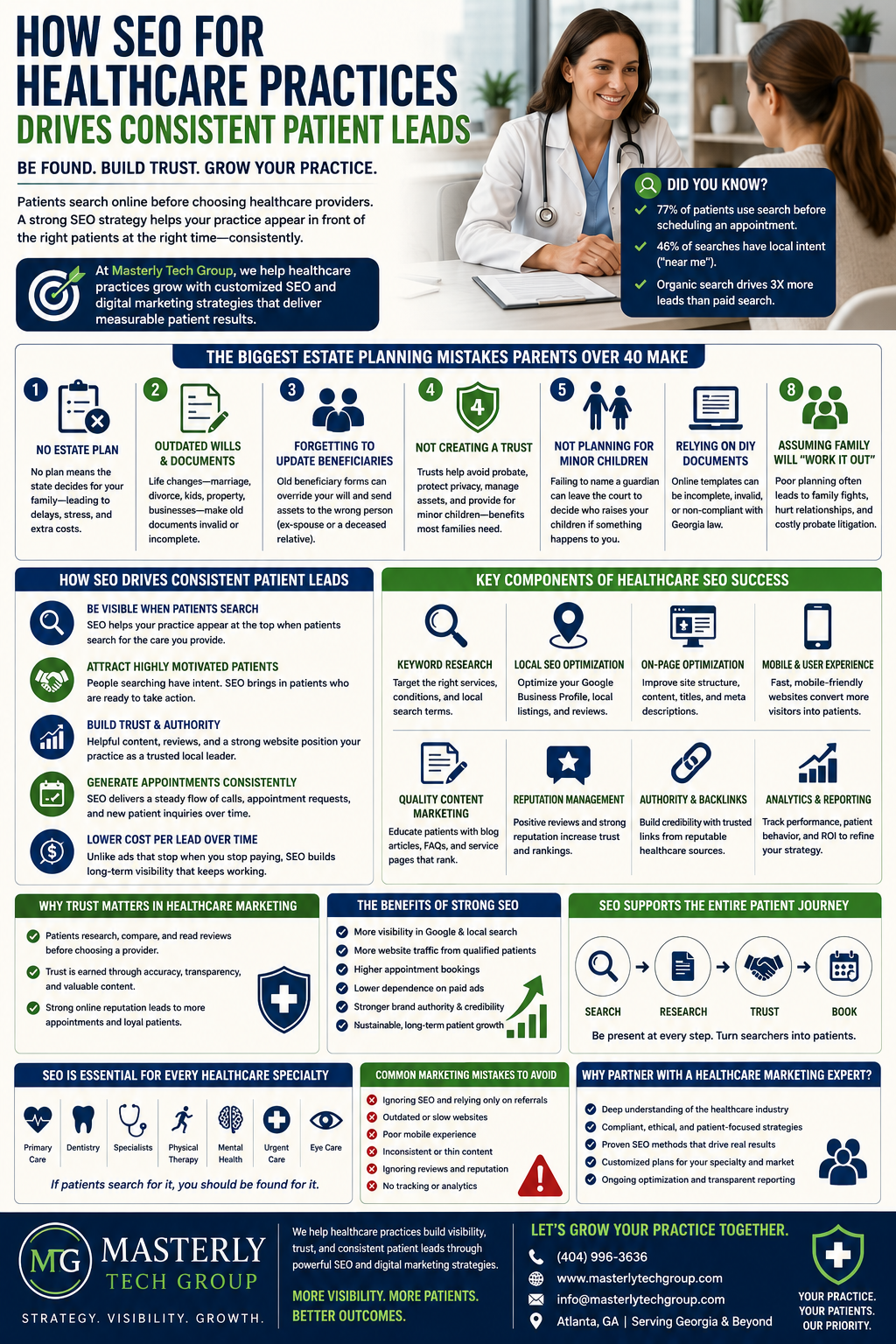
How SEO for Healthcare Practices Drives Consistent Patient Leads
Why Healthcare Practices Can No Longer Ignore Online Visibility
The way patients search for healthcare providers has changed dramatically over the last decade. Most people no longer rely only on referrals from friends or printed directories when looking for medical services. Instead, they turn to search engines, online reviews, and healthcare websites to help them make decisions about who they trust with their care. For healthcare practices trying to grow consistently, visibility online has become just as important as reputation within the local community.
Many healthcare organizations invest heavily in traditional advertising without realizing how much patient behavior has shifted toward digital platforms. Patients now research symptoms, compare providers, read reviews, and book appointments online before ever making a phone call. If a practice does not appear prominently in search results, potential patients may never discover the services it offers.
At Masterly Tech Group, we understand that healthcare marketing is not simply about clicks or impressions. It is about building trust, creating long-term patient relationships, and helping healthcare providers connect with the right audiences at the right time. Effective healthcare seo services help medical practices create a reliable stream of patient inquiries while strengthening long-term brand visibility.
Healthcare marketing today requires more than occasional social media posts or paid ads. It requires a complete digital strategy designed specifically for the healthcare sector and the unique challenges medical organizations face in competitive markets.
The Connection Between SEO and Patient Acquisition
Search engine optimization plays a major role in patient acquisition because it helps healthcare websites appear when potential patients actively search for care. When someone searches for a local doctor, specialist, dentist, or healthcare service, practices appearing near the top of search results often receive the majority of attention.
SEO focuses on improving:
- Website visibility
- Search engine rankings
- Content relevance
- User experience
- Mobile performance
- Local search presence
Healthcare marketing agencies often emphasize SEO because organic search traffic tends to generate highly motivated patient leads. Unlike some advertising methods that interrupt audiences, search engine optimization connects practices with people already seeking healthcare services.
This creates more consistent patient growth over time while reducing reliance on expensive short-term advertising campaigns.
Why Healthcare SEO Differs From Other Industries
The healthcare industry operates differently from many other business sectors. Patients trust healthcare professionals with deeply personal concerns, which means credibility and trust matter far more than flashy advertising alone.
Healthcare marketing requires:
- Accuracy
- Compliance awareness
- Patient education
- Reputation management
- Sensitive messaging
- Clear communication
Search engines also evaluate healthcare websites carefully because inaccurate medical information can affect public wellbeing. As a result, healthcare digital marketing agency strategies must focus heavily on quality content and trust-building.
Medical practices that attempt generic digital marketing often struggle because healthcare audiences expect professionalism, expertise, and clear communication before scheduling appointments.
Why Consistent SEO Creates Long-Term Growth
Paid advertising can generate quick visibility, but SEO creates sustainable long-term traffic that continues producing results over time.
Healthcare organizations investing in long-term healthcare marketing strategies often benefit from:
- Steady patient acquisition
- Lower advertising dependency
- Increased trust
- Better online authority
- Higher patient engagement
SEO helps practices appear consistently when patients search for treatments, conditions, specialists, or healthcare services. Over time, this visibility strengthens the practice’s reputation within search engines and among healthcare audiences.
Unlike short-lived advertising campaigns, optimized content can continue generating patient inquiries for months or even years.
How Local SEO Helps Medical Practices Grow
Local seo is one of the most important parts of healthcare marketing because most patients search for providers near where they live or work.
A strong local presence helps practices appear in:
- Google Maps
- Local search listings
- “Near me” searches
- Mobile healthcare searches
Healthcare providers who optimize for local search often see stronger patient volume because they become easier to discover during urgent healthcare needs.
This is especially important for:
- Dentists
- Urgent care clinics
- Specialists
- Primary care physicians
- Therapy practices
- Surgical groups
Healthcare marketing companies frequently prioritize local optimization because it directly affects patient acquisition within target geographic areas.
Why Website Content Matters for Healthcare SEO
Content marketing plays a major role in healthcare seo services because patients search online for answers before scheduling appointments.
Educational content helps practices:
- Build trust
- Improve rankings
- Increase website traffic
- Answer patient concerns
- Demonstrate expertise
Patients searching for symptoms, treatments, or procedures often begin with informational queries. Healthcare marketers who create useful content position their clients as trusted authorities within their specialties.
Strong healthcare marketing content may include:
- Blog articles
- Treatment pages
- FAQs
- Procedure explanations
- Patient education resources
Content should feel informative, professional, and easy to understand rather than overly technical or promotional.
Why Trust Is Essential in Healthcare Marketing
Healthcare marketing differs from many industries because patients make decisions based heavily on trust and confidence.
Before scheduling appointments, patients often evaluate:
- Reviews
- Website quality
- Educational content
- Provider experience
- Online reputation
- Communication style
Healthcare brands that appear trustworthy online often experience stronger patient engagement and higher conversion rates.
This is why reputation management plays such an important role in healthcare digital marketing agency services. Negative reviews, outdated websites, or weak online visibility may discourage patients from moving forward.
How SEO Helps Generate Patient Appointments
SEO does not simply increase website traffic. Its real value comes from helping generate patient appointments consistently.
Strong healthcare marketing strategies guide potential patients through every stage of the decision-making process:
- Awareness
- Research
- Trust-building
- Scheduling
- Follow-up engagement
Practices with optimized websites often receive more calls, appointment requests, and online inquiries because patients can easily find information and take action.
Healthcare marketing agencies that focus only on impressions without measuring conversions often miss the bigger picture. Successful SEO should ultimately support measurable patient growth.
The Role of Patient Education in SEO
Patient education is one of the strongest tools healthcare providers can use for long-term online growth.
Educational content helps:
- Build authority
- Improve rankings
- Reduce patient anxiety
- Increase trust
- Support informed decisions
Healthcare organizations that publish helpful information often perform better in search results because search engines value content that answers patient questions effectively.
Educational articles also create opportunities for healthcare companies to connect with patients before competitors do.
Why Healthcare Practices Need Specialized Expertise
Healthcare marketing requires specialized expertise because medical advertising involves unique compliance, ethical, and communication considerations.
A general marketing agency may not fully understand:
- HIPAA awareness
- Patient privacy concerns
- Medical terminology
- Healthcare regulations
- Sensitive healthcare messaging
Healthcare marketing firms with deep healthcare expertise are often better equipped to develop campaigns that balance visibility with professionalism.
At Masterly Tech Group, we understand the healthcare landscape and the challenges practices face when competing online in highly regulated industries.
How Search Engines Evaluate Healthcare Websites
Search engines prioritize healthcare websites that demonstrate trustworthiness, authority, and relevance.
Factors affecting rankings often include:
- Website speed
- Mobile optimization
- Content quality
- Backlink authority
- User experience
- Reputation signals
Healthcare organizations with outdated websites or weak content often struggle to compete even if they offer excellent medical services.
A strong digital strategy focuses not only on rankings but also on creating better experiences for patients visiting the site.
Why Healthcare Practices Struggle Without SEO
Many healthcare providers rely heavily on referrals and word-of-mouth marketing. While referrals remain valuable, relying on them alone can limit long-term patient growth.
Without effective SEO:
- Competitors dominate search results
- Patient acquisition becomes inconsistent
- Advertising costs increase
- Online visibility weakens
- Potential patients choose other providers
Healthcare marketing today requires a balanced combination of organic visibility, paid search, reputation management, and educational content.
Practices ignoring SEO often lose opportunities without even realizing it.
The Difference Between SEO and Paid Search
Paid search advertising creates immediate visibility by placing ads at the top of search results. SEO focuses on long-term organic rankings that continue generating traffic over time.
Both strategies play important roles in healthcare marketing.
Paid search may help:
- Promote new services
- Target competitive keywords
- Generate short-term leads
- Increase immediate visibility
SEO helps:
- Build authority
- Lower long-term acquisition costs
- Increase sustainable traffic
- Strengthen credibility
The strongest healthcare marketing strategies often combine both approaches effectively.
Why Reputation Management Affects SEO
Reputation management directly affects patient behavior and search performance.
Patients often compare:
- Star ratings
- Online reviews
- Testimonials
- Social proof
- Provider responses
Search engines also consider reputation signals when evaluating healthcare websites.
Healthcare marketing companies frequently help practices improve online reviews and strengthen brand credibility because patient trust strongly influences conversion rates.
Even highly ranked websites may struggle if reviews create concerns about quality or professionalism.
How SEO Supports Long-Term Healthcare Success
SEO supports healthcare success because it builds momentum gradually over time.
As websites gain:
- More content
- Better authority
- Stronger backlinks
- Improved user engagement
search visibility often continues improving.
Healthcare organizations investing consistently in SEO may eventually dominate local search results within their specialties. This creates a steady flow of patient inquiries without depending entirely on paid advertising.
Long-term visibility often becomes one of the most valuable digital assets a healthcare practice can develop.
Why Mobile Optimization Matters
Most patients now search for healthcare information on smartphones or tablets.
Healthcare websites that load slowly or display poorly on mobile devices may lose potential patients quickly.
Healthcare digital marketing agency strategies often prioritize:
- Mobile responsiveness
- Fast loading speeds
- Easy navigation
- Simple appointment forms
Patients experiencing frustration during online searches frequently leave and choose competitors instead.
A strong mobile experience supports both SEO performance and patient conversion rates.
Why Healthcare Audiences Expect Professionalism
Healthcare audiences evaluate providers differently than they evaluate many other businesses.
Patients often expect:
- Professional design
- Accurate information
- Clear communication
- Educational value
- Reliable contact information
Outdated or poorly designed websites may reduce confidence even before patients speak with providers directly.
Healthcare marketers must balance professionalism with approachable communication to create stronger patient relationships online.
The Importance of Data Analytics in Healthcare SEO
Data analytics help healthcare marketing agencies understand what strategies generate results.
Important metrics may include:
- Website traffic
- Appointment requests
- Conversion rates
- Bounce rates
- Keyword rankings
- Patient demographics
Analytics allow healthcare companies to refine marketing strategies based on actual performance rather than assumptions.
This helps practices allocate resources more effectively while improving measurable patient growth.
How Content Marketing Builds Authority
Content marketing helps healthcare providers become trusted educational resources within their specialties.
Strong content may answer questions involving:
- Treatments
- Symptoms
- Recovery expectations
- Insurance concerns
- Preventive care
Search engines reward websites that consistently provide useful information for users.
Over time, quality content strengthens both search visibility and patient trust simultaneously.
Why Healthcare Marketing Requires Deep Industry Knowledge
Healthcare marketing agencies need deep industry knowledge because medical decision-making differs from most consumer behavior.
Patients often spend significant time researching providers before scheduling appointments.
Healthcare marketers must understand:
- Patient concerns
- Medical terminology
- Competitive healthcare markets
- Insurance influences
- Treatment sensitivity
A healthcare marketing partner without deep expertise may struggle to create messaging that resonates effectively with healthcare audiences.
The Role of Social Media Campaigns in Healthcare SEO
Social media campaigns may not directly improve rankings, but they can strengthen visibility and audience engagement.
Healthcare organizations often use social platforms to:
- Share educational content
- Promote services
- Build brand recognition
- Increase patient trust
Social engagement may also drive traffic back to optimized healthcare websites, supporting broader digital marketing goals.
Creative campaigns that educate rather than aggressively sell often perform best in the healthcare sector.
Why SEO Helps Smaller Practices Compete
SEO creates opportunities for smaller practices to compete against larger health systems and national healthcare brands.
Strong optimization allows local providers to appear prominently for:
- Specialty searches
- Geographic searches
- Treatment-specific keywords
Private medical practices often benefit significantly from targeted healthcare marketing strategies because local search intent strongly influences patient decisions.
Smaller organizations can build meaningful online authority even within competitive markets.
How Patient Engagement Supports Better Marketing Results
Patient engagement strengthens long-term healthcare marketing success because engaged patients are more likely to:
- Leave reviews
- Refer others
- Return for future care
- Interact with content
Healthcare organizations focusing on communication and education often develop stronger patient relationships overall.
SEO supports engagement by helping patients access valuable information easily throughout the healthcare journey.
Why Healthcare Marketing Is Becoming More Competitive
The healthcare landscape continues evolving rapidly as more providers invest in digital marketing.
Patients now compare:
- Websites
- Reviews
- Provider biographies
- Educational resources
- Online accessibility
Healthcare companies failing to improve online visibility risk losing market share to competitors with stronger digital strategies.
This increased competition is one reason healthcare seo services continue growing in importance across the industry.
The Value of a Proven Track Record
When selecting a healthcare marketing agency, practices should look for firms with a proven track record of success within healthcare environments.
Experience matters because healthcare marketing involves:
- Complex patient behavior
- Regulatory awareness
- Specialized messaging
- Long decision cycles
Healthcare providers often benefit from working with marketing agencies that understand real-world healthcare challenges rather than generic advertising alone.
Why SEO Supports Brand Development
SEO contributes significantly to brand development because repeated visibility builds familiarity and trust over time.
Patients who consistently see a practice appearing in search results often begin associating that organization with authority and reliability.
Strong healthcare brands typically invest in:
- Consistent messaging
- Educational content
- Reputation management
- Search visibility
Brand positioning becomes stronger as practices gain recognition across digital platforms.
How Strategic Marketing Solutions Improve Growth
Strategic marketing solutions help healthcare organizations align their online visibility with long-term business goals.
Effective strategies often involve:
- SEO
- Paid search
- Content marketing
- Social media campaigns
- Reputation management
Healthcare marketing firms focusing on integrated approaches often create more stable patient growth over time.
SEO works best when combined with broader digital marketing efforts supporting consistent visibility and patient engagement.
Why Generic Marketing Approaches Often Fail
Healthcare marketing requires far more nuance than many other industries.
Generic marketing agencies may struggle because they lack:
- Deep healthcare expertise
- Understanding of patient behavior
- Compliance awareness
- Medical communication skills
The right healthcare marketing agency understands the emotional and practical factors influencing patient decisions.
This specialized expertise often makes a major difference in campaign performance.
The Importance of Understanding Target Audiences
Successful healthcare marketing begins with understanding target audiences clearly.
Different patient demographics may respond differently based on:
- Age
- Insurance status
- Medical needs
- Geographic location
- Technology habits
Healthcare marketers use market research and analytics to better understand patient behaviors and preferences.
This allows practices to create more effective messaging and improve patient acquisition strategies.
How SEO Helps Emerging Healthcare Companies
Emerging companies within the healthcare sector often struggle to build recognition initially.
SEO helps newer organizations:
- Increase visibility
- Build authority
- Reach healthcare audiences
- Generate lead generation opportunities
Strong search visibility may allow smaller or newer healthcare companies to compete more effectively against established organizations.
Digital campaigns focused on educational content often help newer brands build trust faster.
Why Healthcare Providers Need a Long-Term Marketing Partner
Healthcare marketing is not a one-time project. Search algorithms, patient behavior, and competitive markets continue evolving constantly.
Healthcare providers benefit from having a marketing partner that can:
- Monitor performance
- Adjust strategies
- Improve rankings
- Manage reputation
- Develop content
Long-term partnerships often produce stronger results than short-term campaigns alone.
At Masterly Tech Group, we believe ongoing collaboration helps healthcare organizations achieve more stable patient growth over time.
Examples of Healthcare Marketing Success
Many well-known healthcare organizations invest heavily in digital marketing strategies.
Companies and organizations such as:
- Cardinal Digital Marketing
- National Vascular Associates
- North American Dental Group
- Performance Health Partners
have demonstrated how strong digital visibility supports patient acquisition and long-term growth.
These examples highlight how healthcare marketing agencies continue shaping the future of patient engagement online.
Why Traditional Advertising Alone Is No Longer Enough
Traditional advertising still plays a role in healthcare marketing, but relying on it exclusively often limits long-term growth opportunities.
Patients increasingly expect:
- Online convenience
- Educational content
- Immediate information
- Mobile accessibility
Healthcare organizations that combine traditional advertising with modern SEO and digital marketing strategies often achieve stronger overall results.
The future of healthcare marketing continues moving toward digital-first patient experiences.
How Healthcare Marketing Supports Better Patient Experiences
Strong healthcare marketing is not simply about attracting new patients. It also improves patient experiences by helping individuals access information more easily.
SEO-supported websites may:
- Simplify scheduling
- Provide educational materials
- Improve communication
- Reduce confusion
Healthcare providers that prioritize patient centric marketing strategies often build stronger long-term relationships with their audiences.
Better digital experiences frequently translate into stronger patient satisfaction and retention.
Why Deep Expertise Matters in Healthcare SEO
Healthcare SEO requires deep expertise because medical searches often involve highly sensitive topics.
Healthcare marketers must understand:
- Patient fears
- Treatment considerations
- Insurance concerns
- Healthcare regulations
Search visibility alone is not enough. Messaging must also build trust and guide patients toward informed decisions.
This balance requires both technical SEO knowledge and healthcare communication experience.
The Growing Importance of Digital Strategy
Digital strategy now influences nearly every stage of patient decision-making.
From search results to online reviews, patients interact with healthcare brands digitally before making appointments.
Healthcare marketing agencies focusing on integrated digital strategy often help practices:
- Improve visibility
- Increase engagement
- Strengthen reputation
- Generate patient appointments
Healthcare providers ignoring digital trends risk falling behind competitors investing more aggressively online.
Why Consistent SEO Creates Predictable Growth
One of the greatest advantages of SEO is consistency.
As rankings improve, healthcare organizations often experience:
- More traffic
- More appointment requests
- More patient inquiries
- Better visibility
Unlike short-term campaigns that disappear when budgets end, SEO continues producing results over time.
This consistency helps practices forecast growth more effectively while supporting long-term healthcare success.
Why Healthcare Organizations Choose Masterly Tech Group
At Masterly Tech Group, we understand that healthcare marketing requires more than technical SEO skills alone. Our team works with healthcare organizations, healthcare providers, and healthcare companies seeking long-term patient acquisition and sustainable online growth. We combine deep industry expertise with strategic marketing solutions designed specifically for the healthcare landscape.
Our healthcare digital marketing agency focuses on helping clients improve visibility, strengthen reputation management, and generate patient appointments through customized SEO and digital marketing strategies. Whether your organization needs content marketing, paid search management, local seo support, or broader healthcare marketing services, we are committed to creating measurable patient growth built around your goals.
As a healthcare marketing partner, we understand the importance of trust, professionalism, and patient engagement in today’s competitive healthcare environment. Our focus remains on helping healthcare clients build stronger online authority while reaching the right target audiences through effective digital campaigns.
Why Healthcare Organizations Need a Strong Brand Strategy for Long-Term Growth
In today’s competitive healthcare landscape, visibility alone is no longer enough to attract and retain patients consistently. Healthcare organizations must also develop a strong brand strategy that communicates trust, professionalism, expertise, and patient-focused care across every digital platform. A leading healthcare marketing agency understands that successful healthcare marketing involves much more than advertisements or website traffic. It requires building long-term credibility with patients, medical professionals, insurance providers, and referral networks. Many of the best healthcare marketing agencies focus heavily on helping healthcare brands create consistent messaging that supports patient trust while strengthening online authority. At Masterly Tech Group, our healthcare marketing team helps clients develop targeted strategies that align with both patient needs and long-term business goals. Whether working with hospitals, specialty clinics, or healthcare companies, strategic branding often becomes one of the most important factors driving sustainable patient acquisition and long-term market visibility.
How Specialized Healthcare Marketing Drives Better Patient Engagement
Healthcare organizations face unique challenges that require far more than generic advertising approaches. A healthcare marketing campaign must speak clearly to healthcare audiences while remaining compliant, informative, and trustworthy. A top healthcare marketing agency understands how to combine performance marketing, SEO, and patient-focused messaging into effective digital campaigns that improve patient engagement and long-term growth. At Masterly Tech Group, our healthcare digital marketing agency works with healthcare providers, health plans, medical device manufacturers, and emerging healthcare companies seeking stronger visibility and measurable results. We help clients create marketing initiatives that support patient acquisition while also strengthening online reputation and search performance. Unlike a traditional medical marketing agency focused only on ads, we believe successful healthcare marketing should combine education, search optimization, and strategic digital visibility. Through our deep healthcare expertise and global network of marketing professionals, we help organizations create scalable strategies designed for the modern healthcare environment and the evolving expectations of today’s healthcare consumers.
Speak With Masterly Tech Group About Healthcare SEO Services
Healthcare organizations that invest in long-term SEO strategies often position themselves for stronger patient acquisition, increased visibility, and more consistent growth over time. Patients continue relying on search engines and digital platforms when selecting providers, which means online visibility is no longer optional for healthcare practices seeking long-term success.
At Masterly Tech Group, our team helps healthcare providers create customized healthcare marketing strategies designed to improve rankings, strengthen online authority, and support measurable patient growth. Whether you operate a private practice, health system, specialty clinic, or emerging healthcare company, our team is prepared to assist with strategic digital marketing solutions tailored to your goals.
Contact Masterly Tech Group at (888) 209-4055 to book a free consultation. We can answer your questions, review your current online presence, and explain how healthcare seo services can help your practice generate consistent patient leads and long-term digital growth.