RevOps: When Revenue Operations Helps Sales, Marketing, and Service Work From One System
Your marketing team is generating leads. Sales is working opportunities. Customer service is helping existing clients. Yet each team may be working from different information, different systems, and different definitions of what happens next.
That creates a revenue problem.
A lead may be handed to sales without enough context. A salesperson may not know which marketing activity brought the opportunity in. A service team may learn something important about a customer that never reaches sales or marketing. Leadership may have reports, but still struggle to understand what is actually happening across the customer journey.
For anyone searching revops semrush u.s demand 3, the practical answer is straightforward: RevOps, short for revenue operations, aligns sales, marketing, and service processes and systems so growing U.S. companies can fix disconnected handoffs, improve lead management, sharpen pipeline visibility, and keep customer information moving across the full journey.
Instead of treating sales operations, marketing operations, and customer success as separate functions, RevOps looks at the systems, processes, data, and ownership connecting the entire revenue journey.
For business leaders and revenue teams dealing with growth, that matters because disconnected systems create lost leads, unclear ownership, unreliable reporting, and a weaker customer experience. This guide explains what RevOps means, where the biggest breakdowns happen between sales, marketing, and service, when it makes sense to build a RevOps function, what a strong RevOps structure includes, why it matters to your brand, and how Masterly Tech helps companies put it into practice.
What Revenue Operations (RevOps) Means
RevOps is an operating approach that connects the teams, processes, technology, and data involved in generating and retaining revenue.
The goal is not simply to add another software platform.
The goal is to create greater alignment around how a customer moves from first interaction to qualified opportunity, sale, onboarding, service, renewal, or another defined outcome.
A simple RevOps structure brings together three major areas:
- Marketing operations: How marketing campaigns, lead sources, forms, content, and other activities create and organize demand.
- Sales operations: How leads become opportunities, how sales teams manage pipelines, and how ownership and stages are defined.
- Customer success and service: How customer information, service interactions, retention activities, and ongoing relationships connect to the larger customer journey.
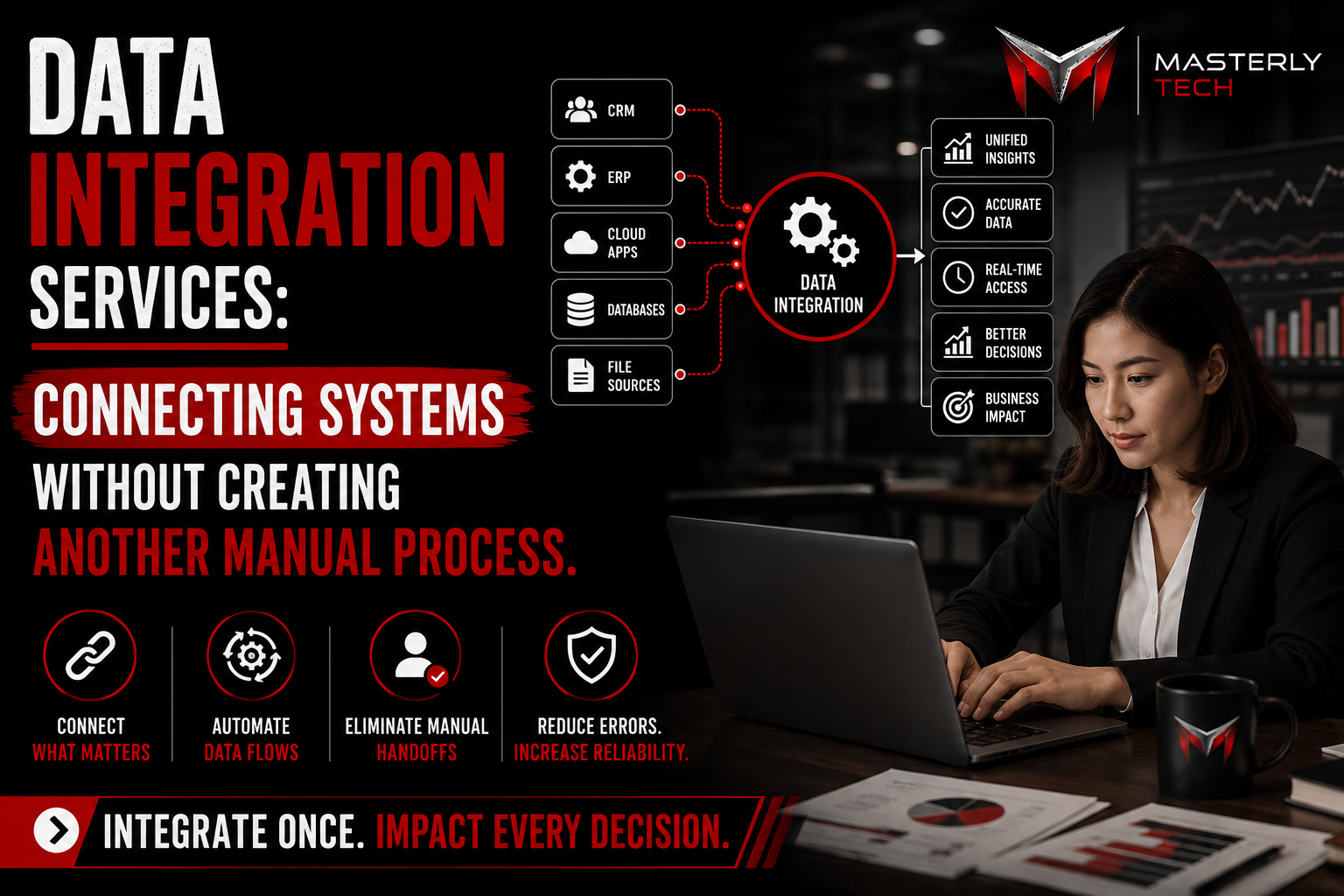
The systems supporting these teams also matter. A CRM, website, analytics platform, marketing automation system, scheduling software, and other tools may each serve an important purpose.
The issue is what happens between them.
When information does not move reliably between systems, employees may spend time entering the same data more than once. Leaders may receive conflicting reports. Sales may question marketing lead quality. Marketing may lack visibility into what happens after a lead is passed to sales.
RevOps addresses the structure around those interactions.
It asks a simple business question:
Can the company clearly see and manage the path from demand to revenue?
Shared lifecycle stages, data, and ownership
One of the most important parts of RevOps is creating shared definitions.
Consider a company where marketing considers a contact a qualified lead after someone downloads a resource. Sales, however, considers a lead qualified only after a conversation confirms a specific business need.
Neither team is necessarily wrong.
The problem is that the company has two different definitions.
RevOps can help establish clearer lifecycle stages and ownership so teams understand what each stage means and what should happen next.
For example, a business might define stages such as:
Lead → Qualified Lead → Sales Opportunity → Client → Customer Success → Renewal
The exact stages should depend on the company's actual sales and service process.
The important part is consistency.
Revenue data should also be structured so leadership can answer practical questions:
- Where are our leads coming from?
- Which leads are becoming qualified opportunities?
- Where are opportunities getting stuck?
- Which team owns the next step?
- What happens after a sale?
- Can marketing, sales, and service see the customer information they need?
When these answers require several spreadsheets and conversations, the company may have an operations problem rather than simply a reporting problem.
Where Sales Team, Marketing, and Service Break Apart
Revenue teams often become disconnected as a company grows.
Marketing focuses on generating demand. Sales focuses on closing business. Service focuses on supporting customers.
Each team can perform its role well while the overall customer journey becomes fragmented.
The lead handoff
A marketing-generated lead may enter the CRM, but nobody may be certain who owns the next action.
Sales may receive the lead without knowing the campaign, page, form, or message that influenced the prospect.
The result can be a slower or less relevant sales conversation.
The pipeline
Sales pipelines can also become difficult to manage when lifecycle stages are unclear.
If one salesperson uses "qualified" to mean a booked meeting while another uses it to mean a prospect who has expressed buying intent, management reports become harder to interpret.
A pipeline should represent the company's actual sales process, not simply a collection of labels inside a CRM.
Customer information
The disconnect can continue after the sale.
A customer may tell the service team about a problem, preference, or business need. If that information stays inside a separate system, the sales and marketing teams may not have the context they need.
Customers experience the business as one company.
They do not experience separate departments.
That is why disconnected internal systems can become an external brand problem.
A prospect who receives repeated questions they already answered may see the company as disorganized. A customer who has to repeat their history to different teams may lose confidence. A sales representative working without current service information may have a less informed conversation.
RevOps helps leadership look at these issues as one connected revenue system.
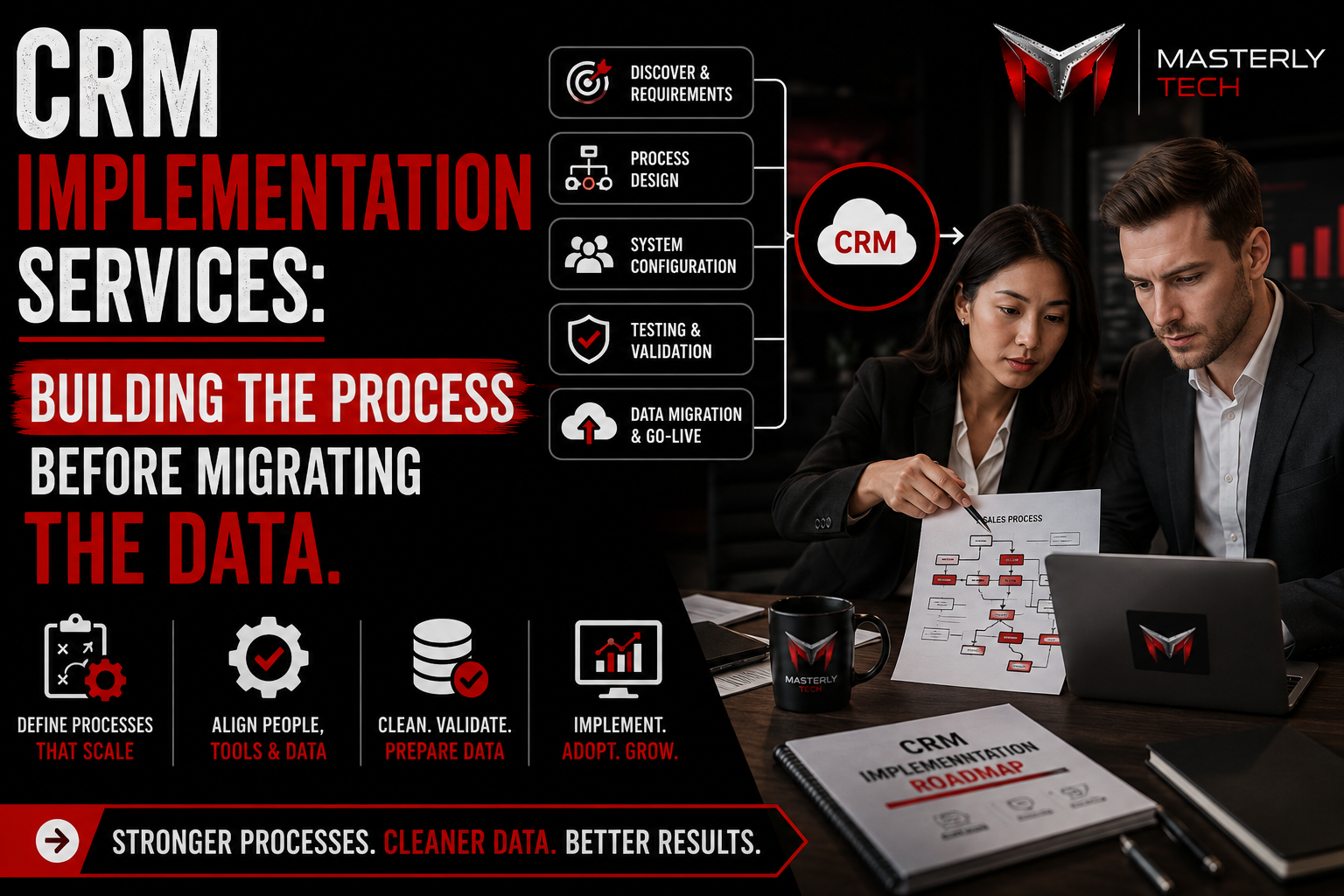
Masterly Tech's existing CRM strategy work similarly focuses on connecting marketing, sales, service, and customer success around shared data, customer journeys, CRM workflows, and ownership.
When RevOps Is Worth Building
RevOps does not need to mean creating a large new department.
For some businesses, the need becomes clear when growth makes existing processes harder to manage.
Signs may include:
Marketing and sales disagree about lead quality.
The teams are using different definitions or looking at different data.
Leads are being lost during handoffs.
A lead enters the system, but the next action is unclear.
Leadership cannot trust revenue reports.
Different systems produce different numbers, or teams calculate key stages differently.
Employees repeatedly move information between systems.
Manual data entry and duplicate records consume time.
Sales cannot see the full customer context.
Important marketing or service information is difficult to access.
Service information does not flow back into the revenue process.
Customer feedback, issues, or opportunities remain isolated from other teams.
The company has added technology without a clear operating structure.
More tools have created more places for information to live without creating a clearer customer journey.
These problems can become more expensive as the company grows.
Adding more people to a disconnected process does not necessarily fix the process. It may simply create more people who have to work around it.
The better question is whether the company's revenue systems, processes, and ownership need to be redesigned around the customer journey.
What a Strong RevOps Structure Should Connect
A practical RevOps structure should connect the parts of the business that influence revenue.
That can include:
Customer journey: A shared view of what happens from first interaction through sales and ongoing service.
CRM structure: Clear records, ownership, pipeline stages, and information requirements.
Revenue data: Consistent information that leadership can use for actionable insights and to understand performance.
Marketing operations: Lead sources, campaign activity, qualification, and handoff processes.
Sales operations: Pipeline management, opportunity stages, ownership, follow-up, and the sales processes that support consistent execution.
Customer success: Customer information and service activity that can inform retention and future opportunities.
Automation: Defined workflows that reduce repetitive manual work where automation makes business sense.
Analytics: Measurement that connects activity to meaningful business questions and supports performance insights.
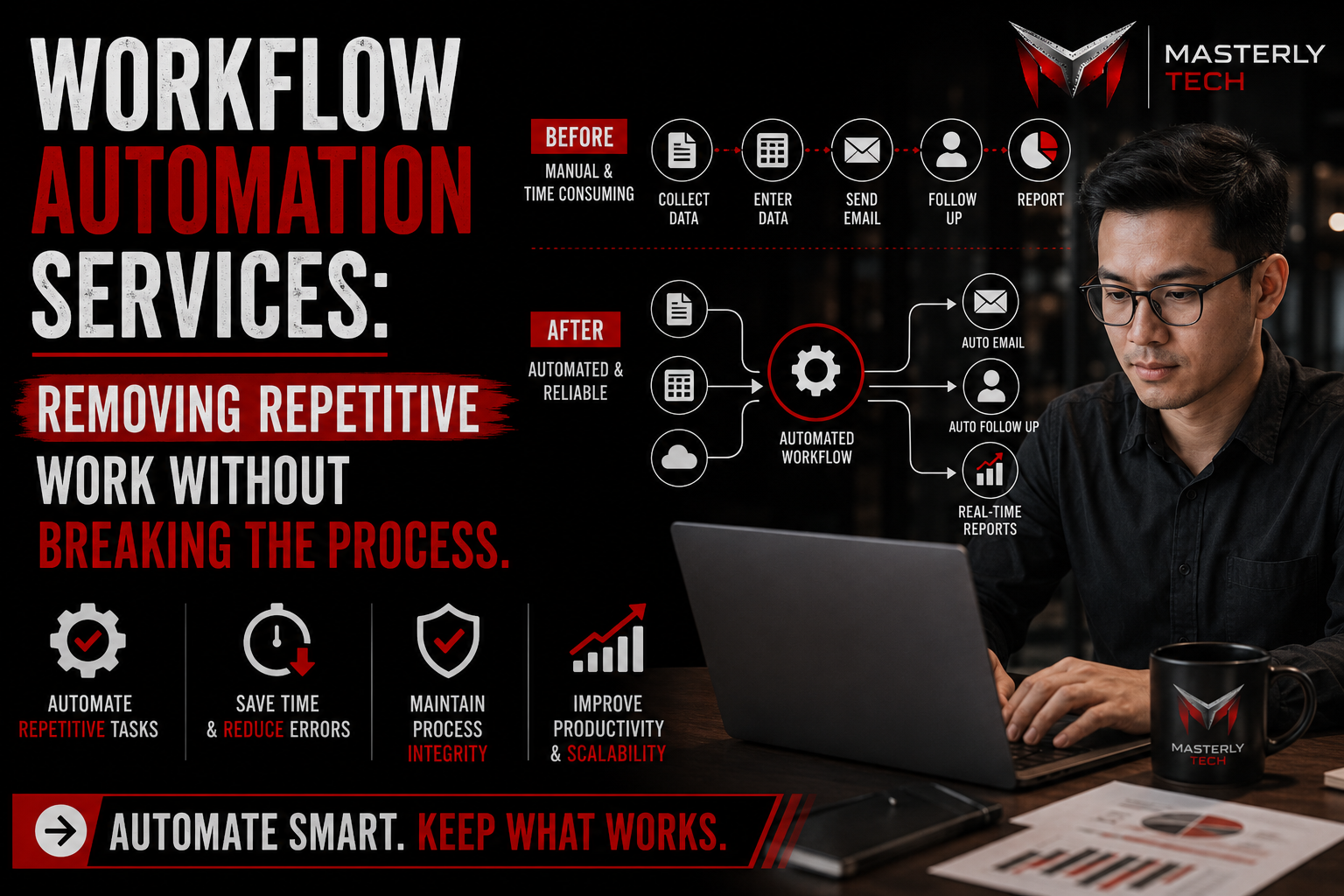
Masterly Tech already provides services across CRM strategy, workflow automation, analytics, website systems, and digital marketing. Its CRM strategy work focuses on designing the client journey before configuring the technology, while its automation guidance emphasizes improving processes rather than simply adding more software.
For businesses considering RevOps, that distinction matters.
The technology should support the operating model.
It should not become the operating model.
Why RevOps Matters to Your Brand
Revenue operations may sound like an internal business function, but customers can feel its effects.
A customer may never know which CRM you use.
They will know if sales understands their needs.
They will know if service has the right context.
They will know if marketing keeps sending irrelevant messages.
They will know if they have to explain the same situation more than once.
Every one of these interactions contributes to the company's reputation.
A connected revenue system can help teams work from a clearer view of the customer. That can support a more consistent experience across marketing, sales, and service.
The value of RevOps is therefore not limited to internal efficiency.
It can also support a more organized customer experience.
How Masterly Tech Can Help
Masterly Tech works with businesses that need their digital systems and customer journey to work together more clearly across the wider sales organization.
Rather than treating RevOps as a software installation, the focus should begin with the business process.
Where do leads enter?
How are they qualified?
Who owns each stage?
What information should sales have?
What does the customer experience after the sale?
Which systems hold important revenue data?
Where are manual handoffs creating friction?
Which workflows should be automated so teams can operate effectively?
Those questions provide a stronger starting point for deciding what the company actually needs, while helping marketing, sales, and service connect strategy with execution.
Masterly Tech's current services include CRM strategy, workflow automation, analytics, website development, SEO, advertising, and related digital systems, with room for continuous improvement in process and workflow refinement.
Its published CRM and automation work also emphasizes connecting lead flow, CRM workflows, follow-up, pipeline management, and customer journey processes instead of treating individual tools as isolated solutions.
For leadership teams, that means the conversation can stay focused on the business problem first.
The objective is not to automate everything.
It is to create a clearer structure for how marketing, sales, and service work together.
How RevOps Connects Sales Operations With Revenue Leadership
RevOps brings revenue operations, sales operations, and sales leadership into a more connected operating model. Instead of allowing each sales organization to manage its own processes and data, RevOps creates clearer connections between the sales team, sales processes, sales engagement, marketing, and customer success. This gives senior leadership better performance insights and helps teams understand whether their pipeline, conversion rates, and customer activity are supporting the company's broader goals. For a growing business, the value is not simply having more data. It is being able to connect strategy with the information leaders use to make decisions, manage performance expectations, and operate effectively.
Turning Revenue Data Into Actionable Insights
A strong RevOps structure helps businesses turn scattered revenue data into actionable insights. Sales activity, customer information, marketing performance, conversion rates, and pipeline data can provide a clearer view of what is happening across the customer journey. BI tools and connected reporting can unify cross-functional metrics such as Net Revenue Retention (NRR) and Customer Acquisition Cost (CAC), making those performance insights easier for a senior manager and senior leadership to review, especially in a recurring revenue environment experience. Instead of relying on disconnected reports or assumptions, leadership can use meaningful results to identify gaps in the sales process, evaluate opportunities for continuous improvement, and make better decisions about where the business should focus.
RevOps Helps Leaders See the Sales Process More Clearly
Revenue operations becomes especially valuable when a company is growing and its sales organization becomes more complex. Leaders may need better visibility into pipeline movement, forecast calls, sales engagement, customer success, and opportunities for market expansion. In a recurring revenue environment, the connection between acquisition, retention, and customer success becomes even more important. RevOps can help leadership evaluate whether sales processes and revenue data are aligned with the company's growth plans, rather than viewing each team or customer interaction separately
Connecting RevOps With Digital Marketing and Customer Acquisition
RevOps also connects with digital marketing because marketing activity is only one part of the path to revenue. Businesses need to understand what happens after someone discovers the company through search, advertising, content, or another channel. SEO, search visibility, and Google Ads may bring more potential customers into the business, but the sales organization still needs a clear process for handling those opportunities. When marketing, sales, and customer success share better data and lifecycle definitions, leaders can evaluate conversion rates, customer movement, and the quality of opportunities rather than focusing only on traffic or lead volume.
Connecting Search Visibility to Revenue Outcomes
Search visibility can generate attention, but traffic alone does not create a predictable revenue process. Businesses may use keyword research tools, search data, organic results, Google Ads, and other digital marketing tools to understand how customers search for solutions. Search volume, keyword difficulty, search intent, and user intent can help inform content planning, but those metrics should be viewed alongside business outcomes. A high-volume keyword may produce fewer meaningful results than a more specific search performed by a customer closer to making a decision. RevOps helps connect this type of marketing data with sales activity, customer behavior, and conversion rates so leadership can evaluate what is actually contributing to business growth.
Why AI Visibility Should Connect to the Revenue Process
Search behavior is also changing as customers use Google, AI Overviews, and other AI-powered search experiences to compare businesses and solutions. AI visibility can influence how potential customers discover a company, but visibility should not be treated as the final measure of success. The more important question is what happens after a prospect finds the business. RevOps can help connect marketing and search activity with sales engagement, customer data, conversion rates, and the broader revenue process. This gives leadership a more complete view of how digital visibility contributes to acquiring and serving customers.
Search Data Can Support Better Revenue Decisions
Search data can help a business understand how potential customers look for solutions, but keyword search volume should not be the only measure of opportunity. Tools such as Google Keyword Planner, Keyword Magic Tool, and other keyword tools can show monthly search volume, keyword difficulty data, and related searches. A keyword with 1,000 volume is searched about 1,000 times monthly, which gives a practical average number to work from. These numbers can differ based on the chosen location, language, device, and other factors, so a keyword with higher search volumes is not automatically worth targeting. Search volume can also shift with seasons and consumer habits. A more specific phrase may have fewer searches but less competition and stronger commercial intent.
For a smaller site, this distinction can be especially important. Finding keywords is not simply about choosing the highest-volume term. Search intent matters. An informational search may bring someone researching a topic, while a more specific search may come from someone comparing options or looking for search engine optimization solutions. The results page can also change over time as Google, AI Overviews, and other search experiences evolve, whether the query leads to a service page or a blog post.
RevOps gives leadership a way to connect this marketing information with what happens after the search. The goal is to understand whether digital activity contributes to more customers, qualified opportunities, and meaningful revenue outcomes.
RevOps Must Reflect the Company's Market and Revenue Model
Revenue operations should be designed around the company's actual business environment. A recurring revenue environment may require different performance measures, customer success processes, and leadership reviews than a business focused mainly on one-time transactions. Quarterly business reviews can help leadership examine performance trends, customer movement, pipeline health, and changing market conditions.
Local market conditions can also affect how a company evaluates its sales organization. Local market benchmarks may differ from benchmarks in other countries, and compensation ranges can vary based on location, experience, the same role, company size, and other factors. Compensation practices and compensation philosophy should therefore be evaluated in the context of applicable regulations and regulatory requirements rather than copied from another market.
For RevOps leaders, the important point is that benchmarks are inputs, not answers. The right structure is determined based on the company's revenue model, sales processes, customers, market, and performance expectations.
Compare RevOps Technology Around Business Needs
Companies comparing RevOps platforms should look beyond feature lists. Technology research, including reports such as the Forrester Wave, can provide useful context when evaluating software categories, but a highly rated platform is not automatically the right choice for every business.
The better question is whether the technology supports the company's specific revenue process. Leadership should consider how the system handles sales data, customer information, lifecycle stages, reporting, automation, integrations, and customer success workflows. The right choice can differ based on company size, revenue model, existing systems, market, operational complexity, and the company's specific site environment when reviewing integrations, reporting, and keyword-related visibility data.
This is particularly important when a business is comparing options for a smaller sales organization or a growing company. More features do not necessarily create better results. The technology should support the way the business needs to operate and give teams clearer information for making decisions.

RevOps FAQ
What does RevOps mean?
RevOps means revenue operations. It connects the people, processes, technology, and data used across marketing, sales, and customer service to create a more coordinated revenue process.
How is RevOps different from sales operations?
Sales operations primarily supports the sales function. RevOps has a broader scope and connects sales operations with marketing operations, customer success, service, technology, data, and shared revenue processes.
When should a company build a RevOps function?
A company should consider RevOps when growth creates disconnected systems, unclear ownership, inconsistent lifecycle stages, unreliable revenue data, or repeated problems between marketing, sales, and service.
Does RevOps require a new software platform?
Not necessarily. RevOps is an operating structure, not simply a software product. Existing systems may be improved, connected, or reorganized based on the company's needs.
Can RevOps help with CRM problems?
Yes. RevOps can help clarify CRM ownership, lifecycle stages, data requirements, pipeline structure, workflows, and how information moves between revenue teams.
Is RevOps only for large companies?
No. The need for RevOps depends more on operational complexity than company size. A growing company may benefit when disconnected systems and processes begin creating problems across the customer journey.
Discuss Your Revenue Operations Structure With Masterly Tech
If sales, marketing, and service are working from different systems or different definitions of the customer journey, the problem may be larger than CRM configuration.
Masterly Tech can help you examine whether a RevOps structure can improve the company's lead-to-client system.
Call (888) 209-4055 to discuss whether a RevOps structure can improve the company’s lead-to-client system.