Data Strategy: Deciding What Data the Business Needs
Growing businesses often have more data than they can use.
Customer details may live in a CRM. Website forms may collect another version of the same information. Operations teams may maintain spreadsheets. Service platforms may hold account history, while reporting tools produce numbers that do not match.
When leaders ask a basic question about leads, clients, sales, service delivery, or business performance, different systems may provide different answers.
This is not only a reporting problem. It is a data strategy problem.
Masterly Tech helps founders, executives, marketing leaders, and operations teams decide what data the business needs, where it should live, who should own it, and how it should support decisions. Our done-for-you data strategy services bring structure to scattered information before the organization invests in another platform, dashboard, or automation.
More Data Does Not Always Create Better Decisions
Businesses collect data through many routine activities.
A person visits the website, completes a form, schedules a call, receives a proposal, becomes a client, uses a service, makes a payment, or requests support. Each activity may create a separate record in a different system.
The business may have thousands of records and still lack a reliable answer to an important question.
Leaders may not know how many qualified inquiries entered the company, which services clients purchased, how long work takes to complete, or why customers stop engaging. Employees may spend hours combining spreadsheets before a meeting, only to debate whether the figures are accurate.
Collecting more information will not solve these problems if the business has not defined what matters.
A clear data strategy connects information to business priorities. It gives the organization a reason for collecting each important data point, shows why a data strategy is important for managing data effectively, and provides a plan for using it; 85% of companies that fail to manage data will not achieve digital transformation.
A Business Data Strategy Starts With Real Decisions
Data becomes useful when it supports a decision.
Executives may need information about revenue, service demand, capacity, or risk. Marketing leaders may need to understand how qualified prospects enter the business. Operations teams may need visibility into handoffs, completion times, workload, or service quality.
Each decision requires different information.
A business data strategy defines which questions matter and which data can support reliable answers, so the data strategy aligns with business goals and business objectives. It also prevents teams from collecting information simply because a platform offers another field, report, or tracking option.
Masterly Tech works with stakeholders to identify the decisions that data should support. We then review whether the current systems collect the right information in a consistent form.
This approach helps keep the project connected to business value rather than turning it into a technical exercise, especially since 41% of leaders say their data strategy lacks alignment with business objectives.
Data Silos Create Operational Friction
When Data Silos spread important information across systems, employees must fill the gaps manually.
A team member may copy form submissions into a spreadsheet. Another employee may update the CRM but forget to change the service platform. Managers may ask employees to prepare separate reports because no shared source provides the needed view.
These workarounds can become normal, even when they consume time, create errors, and make Data Silos costly and time-consuming to process.
Duplicate records may show different contact details. Status labels may have different meanings across departments. Employees may update one system while reports continue using another. Important client or service information may remain inside an employee’s private file.
This friction affects speed, consistency, and confidence.
Masterly Tech reviews where data enters the business, how Data Flow works, where data access breaks down, and where manual work is required. We help identify which issues result from missing connections, unclear rules, weak ownership, or unnecessary duplication.
A Data Management Strategy Creates Consistency
Data management includes how important information is collected, stored, maintained, accessed, used, and governed across its data lifecycle.
It may address customer records, service details, transaction information, operational activity, campaign sources, employee inputs, or other information that supports the business.
The goal is not to place every piece of data into one system. Different platforms may need to perform different functions. The goal is to make the role of each system clear. Clear data architecture, data infrastructure, and data storage provide the foundation for consistent use of information.
The organization should know which platform holds the trusted record for a specific type of information. It should also know when data needs to move between systems and which employees may update it. Poor data quality costs businesses an average of $15 million annually, while high-quality data can save the same amount.
Masterly Tech helps clients clarify these relationships. This creates a more dependable foundation for reporting, automation, and decision support, with processes designed to ensure data quality and build high quality data and quality data for decision support.
Data Ownership Prevents Important Records From Being Ignored
Data quality is difficult to maintain when no one owns the information.
A team may collect contact details without deciding who corrects errors. Service information may become outdated because the responsible department assumes another team maintains it. Reports may depend on fields that employees do not understand or use consistently.
Data ownership gives a person or team responsibility for the meaning, quality, access, and proper use of important information.
Ownership does not mean one department controls all data. It means responsibilities are clear.
A business may need different owners for customer information, financial records, service activity, employee data, or operational reporting, with ownership often sitting across business units rather than in one central group. These owners should understand which decisions rely on the data and which standards must be maintained.
Masterly Tech helps organizations identify where ownership is missing or unclear. We can recommend a practical structure that reflects how the business actually operates and supports a unified data strategy.
Data Governance Should Fit the Business
Data governance establishes the roles, rules, and decision rights, including clear data governance policies, that guide how information is managed.
For a growing business, governance does not need to become a large program filled with unnecessary meetings and documents. It should address the areas where unclear practices create risk, delay, or inconsistent decisions.
Relevant questions may include:
- Who can create or change important fields?
- Which system contains the trusted record?
- Who approves new data collection?
- How are duplicate records handled?
- Which employees can access sensitive information needed to keep secure data in the right hands and support data security?
- What happens when a data issue is discovered?
- Who decides whether a new system is allowed to collect or store data?
- How long should information remain available?
Clear answers help teams work more consistently. Good governance also supports regulatory compliance, including privacy regulations like GDPR and CCPA, helps reduce the risk of data breaches, and protects data integrity.
Masterly Tech helps develop data governance recommendations that match the organization’s size, systems, responsibilities, and business needs.
Integration Should Serve a Defined Purpose
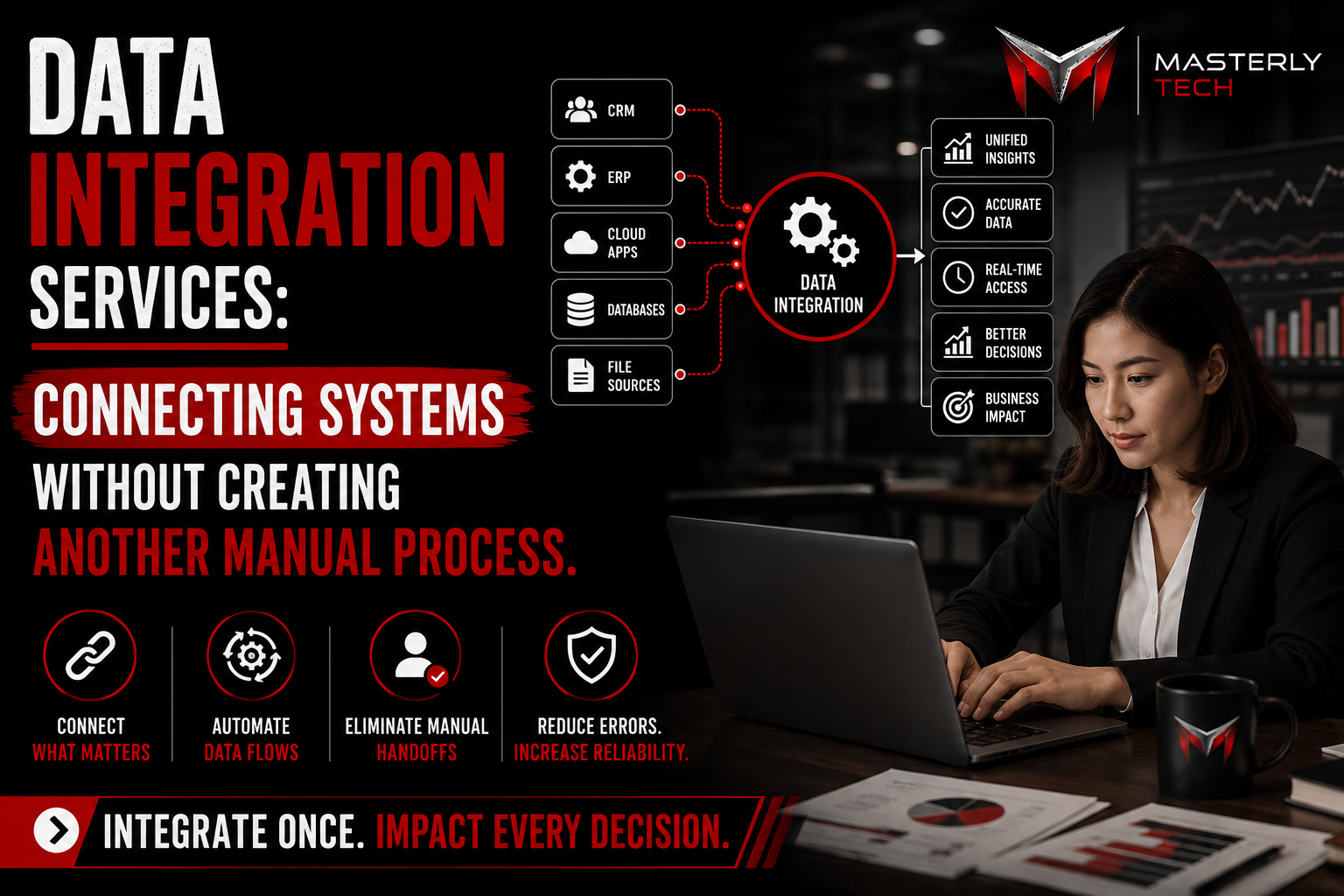
Connecting systems can reduce manual work, but Data Integration should not move information without a clear reason.
Before two platforms exchange data, the business should understand which information needs to move, when it should move, and which system remains responsible for the trusted record. Integration should help the business use the same data consistently across systems.
Poorly planned integration can create duplicate contacts, overwrite accurate information, or send incomplete records into important workflows. It can also make errors harder to trace because employees do not know where the original data came from.
Masterly Tech reviews system connections within the larger data strategy. We identify which information must be shared to support real processes and where a connection may create more complexity than value.
This helps the organization use integration to support clear workflows instead of simply creating more technical activity. Better connections can also improve operational efficiency and reduce costs by increasing data processing efficiency.
Reliable Reporting Depends on Shared Definitions
Two reports can use the same word and still measure different things.
Marketing may define a lead as anyone who submits a form. Sales may count only prospects who meet certain qualifications. Operations may count a new client after an agreement is signed, while finance may count the client after payment is received.
Each definition may serve a valid purpose, but leaders need to know the difference.
Without shared definitions, teams can spend more time debating the numbers than using them. Dashboards may look polished while presenting measures that do not support the same business questions.
A business data strategy clarifies important terms, sources, and calculation rules so the organization can better support data analytics and turn shared definitions into more reliable data insights. It establishes what the organization means when it refers to a lead, client, active account, completed service, renewal, or another key measure.
Masterly Tech helps leaders define these measures and identify which systems contain the required information before analyzing data for reporting or dashboards.
Decision Support Requires the Right Level of Detail
Leaders do not need every available data point.
They need actionable insights that help them understand performance, identify a concern, allocate resources, or choose a next step. Excessive reports can hide the measures that deserve attention.
At the same time, information that is too broad may not explain why a result changed.
Effective decision support provides the right level of detail for the person using it, which helps produce data-driven insights and supports advanced analytics. An executive may need a clear summary with the ability to investigate unusual changes. A department leader may need more detail about workload, handoffs, or service activity. An employee may need information related to a specific account or task.
Masterly Tech considers these different needs when developing data and reporting recommendations. This helps the business avoid forcing every stakeholder to use the same report. Robust strategies also support innovation through analytics and AI, and high-quality data is crucial for effective AI applications.
Data Quality Affects the Client Experience
Internal data problems can become visible to clients, and inconsistent data is often what causes the disconnect.
A customer may receive a message with the wrong name, repeat information already provided, or be contacted about a service that has been completed. Two employees may request the same document. A current client may receive communication intended for a new prospect.
These errors can make the organization appear disconnected. Inaccurate or inconsistent data can lead to misguided business strategies and missed opportunities.
Reliable data supports a more consistent experience by giving employees access to accurate information at the right time. It also helps automated messages and internal alerts reflect the client’s actual stage.
Masterly Tech reviews how data quality issues affect both internal work and client-facing interactions. We help identify where better standards, ownership, or system connections may improve consistency.
Done-for-You Data Strategy Services
Masterly Tech provides done-for-you services for creating a data strategy for organizations that need a comprehensive data strategy across scattered systems.
We begin by understanding the business decisions, operational processes, systems, and stakeholders involved, starting with the current data landscape and the key data assets that support it. We then review how important information is collected, stored, moved, and used.
The key components and components of a data strategy we cover may include:
- Identifying the business questions data should answer
- Creating an inventory of important data sources
- Clarifying the purpose of each system
- Identifying duplicate or conflicting records
- Reviewing data definitions and field usage across enterprise data, including structured data, unstructured data, and raw data where relevant
- Recommending trusted sources for key information
- Clarifying data ownership
- Reviewing integration and manual data movement
- Identifying reporting gaps
- Developing practical data governance recommendations
- Reviewing access and approval responsibilities
- Reviewing data processes and data management practices, including where limited maturity means new policies or training are needed
- Prioritizing issues based on business impact
- Creating a data strategy roadmap with business goals and proposed technologies
The final recommendations are designed around the organization’s actual needs and capacity. Training, skill development, and data literacy also matter, since limited data literacy can prevent true data democratization. They provide a clearer foundation for future technology decisions and support future data initiatives.
Plan the Data Before Adding Technology
A new platform can create more information without resolving current problems.
Before purchasing another system, the business should start with an effective data strategy or a good data strategy built around all your data, not just another tool. The business should understand what data it needs, which current tools already collect it, and how the information will support decisions. The organization should also know who will own the platform and maintain the records it creates.
The same concern applies to dashboards and automation. In fact, 85% of companies fail to manage data effectively and miss digital transformation goals.
A dashboard cannot correct unclear definitions or unreliable source data. Automation can move inaccurate information faster if the underlying rules have not been addressed.
Masterly Tech helps organizations examine these issues first. A clear data management strategy can reveal whether the next priority is a new platform, a better connection, cleaner records, stronger ownership, or a more useful report, because planning first makes managing data across existing systems easier before expanding technology.

Frequently Asked Questions About Data Strategy
What is a data strategy?
A data strategy defines what information a business needs, how it should be managed, and how it will support operations, decisions, and competitive advantage.
What is a business data strategy?
A business data strategy connects data priorities, systems, ownership, and reporting with the organization’s goals. It should also align with the wider business strategy so data work supports the same commercial direction, decisions, and outcomes.
What is a data management strategy?
A data management strategy defines how information should be collected, stored, maintained, accessed, and shared. A modern data strategy also considers how data is integrated across systems and governed over time so it stays usable as needs change.
What is data governance?
Data governance establishes the roles, rules, standards, and decision rights used to manage important information, and it supports successful data strategy implementation by clarifying standards and decision rights.
Why is data ownership important?
Data ownership clarifies who is responsible for the meaning, quality, access, and proper use of specific information.
Can Masterly Tech review our current systems?
Yes. Masterly Tech can review how data is collected, stored, shared, and used across your current platforms, identify Data Silos, and assess whether a dedicated data team is needed to support improvement.
Do we need to replace our current platforms?
Not necessarily. The review may identify ways to improve current systems before adding or replacing technology, because implementing a data strategy does not always start with replacing the platform.
Can a data strategy improve reporting?
Yes. It can clarify definitions, trusted sources, ownership, and the information required for reliable reports, so reporting improves when business users can rely on consistent definitions and trusted sources.
Can Masterly Tech help before we build a new dashboard?
Yes. We can help define what the dashboard should measure and whether the source data is ready to support it.
Request a Data and Systems Review Before Adding Another Platform, Dashboard, or Automation
Masterly Tech helps organizations build an enterprise data strategy before adding another platform, dashboard, or automation, clarifying the information your business needs, where it should live, who should own it, and how it should support better decisions.
Visit Masterly Tech or call (888) 209-4055 to request a business data strategy and systems review.