
Google Search Console Indexing Issues: How Businesses Should Diagnose Pages Google Will Not Add
Important Pages Cannot Produce Results When Google Will Not Index Them
Your business may have strong service pages, useful content, and a professional website, yet some of your most important URLs may never appear in Google search results. When this happens, the problem may not be your offer or your writing. It may be caused by Google Search Console indexing issues—situations where Google discovers, crawls, or evaluates a URL but does not add it to google's index. Pages need to be included in google's index, which works like a library catalog for web pages, before they can reliably appear in search results.
A missing page cannot attract organic traffic, generate leads, or support the rest of your website. For business owners, marketers, and website managers, that can directly limit visibility for the services, products, locations, or information potential customers are trying to find.
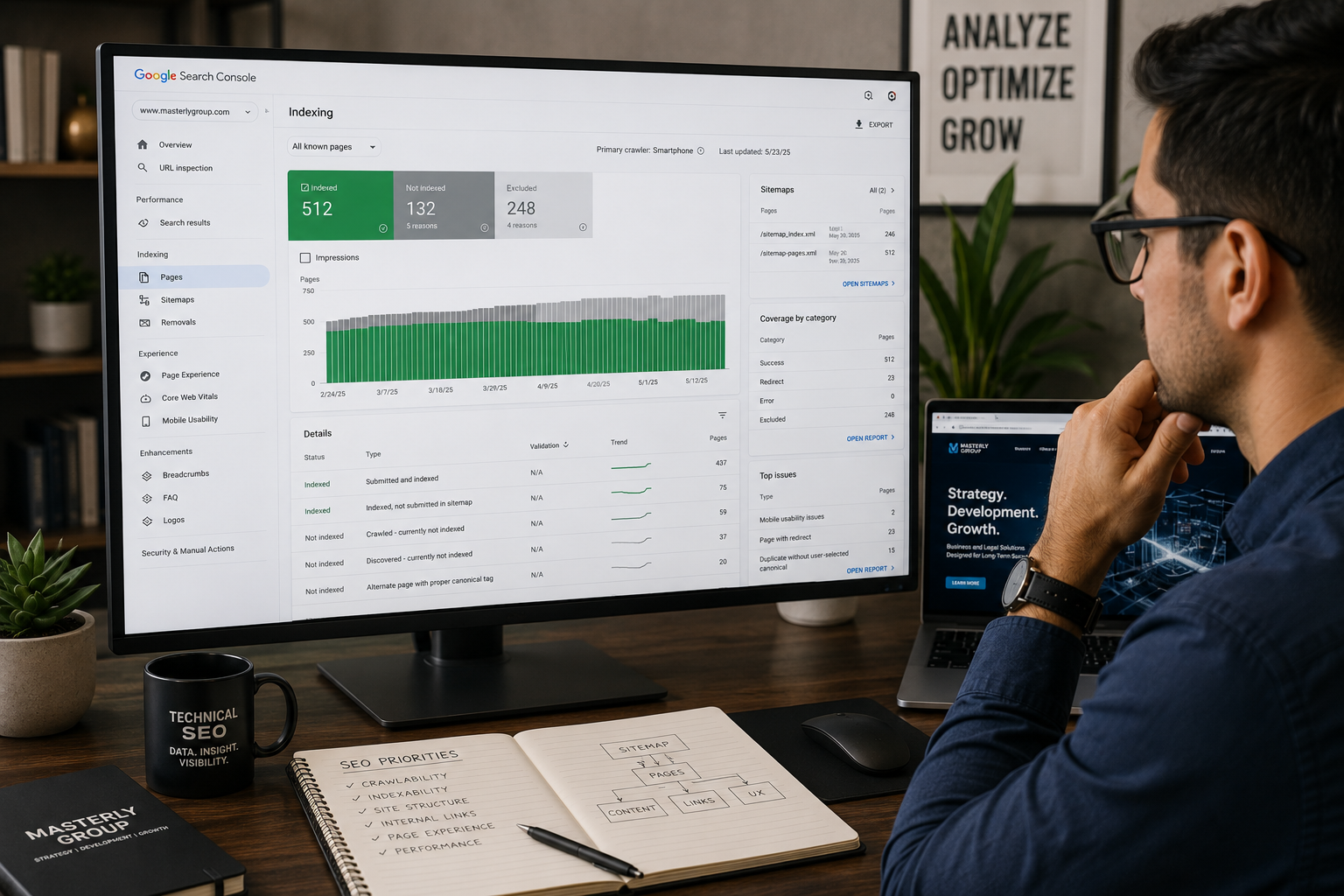
Search Console may show that a page was discovered, crawled, excluded, marked as crawled currently not indexed or discovered currently not indexed, affected by sitemap or canonical tag problems, or assigned a different canonical URL. Each status points to a different technical or content-related issue, and this page explains how to diagnose those indexing signals, understand what they mean for search performance, and evaluate when professional SEO support may be needed.
Why Google Search Console Indexing Issues Matter to Your Business
A website is often one of a company’s most valuable sales and marketing assets. Every important page should have a clear purpose, such as educating prospects, supporting a service, building authority, or encouraging a visitor to contact the business.
When Google Search Console indexing issues affect those pages, your investment may not reach the people searching for what you offer or fully address user needs. The page may exist on your website, but it can remain nearly invisible in organic search. That also means missed ranking opportunity for the pages that matter most.
Indexing concerns may affect:
- Service and product pages
- Location pages
- Blog articles
- Landing pages
- Category pages
- Recently updated content
- Pages created during a website redesign
The longer a valuable page remains excluded, the longer your business may miss opportunities to earn visibility and attract qualified users.
A Page Not Indexed May Signal a Larger Website Problem
A page not indexed message does not always mean there is one simple error. It may reflect how Google views the page, how the site is structured, or how technical signals are being sent.
In some cases, the issue affects only one URL. In others, the same pattern may appear across an entire section of the website.
Masterly Tech evaluates the page within the larger site instead of reviewing the status message alone. This may include examining internal links, crawl access, duplicate content signals, page quality, site architecture, redirects, and technical directives.
A detailed review helps determine whether the problem is isolated or part of a broader technical SEO concern.
Understanding Crawled Currently Not Indexed
The status crawled currently not indexed generally means Google accessed the page but did not add it to the index at that time.
This may occur when the page appears too similar to another URL, provides limited unique value, reflects thin content, sends unclear canonical signals, or is not well supported by the rest of the website. It may also occur when Google needs more time to evaluate the page, which is why content quality and improving content quality are often part of the fix.
Google is more likely to keep a page indexed when the content is unique, offers personal experience, and meets user expectations.
For a business owner, the important question is not simply what the status means. The greater concern is why an important business page was crawled but not selected for indexing.
Masterly Tech reviews the content, structure, internal linking, technical setup, and relationship between the affected page and other URLs. Our goal is to identify the factors that may be limiting the page’s search visibility.
Understanding Discovered Currently Not Indexed
The status discovered currently not indexed generally means Google knows the URL exists but has not yet crawled it.
This can happen when a website contains a large number of URLs, when new pages are added faster than Google chooses to crawl them, has inefficient crawl paths, sends mixed signals, or gives Google little reason to prioritize the page. Weak internal linking and outdated sitemap entries can also make it harder for Google to move from known pages through the site and decide which URLs to crawl next.
For a company launching a new service or publishing time-sensitive content, waiting without understanding the cause can create unnecessary delays.
A technical review can help determine whether Google can reach the page efficiently and whether the website is directing enough importance toward it.
Sitemap Indexing Problems Can Affect Discovery
An XML sitemap helps search engines locate important URLs, but simply listing a page does not ensure that it will be indexed.
A sitemap indexing problem may arise when the sitemap contains redirected pages, duplicate URLs, noncanonical pages, blocked content, outdated links, or URLs that return errors.
The sitemap may also fail to reflect the website’s actual priorities. When low-value or unavailable pages appear beside essential service pages, or when indexed URLs are mixed with excluded or weak candidates, search engines may receive an unclear picture of the site. After corrections are made, we can help you upload or resubmit the sitemap in Search Console so Google recrawls the right file.
Masterly Tech reviews sitemap structure, URL status, index coverage, and consistency with the live website. We identify entries that may need correction and help ensure the sitemap supports the pages that matter most to the business.
Canonical Review Helps Clarify Which Page Google Should Index
Canonical tags help search engines understand which version of a page should be treated as the primary URL.
A canonical review may be necessary when Google selects a different page than the business intended. This can occur when multiple URLs contain similar content, URL parameters create alternate versions, or canonical signals conflict with internal links and sitemap entries.
Conflicting Canonical Signals
Google may receive different instructions from canonical tags, redirects, internal links, and sitemaps. When those signals do not agree, the search engine may choose a URL that does not support your business goals.
Duplicate or Similar Pages
Service areas, product variations, category pages, and campaign landing pages can sometimes appear too similar. A careful review helps determine whether each page has a clear and useful role.
Incorrect Canonical Tags
A page may point to another URL by mistake, preventing the intended page from being selected for indexing.
Masterly Tech evaluates these signals together rather than viewing a canonical tag in isolation.
Indexing Problems Can Damage More Than Search Traffic
Missing pages can affect your full digital strategy.
A service page that does not appear in Google may receive fewer visitors, while a location page that remains excluded may fail to reach nearby prospects. A new product page may never gain visibility during an important launch.
These issues can also create confusion when marketing teams see strong content and active campaigns but little organic performance.
Search visibility supports your business reputation by helping customers find accurate, current information. When outdated or less useful pages appear instead of your preferred URLs, your brand may not be represented as clearly as it should be, and soft 404s and broken redirects can also lead to poor user experience. Fixing these technical issues helps customers reach the right content and supports clearer indexing signals.
Resolving indexing concerns helps create a stronger foundation for content, advertising, public relations, and long-term search performance.
Why Repeated Indexing Requests May Not Solve the Problem
Request indexing can be useful, but repeated requests do not fix the underlying cause of exclusion.
If a page sends mixed technical signals, lacks internal support, or closely duplicates another URL, using the url inspection tool to verify meaningful fixes in Search Console should come before you request indexing again.
Business owners may spend weeks resubmitting pages while the real issue remains untouched. A focused technical review is often more valuable than repeating the same request.
Masterly Tech looks beyond the indexing button. We examine why the page is being treated a certain way and what changes may improve its eligibility and importance.
How Masterly Tech Approaches Indexing Concerns
Masterly Tech provides a done-for-you review for businesses that need important pages evaluated and corrected.
Our process may include examining:
Search Console Coverage and Page Reports
We review affected URLs, indexing categories, crawl information, and patterns across the website using the page indexing report, the indexing report, and the broader report in Google Search Console. This report shows indexed pages and non indexed URLs so businesses can review each page’s indexing status.
Technical Page Signals
We evaluate status codes, redirects, robots directives, canonical tags, server errors, redirect errors, structured data issues, and other signals that influence crawling and indexing.
A robots.txt file can end up blocking Google from crawling pages.
Internal Linking and Site Structure
We examine whether the website clearly connects visitors and search engines to the affected pages from other pages on the site, so the structure supports discovery instead of leaving key URLs hard to reach.
Sitemap Accuracy
We review whether important URLs are included correctly and whether excluded or outdated pages are creating confusion.
Content and Page Relationships
We assess whether the page serves a distinct purpose, supports content quality, and whether another URL may be competing with it.
After reviewing these factors, we explain the likely causes and recommend a focused correction plan to address overlapping pages and fix issues based on the business’s priorities.
Why Businesses Choose Masterly Tech
Indexing problems often involve several systems working together. Website platforms, plugins, templates, redirects, content changes, and search engine signals can all affect the result.
Masterly Tech helps business owners avoid the frustration of trying random fixes for recurring common issues without knowing which issue matters most.
Our team provides clear technical analysis, practical solutions, and professional implementation support. We focus on the pages that support your services, products, locations, and revenue goals.
A technical SEO consultation gives your business an opportunity to understand the problem, prioritize the right corrections, and create a stronger search foundation without managing the technical work alone.
Frequently Asked Questions
What are Google Search Console indexing issues?
Google Search Console indexing issues occur when Google discovers or crawls a URL but does not add it to the searchable index, or when technical signals cause a page to be excluded. These issues affect whether a page enters the search index.
Why is my page not indexed?
A page not indexed may be caused by crawl restrictions, duplicate content, canonical conflicts, weak internal links, sitemap problems, redirects, or other technical and content signals. Common reasons include the most common reasons already listed here, from crawl restrictions and duplicate content to canonical conflicts and weak internal links.
What does crawled currently not indexed mean?
Crawled currently not indexed means Google accessed the page but did not select it for indexing at that time. Sometimes Google crawls a page but still leaves it out of the index if it offers limited value compared with similar URLs.
What does discovered currently not indexed mean?
Discovered currently not indexed means Google knows the URL exists but has not yet crawled it. One example is a newly published page with weak internal links, so it stays low on crawl priority.
Can a sitemap indexing problem keep pages out of Google?
A sitemap indexing problem can make it harder for Google to understand which URLs are current, available, and important. Sitemap inclusion alone does not guarantee indexing.
What is a canonical review?
A canonical review evaluates whether canonical tags and related signals clearly identify the preferred URL that should appear in search.
Will requesting indexing fix the problem?
Not always. You can request indexing, but it does not correct underlying technical, structural, or content concerns that may be causing the exclusion. Businesses should do that only after they fix the root issue and confirm the page in Search Console tools.
When should I request a technical SEO consultation?
Consider a technical SEO consultation when important pages remain excluded, Search Console reports repeated indexing concerns, or your team has reviewed Search Console and available documentation but still cannot determine why Google will not add specific URLs.
Request an Indexing and Search Console Review
If important pages are missing from Google, waiting may leave valuable services, products, and locations invisible to potential customers. Masterly Tech evaluates Google Search Console indexing issues, including a page not indexed, crawled currently not indexed, discovered currently not indexed, sitemap errors, conflicting canonical signals, structured data problems, and other technical issues.
Our team reviews the technical and structural factors affecting your website, explains the likely causes, and develops a focused plan with practical solutions to fix issues on the pages that matter most to your business. Note: resubmitting pages without corrections is not enough.
Request a professional technical SEO consultation and indexing review today.
Masterly Tech
Website:https://www.masterlytechgroup.com/
Phone: (888) 209-4055