Marketing Automation Workflow: Triggers, Handoffs, and Human Checks
Marketing technology should help your team respond faster and work with better information. Instead, disconnected systems often create more manual work.
A website form sends an email, but the lead never reaches the CRM. A prospect downloads a resource, but sales does not know about it. A customer continues receiving sales messages after signing a contract. Employees copy information between platforms because the systems do not update each other.
These problems do not always mean the company needs more software. They often mean the business lacks a clearly designed marketing automation workflow.
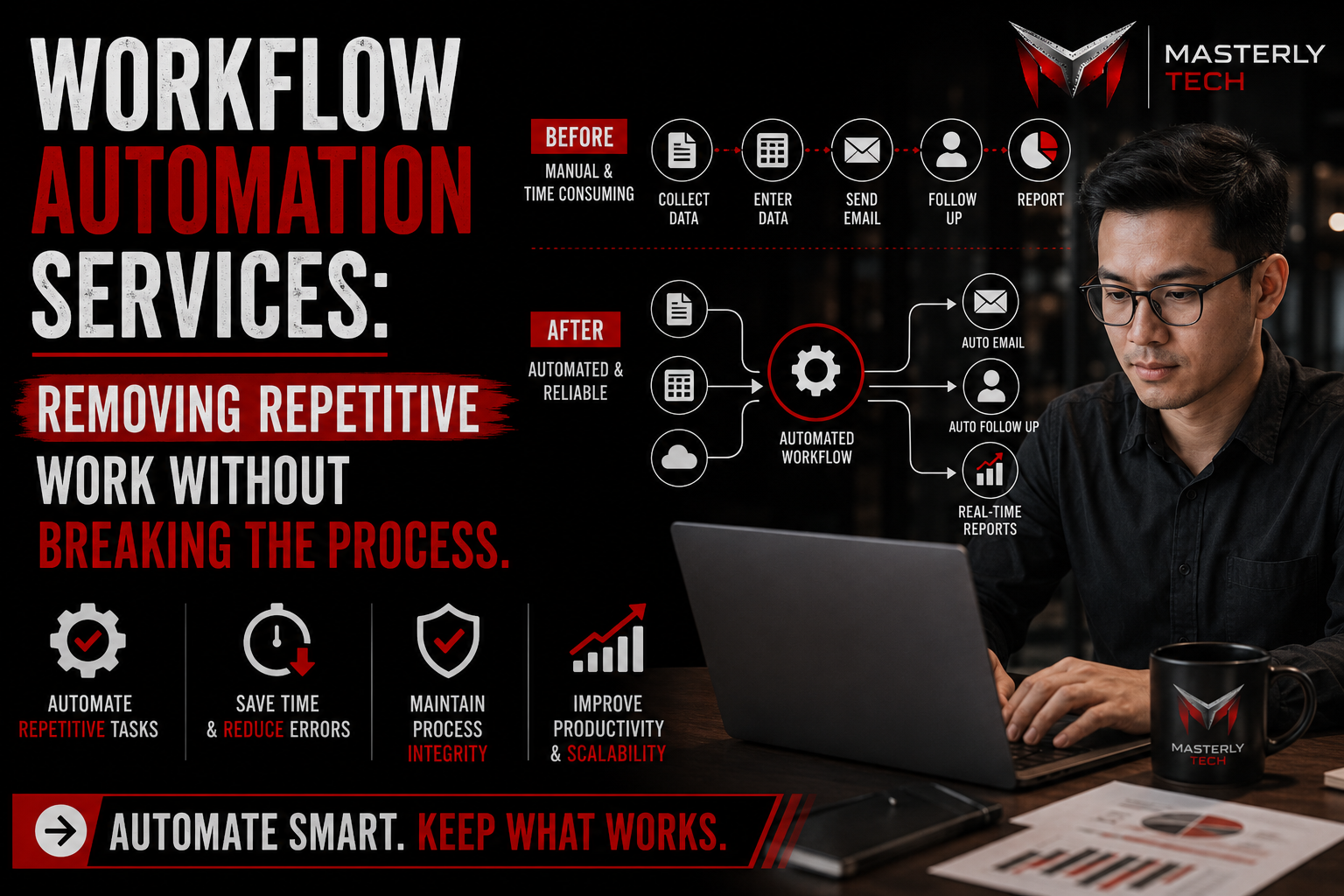
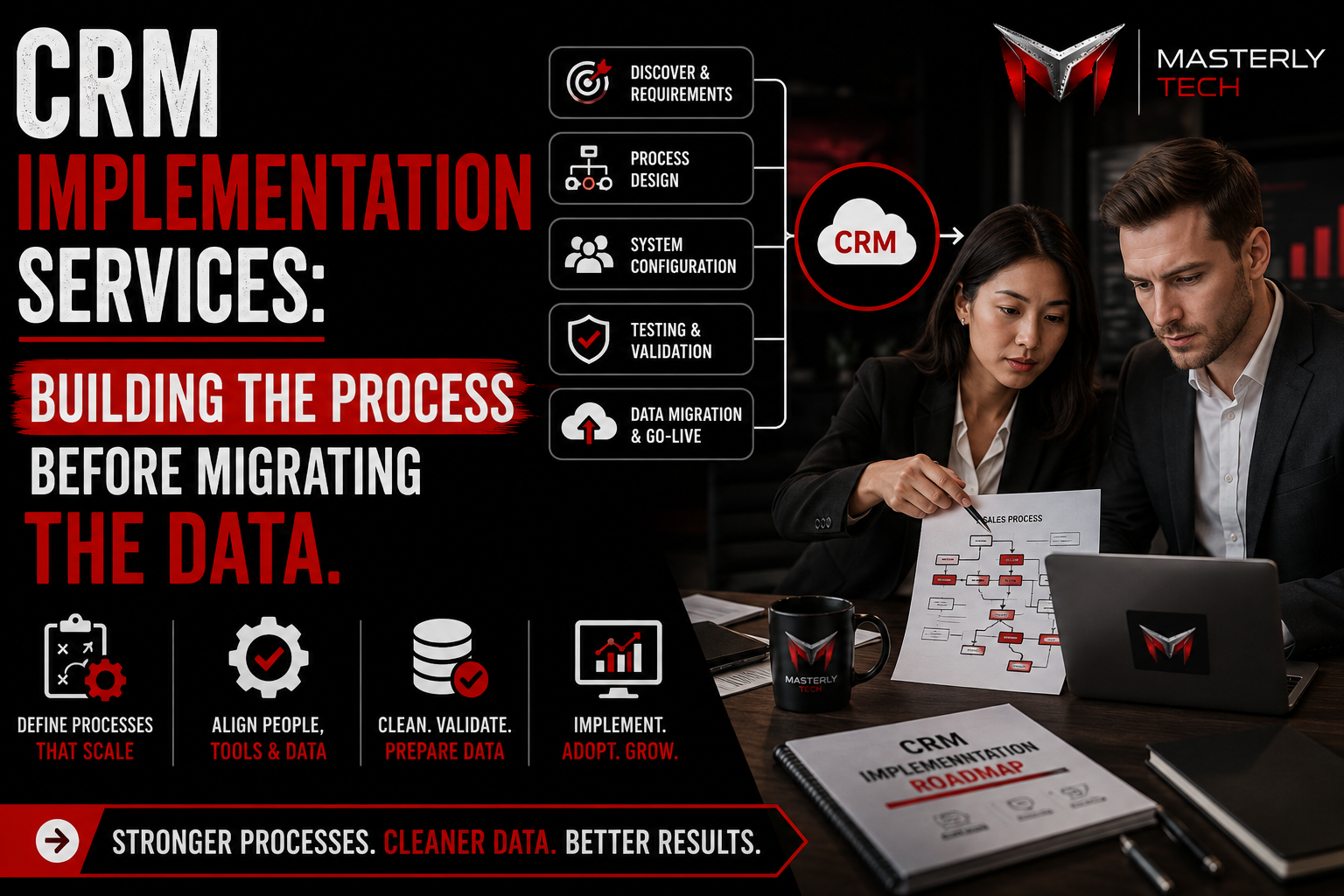
Masterly Tech helps founders and growth teams connect marketing, CRM, and automation systems around the way work should move. We provide a done-for-you service that defines triggers, assigns responsibility, adds human review, and creates more dependable follow-up.
When Marketing Activity Does Not Lead to Action
A company may generate website visits, form submissions, email engagement, event registrations, and sales inquiries without having a reliable process for managing them.
Marketing sees campaign activity. Sales sees CRM records. Leadership sees reports. However, each group may be looking at different information.
A strong lead can sit untouched because no one received an alert. Two employees may follow up with the same prospect because ownership was unclear. An unqualified contact may enter a sales sequence that does not fit the person’s needs. A CRM record may show the wrong stage because someone forgot to update it.
These gaps can lead to:
- Slow responses to potential customers
- Incomplete or duplicate CRM records
- Conflicting marketing and sales messages
- Missed follow-up tasks
- Unclear lead ownership
- Poor campaign reporting
- Inconsistent customer experiences
- Extra administrative work for employees
The team may attempt to solve these issues by adding another automation tool. That tool can only follow the rules it is given. If triggers, stages, responsibilities, and exceptions are unclear, the new technology may automate the confusion.
A Marketing Automation Workflow Needs Clear Triggers
Every automated workflow begins with a trigger. The trigger is the approved event that starts an action or sequence.
A trigger may occur when someone submits a form, schedules a meeting, downloads a resource, joins a list, reaches a lead score, changes a CRM stage, or completes another meaningful activity.
The trigger must be specific enough to start the correct response. A general form submission may not provide enough information if the company offers several services. A page visit may show interest, but it may not justify immediate contact from sales.
Masterly Tech helps businesses decide which actions should begin a workflow and what information must be available first. We also identify conditions that should prevent an automation from running.
For example, a new sales email should not be sent if the contact is already a customer, has an active opportunity, previously unsubscribed, or requested a different type of communication.
Thoughtful trigger rules protect the customer experience and help employees trust the system.
Better Handoffs Between Marketing and Sales
The handoff between marketing and sales is a common source of delay.
Marketing may define a qualified lead based on content activity or email engagement. Sales may expect information about company size, service need, budget, authority, or timing. If the teams use different definitions, leads may be passed before they are ready or remain in marketing after they need personal attention.
A connected marketing automation workflow can apply agreed qualification and routing rules more consistently. Stronger handoffs also support lead nurturing, and lead nurturing workflows can increase sales opportunities by 20%.
When a lead meets the approved conditions, the system may:
- Create or update the CRM record
- Assign the correct owner
- add the lead to the appropriate pipeline
- Create a sales task
- Notify the responsible employee
- Record the source and relevant activity
- Pause general marketing messages
- Set a deadline for the next action
Automation supports the handoff, but it does not replace professional judgment. A salesperson still needs to review the account, understand the buyer’s needs, and determine the best response.
Masterly Tech designs the point where automated activity should stop and human involvement should begin.
Human Checks Protect the Customer Experience
Not every marketing or sales decision should be automated.
A high-value proposal, sensitive client issue, unusual request, or complex account may require review before the next message is sent. A contact may meet the technical conditions for a campaign while still being a poor fit for the communication.
Human checks allow employees to confirm that the action makes sense.
A workflow might create a task for review instead of sending an email immediately. It may notify an account owner before changing a customer’s status. It may require approval before a contact enters a high-value sales sequence.
These review points are important because automation can repeat mistakes at scale. An incorrect field, broken rule, or unsuitable message can affect many contacts before the team notices.
Masterly Tech helps determine where human checks are needed based on business risk, customer expectations, data quality, and the complexity of the decision.
Why Poor Automation Can Damage the Brand
Customers do not see the technical rules inside an automation platform. They experience the result.
They notice when a company responds quickly and remembers the information they provided. They also notice when it sends duplicate emails, asks repeated questions, or continues promoting a service they already purchased.
A poorly designed workflow can make a capable company appear careless. It may suggest that teams do not communicate or that the business does not understand its customers.
A dependable workflow creates a more organized experience. Prospects receive communication that matches their interests. Sales representatives enter conversations with useful context. Customers are moved out of prospect campaigns when their relationship changes. Internal teams have a clearer view of what has happened and what should happen next.
This consistency supports the company’s brand, service quality, and reputation.
Connecting Forms, Email, CRM, Customer Data, and Reporting
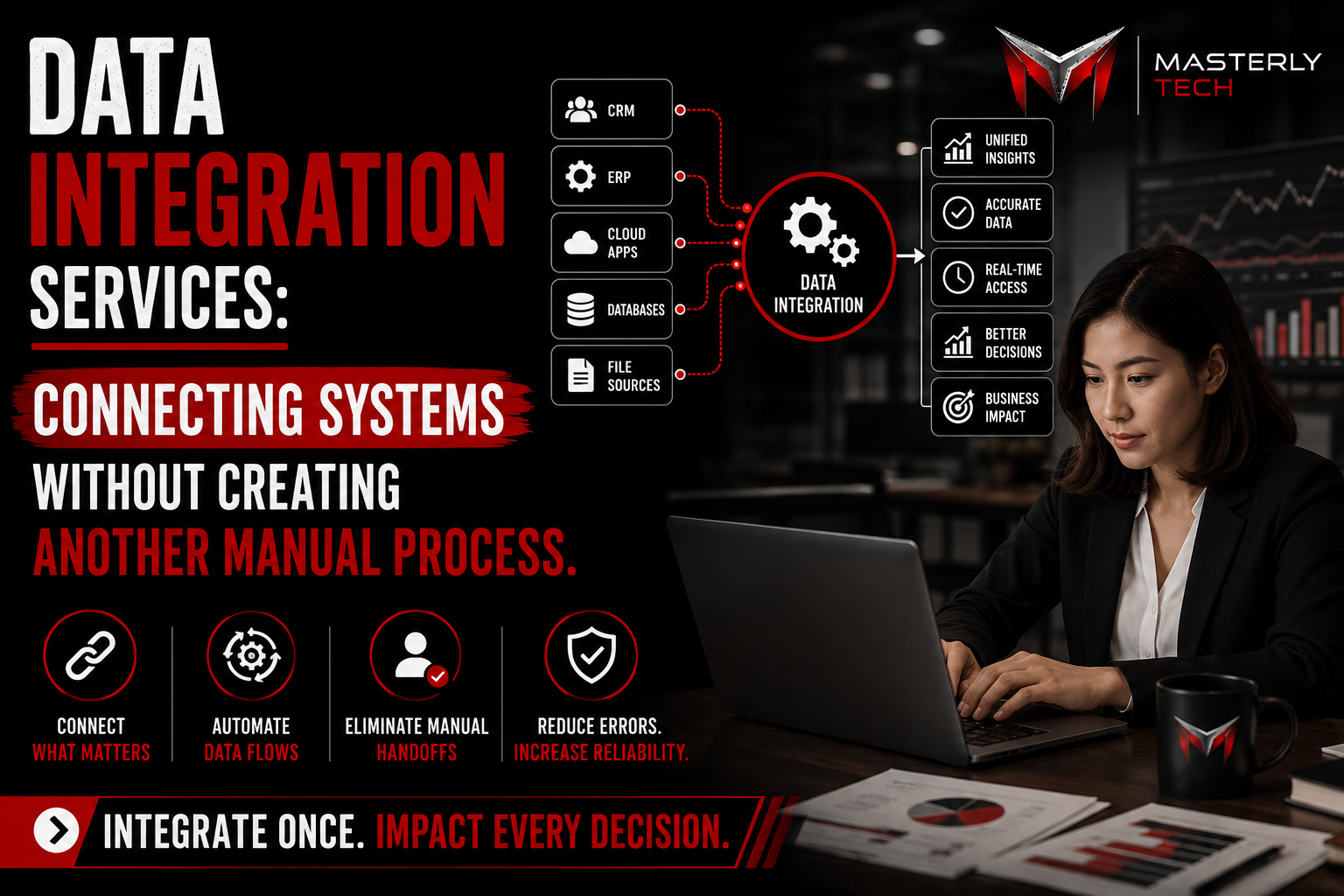
Marketing automation often involves several platforms. A business may use one system for website forms, another for email marketing, a CRM for sales, and a reporting tool for leadership.
If information does not move correctly between these platforms, employees must fill the gaps manually.
Masterly Tech reviews how data enters, moves through, and leaves each system. We identify which platform should hold the primary record and which fields must remain consistent.
A connected workflow may support:
- Website lead capture
- Contact and company record creation
- Lead-source tracking
- Email list management
- Meeting and appointment updates
- Sales-stage changes
- Internal task creation
- Customer onboarding
- Campaign reporting
- Re-engagement of inactive prospects
The goal is not to connect every available feature. It is to move the right information at the right time so employees can complete their work and leadership can understand performance.
Workflow Design for Lead Nurturing and Different Buyer Stages
A new visitor, qualified lead, active opportunity, current customer, and past customer should not receive the same communication.
Each relationship stage has different needs across the customer lifecycle.
New subscribers may need welcome messages that confirm an inquiry was received, and automated welcome emails can increase first purchases by 104%. A qualified lead may need a personal response from sales. An active opportunity may require meeting reminders or proposal follow-up. A new customer may need onboarding information. A past customer may need a carefully timed check-in. Re-engagement campaigns and drip campaigns can also support follow-up at the right time, and abandoned cart emails can recover 69% of lost sales.
Masterly Tech helps businesses define these stages and connect them to appropriate workflows. We also plan for changes between stages so contacts do not remain in outdated campaigns.
This creates a more relevant experience while reducing the manual work required to manage every contact separately. We map the customer journey so automated journeys can deliver relevant content across multiple channels based on customer behavior or purchase history, and personalized emails can increase engagement by over 60%.
Workflow Exceptions Need a Plan
Automation performs well when activity follows the expected path. Real business activity does not always do that.
A form may contain incomplete information. A contact may use two email addresses. A lead may be connected to an existing customer account. An integration may fail. A salesperson may need to change an opportunity stage manually.
A professional marketing automation workflow needs rules for these exceptions.
Depending on the situation, the system may assign the record for review, create an internal alert, stop the workflow, or place the contact into a temporary status. The team also needs a clear process for resolving the issue.
Masterly Tech considers common exceptions during workflow planning and testing. This helps prevent small data problems from becoming larger customer or reporting problems.
Reporting Depends on Reliable Workflow Data
Leadership needs to understand which marketing activities create qualified conversations and business opportunities.
That becomes difficult when lead sources are missing, stages are used inconsistently, or campaign responses are not connected to CRM records. A polished dashboard cannot correct unreliable information underneath it.
Masterly Tech designs workflow updates with reporting in mind. We help establish consistent sources, statuses, ownership fields, and conversion points.
Better data can help the organization understand:
- Which sources produce qualified leads
- How quickly employees respond
- Where leads stop moving
- Which campaigns support sales opportunities
- How long contacts remain in each stage
- Which workflows require improvement
This gives leadership clearer information for decisions about marketing activity, sales capacity, and system investment.
Done-for-You Marketing Automation Workflow Services
Masterly Tech provides professional support for businesses that need their marketing and CRM systems to work together. Successful marketing automation requires defining clear objectives and measurable goals. We help shape a practical marketing workflow automation approach, choose the right automation solution, review key features, and implement automation software that supports effective marketing automation workflows.
Our services may include:
Systems Review
We assess your current forms, email platform, CRM, integrations, reporting tools, data flow, and manual work, including repetitive marketing tasks and internal workflows across your current tech stack.
Workflow Planning
We define triggers, conditions, actions, timing, ownership, human reviews, exceptions, and expected outcomes as part of the marketing process, and setting up an effective marketing automation workflow requires clear goals and targeted customer segmentation when you build marketing automation workflows from proven workflow templates. Dynamic segmentation allows contacts to automatically enter or exit segments based on their behavior.
Platform Configuration
We configure approved fields, lists, stages, assignments, task assignments for the sales team, automated notifications where appropriate, alerts, tasks, sequences, and integrations within the selected systems.
Testing and Quality Review
We test common contact paths and exceptions to find incorrect routing, missing data, duplicate activity, and unsuitable messages.
Documentation and Team Support
We document how each workflow works, where employees must take action, and how future changes should be managed.
Our goal is to create a practical automation structure that supports the business without making daily work harder for the team.
Reduce Manual Work While Building Customer Lifetime Value
Common marketing automation workflows help marketing teams replace repetitive tasks, simple tasks, manual data entry, and other manual processes with connected, AI-powered systems. By linking marketing channels, social media, accounting software, project management tools, and expense reports to a central database, project managers can understand workflow automation, reduce human error, coordinate routine tasks, and monitor performance while keeping manual intervention where judgment is required. This approach connects project management with the wider marketing strategy, content strategy, lead generation, and each marketing campaign. Automated campaigns can use social proof and loyalty rewards to keep customers engaged, strengthen customer retention, improve average order value, and increase customer lifetime value. Masterly Tech helps businesses reduce data entry and manual tasks while building workflows that support stronger customer lifetime results and measurable lifetime value.

Frequently Asked Questions About a Marketing Automation Workflow
What is a marketing automation workflow?
A marketing automation workflow is a form of workflow automation: a structured system of automated workflows that uses triggers and rules to move information, send approved communication, update systems, and handle assigning tasks with less manual effort.
What can start a marketing automation workflow?
Common triggers include form submissions, meeting bookings, email activity, lead-score changes, CRM-stage updates, new subscribers, and customer purchases. You can also start automations from customer behavior, including actions tracked across multiple channels such as push notifications.
Does every workflow need a human check?
No. Routine, low-risk actions may run automatically. Human checks are useful when decisions involve sensitive information, high-value opportunities, unusual requests, or customer risk.
Can Masterly Tech improve an existing workflow?
Yes. Masterly Tech can review current workflows, identify gaps, and improve their triggers, routing, data updates, timing, and review points. We can also recommend practical automation examples when refining an existing setup, including lead nurturing sequences, client onboarding flows, and re-engagement campaigns.
Can a workflow connect marketing with a CRM?
Yes. A workflow can create and update records, assign owners, change stages, create tasks, and share approved activity between marketing and CRM systems. It can also trigger a follow up email, apply lead scoring based on engagement, support timely communication between marketing and the sales team, and keep handoffs clear as contacts move through the funnel.
How do you prevent contacts from receiving the wrong messages?
Clear conditions, suppression rules based on customer data and audience rules, stage updates, human reviews, and testing help prevent unsuitable or duplicate communication so contacts receive more relevant messages and relevant content.
How long does it take to build a marketing automation workflow?
The timeline depends on the number of platforms, workflows, integrations, approval steps, and exceptions involved. Masterly Tech defines the scope after reviewing the current systems.
Request a Systems Review
If leads are being lost between forms, email campaigns, CRM stages, and sales follow-up, Masterly Tech can help.
Our done-for-you marketing automation workflow services connect triggers, handoffs, human checks, and reporting around your business process. We review your current systems, identify workflow gaps, and develop a practical plan for more reliable marketing and sales activity.
Visit Masterly Tech or call (888) 209-4055 to Request a Systems Review.