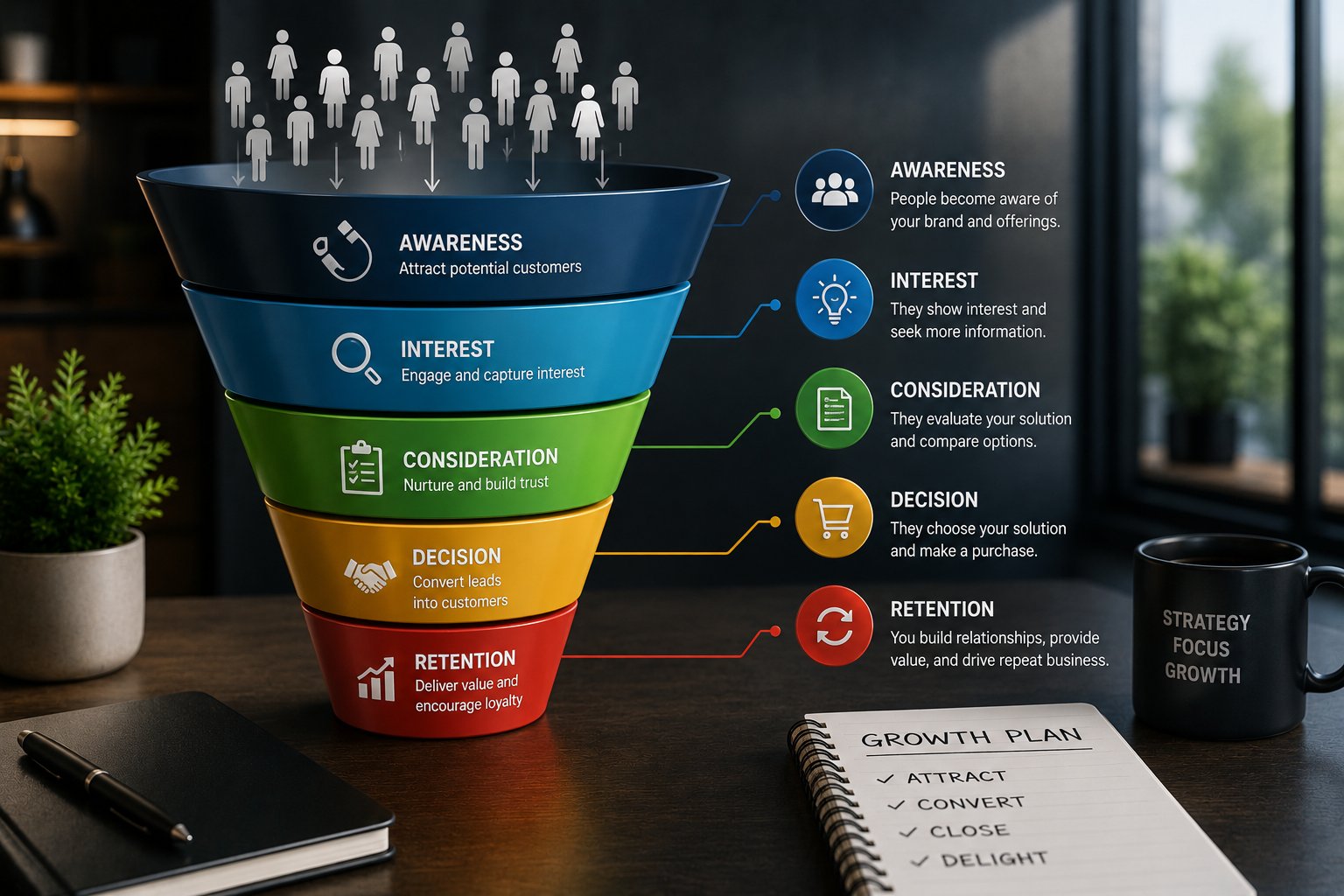
Sales Funnel Where Growing Companies Lose Qualified Prospects Between Interest and Decision
Why Most Businesses Struggle to Convert Prospects into Customers
Your business is generating traffic and capturing new leads, but somewhere between first contact and final purchase, prospects disappear. You're spending money on advertising, creating content, running campaigns - yet conversion rates stay flat and your sales teams can't explain where the leakage happens. This is the single most common growth problem businesses face in 2026, and it almost always comes down to one thing: there's no structured system guiding prospects from awareness to purchase.
A sales funnel gives you that system. It maps every stage of the customer journey and the buying process prospects move through - from the moment someone becomes aware of your brand to the point they buy and beyond - so you can see exactly where people drop off, why they hesitate, and what to fix. A sales funnel is shaped like a funnel because it starts wide and narrows down to buyers. Many enter at the top; far fewer reach the bottom.
This guide covers everything you need to build, measure, and optimize your sales funnel for better conversions in 2026. Whether you run a local service business, a SaaS company, or an e-commerce store, the principles here will help you turn more prospects into paying customers by addressing prospect challenges with proven, data driven strategies.
Why Smart Businesses Rely on Sales Funnels
The gap between average businesses and top performers isn't luck - it's structure. Companies that build and document their sales process consistently outperform those that rely on ad hoc selling.
- Higher conversion rates: Sales funnel optimization can increase sales by 30%. Top-performing funnels convert at 5–11%, while the average hovers around 2.35%. The difference is a clearly defined funnel stage progression that matches messaging to buyer intent.
- Lower acquisition costs: Businesses with optimized funnels dramatically reduce customer acquisition costs. In one documented case, a wellness brand cut paid acquisition cost by 73% by rebuilding its funnel architecture with better qualification, faster checkout, and behavioral nurture sequences.
- Faster sales cycles: A structured sales pipeline shortens the time from lead to closed deal. One SaaS company dropped its cost per qualified lead from $363 to $15 over just 60 days by restructuring its funnel on Meta - awareness video ads at the top, eBook downloads in the middle, live demo requests at the bottom.
- Better forecasting: Businesses can track conversion rates at each stage of the funnel for better sales forecasting. When you know your stage-to-stage numbers, you can predict revenue with confidence instead of guessing.
Sales funnels allow businesses to tailor marketing efforts to each customer stage, which means every dollar and every hour of effort goes further.
What Makes Sales Funnels Essential for the Customer Journey and Business Growth
Traditional sales approaches - cold calls, mass emails, hoping a prospect remembers you - leave too much to chance. A documented funnel replaces hope with a predictable, repeatable path from initial contact to closed deal.
- Predictable lead progression: Every prospect follows a defined path. You know what content they see, what action triggers the next step, and when sales reps should engage, so both buyers and sellers benefit from clearer handoffs and better-timed conversations. Establish clear criteria for moving leads through the sales funnel, and you eliminate guesswork.
- Pinpoint drop-off locations: A sales funnel helps identify bottlenecks where potential customers drop off. Instead of wondering why revenue stalled, you can see that 40% of leads abandon between consideration and intent - and address that specific barrier.
- Stage-matched messaging: Prospects in the awareness stage need different information than those in the decision stage. Funnels let you deliver personalized messaging that speaks directly to each prospect's pain points and concerns at each buying stage.
- Systematic nurturing over random outreach: Effective nurturing sequences help warm leads before sales engagement occurs. Rather than sales teams chasing every lead equally, automation moves prospects through education and building trust until they signal genuine buying intent.
Understanding the buyer's journey improves marketing strategies. When you can see the mechanics of how customers engage, where they hesitate, where they drop off, and each persona's unique needs, you know exactly where to focus effort.
The 6 Core Stages of Every Sales Funnel
While specific models vary - the four classic stages of a sales funnel are Awareness, Interest/Consideration, Decision, and Purchase - most modern funnels expand to six stages that capture the complete prospect journey, including post-purchase behavior. The sales funnel typically progresses from awareness to conversion. Here's what each funnel stage looks like in practice.
Awareness Stage
Awareness is the phase where potential customers first discover a brand. In the awareness stage, customers recognize a problem or need - but they don't yet know about the solutions available. They might find you through a search engine result, a social media post, a referral from a colleague, or a paid ad.
At this point, your target audience isn't ready to buy. They're simply becoming aware that a problem exists, forming an initial idea of the problem and possible solutions, and starting to look for information. The marketing efforts here focus on visibility: blog posts, social content, video ads, and SEO-optimized pages that address the prospect's situation directly.
Interest Stage
In the Interest phase, prospects research options and evaluate solutions. They've moved past casual browsing - now they're actively educating themselves. Common interest indicators include downloading a guide, attending a webinar, signing up for a newsletter, or following your social accounts.
This stage focuses on education rather than direct selling. Marketers use lead magnets to capture contact details and convert website visitors into leads. The goal is to demonstrate expertise and relevance so prospects see your business as a credible resource worth their time putting attention toward.
Consideration Stage
During the consideration stage, customers evaluate multiple solutions. Prospects are comparing your service against competitors - reading reviews, examining features, requesting demos, and analyzing pricing. This is where you must demonstrate your unique value proposition clearly.
Friction at this stage comes from unclear pricing, weak social proof, or a confusing evaluation process. The businesses that win here are the ones that make comparison easy and differentiation obvious.
Intent Stage
Sales teams engage when a lead shows high intent, such as requesting a quote. At this point, prospects have narrowed their choices to two or three preferred solutions. They're asking about implementation details, requesting proposals, or adding products to carts.
This stage demands personalized attention from sales reps. Objections surface here - about pricing, timing, fit, limited internal resources, or competing priorities. Speed matters: leads grow cold fast if follow up is delayed.
Purchase Stage
The decision stage involves finalizing details before purchase. Action is the final phase where prospects complete a transaction and become customers. Activities include negotiating terms, reviewing contracts, securing stakeholder approval, and confirming budget.
Common friction points are logistical (limited payment options, unclear terms), psychological (last-minute doubt), or administrative (multiple decision-makers). Removing these barriers - clear CTAs, simple checkout, transparent terms - directly impacts conversion rates.
Retention Stage
Retention strategies focus on keeping customers happy and encouraging repeat business. This stage covers onboarding, customer success, ongoing support, and encouraging repeat purchases and referrals.
Satisfied customers become advocates who feed the top of your funnel through word-of-mouth, reviews, and referrals. In one documented case, nurtured customers had 34% higher lifetime value than those acquired without structured post-purchase engagement.
How Sales Funnels Work in Practice
Here's how the six stages translate into concrete steps you can implement in your business today.
Step 1: Attract Prospects to Your Funnel
Use SEO targeting problem-focused keywords, content marketing, paid advertising, and social media to drive top-of-funnel traffic. The critical detail most businesses miss: precise targeting. When you match your ideal customer profile from the start, every downstream stage performs better.
One B2B company reduced its cost per lead by 42% and increased its lead-to-SQL rate by 18% simply by improving top-funnel targeting and qualification criteria - before changing anything else in the funnel.
Step 2: Capture and Qualify Leads for Sales Reps
Convert visitors into qualified leads through lead magnets (eBooks, free trials, webinars), optimized landing pages, and forms designed with only the necessary fields. Landing page median conversion sits around 6.6% based on data from over 41,000 pages - so there's significant room for improvement if you're below that benchmark.
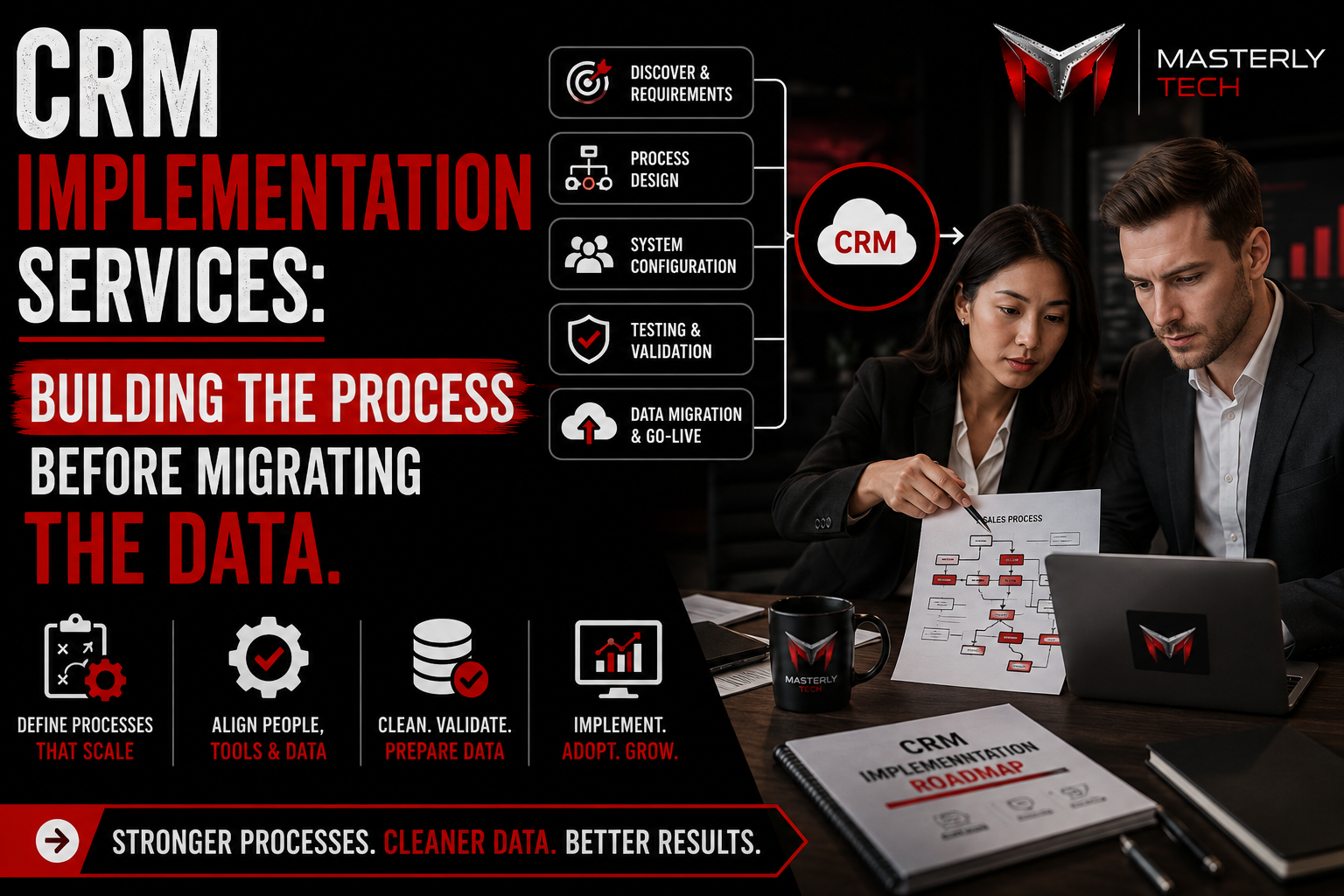
Lead scoring - combining behavioral signals (pages visited, content downloaded) with firmographic data (company size, industry, role) - separates sales-ready prospects from those needing further nurture. Sales teams may distrust leads from marketing, slowing follow-up. The fix: establish shared definitions for what constitutes a qualified lead, and automate notifications for sales-ready leads using CRM systems so sales reps act immediately.
Step 3: Nurture Through Automated Sequences
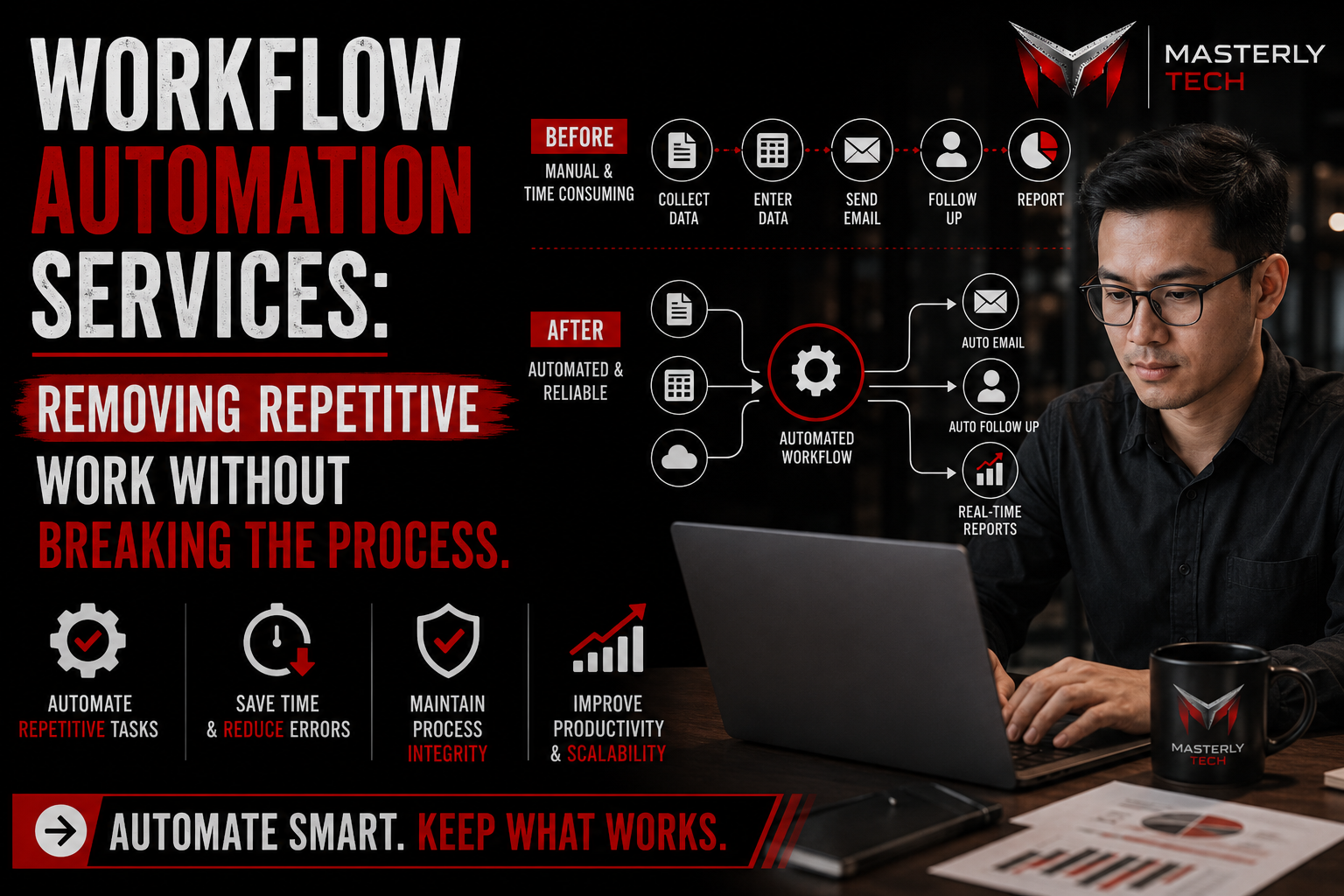
Automation is where funnels deliver their biggest efficiency gains. Email sequences triggered by prospect behavior, retargeting campaigns, and stage-matched content keep prospects moving forward without manual effort from your team.
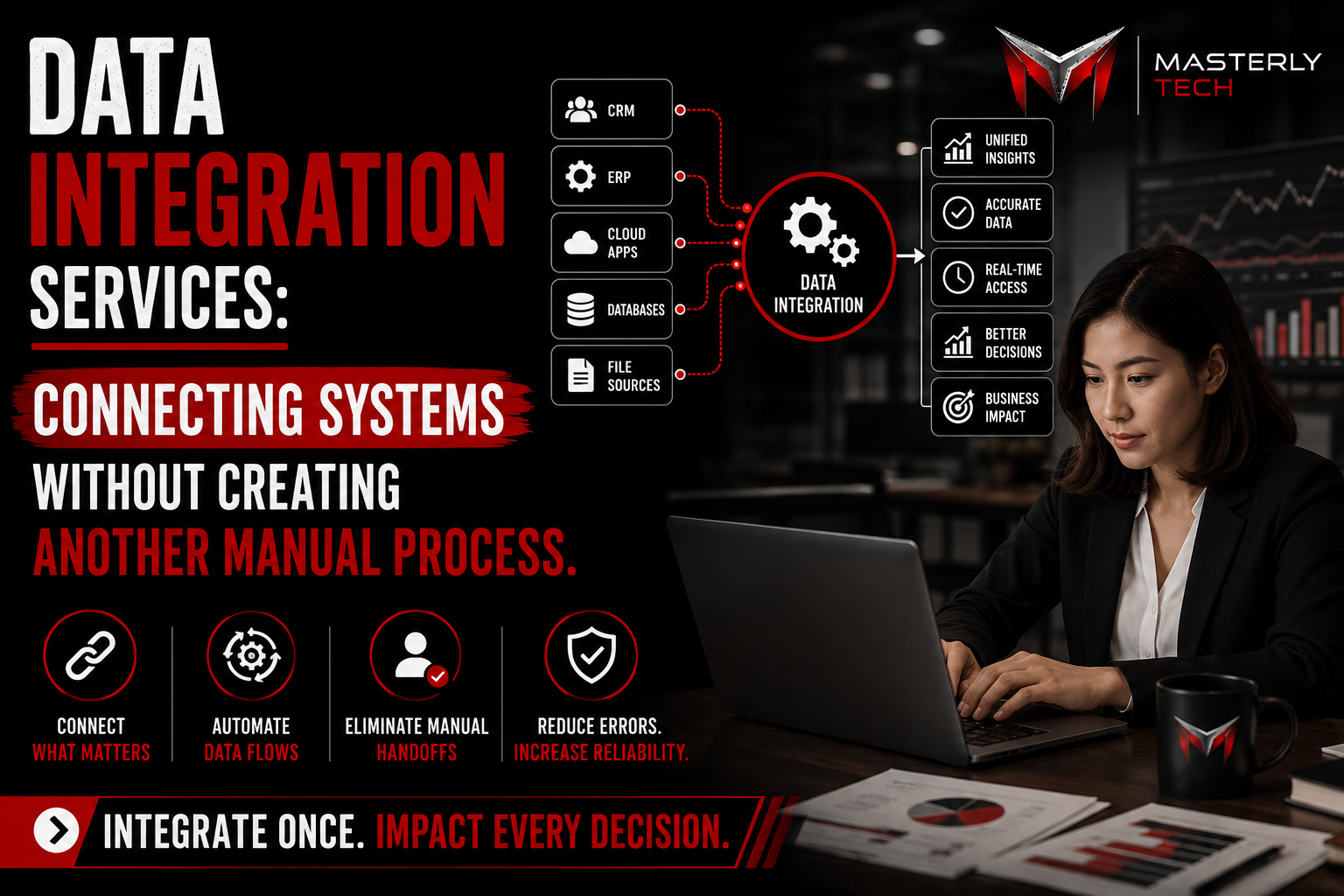
Integrating marketing and sales tools enhances lead visibility. When your CRM, email platform, and analytics talk to each other, every team member can see exactly where a prospect stands in the buyer's journey. Integrated tools provide unified visibility into the lead journey - no leads fall through the cracks, and no effort gets duplicated.
Proven Results from Optimized Sales Funnels
The data from real funnel optimizations is compelling:
- Streamline HQ had 800 leads per month but only a 2% lead-to-customer conversion rate before implementing automated nurture sequences. After optimization, conversion rose to 6.4% - a more than threefold improvement - while customer acquisition cost dropped by 45%.
- A wellness DTC brand cut paid acquisition cost from $94 to $25 per customer and quadrupled retention by rebuilding its funnel with a quiz-based qualification flow, branched user paths by intent, and personalized recommendations.
- Kingdom Codex reduced cost per sale by 60–75% and improved conversion rates from 3–4% to an average of 5.13%, with best weeks exceeding 7%. Weekly sales scaled 5–10×.
- An educational services organization implementing a flywheel-based funnel on HubSpot saw monthly SQLs increase by 63%, sessions grow by over 1,900%, and their contact database expand by 4,550%.
These aren't theoretical - they're documented, measurable outcomes from businesses that invested in funnel architecture rather than simply increasing ad spend.
Real Sales Funnel Examples That Drive Results
Abstract advice only helps so much. Here's how real companies structure their funnels with specific tactics, timelines, and measurable outcomes.
SaaS (Low-ACV B2B): Bay Leaf Digital rebuilt a full funnel on Meta over 60 days for a B2B SaaS client. The funnel had three layers: awareness via video ads, middle-funnel engagement via an eBook download, and bottom-funnel conversion via live demo requests. Tracking used pixel events mapped to HubSpot lifecycle stages. Result: cost per qualified lead dropped from $363 to $15, delivering 270 leads and 11 trials.
E-commerce (Performance Branding): PLAE Shoes implemented a full-funnel content and creative refresh combining prospecting with retargeting. Revenue increased 36% quarter-over-quarter, overall customer acquisition cost dropped approximately 26%, and cost per purchase from existing customers fell 66%.
B2B Enterprise (ABM): A global commerce platform used full-funnel account-based marketing with targeted content and strategic media allocation. The result: cost per lead dropped 74%, cost per qualified lead fell 62%, and lead qualification rate reached approximately 41%.
Each of these examples shares a common thread: the company didn't just create more content or spend more on ads. They mapped the complete customer journey, identified where prospects stalled, and built stage-specific interventions to guide prospects forward.
Essential Tools for Sales Funnel Success
The right technology stack turns funnel strategy into daily execution. Here are the categories that matter most:
- CRM platforms: Salesforce, HubSpot, Pipedrive, or Zoho for tracking prospect progression, managing your sales pipeline, automated lead scoring, and activity logging. Automated notifications ensure sales act quickly on qualified leads.
- Marketing automation: ActiveCampaign, Marketo, Pardot, or Klaviyo (for e-commerce) for multi-step nurture sequences, behavior-based triggers, and drip campaigns that move prospects through the funnel without manual intervention.
- Analytics tools: Google Analytics (GA4), Mixpanel, Hotjar, or Funnelytics for measuring performance at each funnel stage, identifying drop-off points, and running real time analysis of prospect behavior.
- Landing page builders: Unbounce, Leadpages, or Instapage for high-converting lead capture pages optimized through continuous A/B testing.
- Emerging technology: Conversational chatbots are replacing static forms for early qualification. Generative AI is powering lead nurture at scale - Salesforce's internal Agentforce Lead Nurturing Agents generated over $100M in pipeline through autonomous workflows. Intent data tools and predictive scoring models are becoming standard for businesses serious about data driven insights.
How to Optimize Your Sales Funnel Performance with Key Metrics
Building a funnel is step one. Continuous optimization is where compounding growth happens.
- Define buyer personas with real data: Use customer interviews, analytics, and behavioral patterns - not assumptions - to develop precise profiles. Differentiated messaging for each persona reduces friction across every stage.
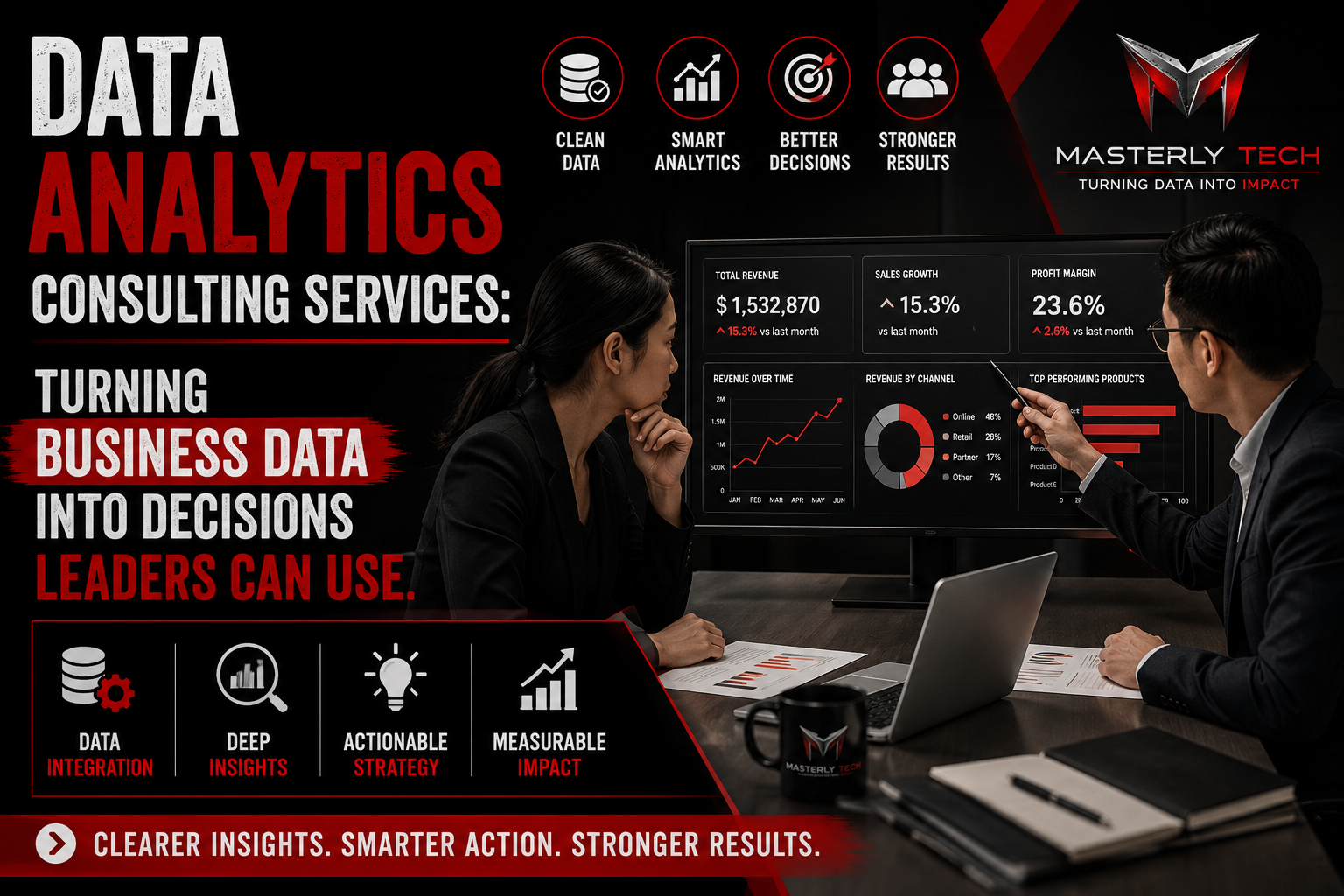
- Track key metrics at each stage: Monitor stage-to-stage conversion rates (MQL → SQL → Opportunity → Customer), time spent in each stage, and drop-off points. Compare against benchmarks: average full-funnel conversion is 2–3%, while strong funnels exceed 5–10%. Sales funnels help track prospects' progress toward purchase.
- A/B test systematically: Test headlines, CTAs, form length, pricing displays, and content types (videos vs. eBooks vs. webinars) at each funnel stage. Small improvements compound across stages.
- Close the feedback loop: Regular feedback sessions improve lead quality and sales alignment. Misalignment can lead to dropped leads and missed revenue opportunities. Regular alignment meetings improve lead quality and response times between marketing and sales teams.
- Address worst leaks first: Analyze your funnel to identify bottlenecks and focus improvement efforts on the stage with the largest drop-off before optimizing stages that already perform well. Kingdom Codex focused on specific drop-offs and converted existing traffic volume into dramatically more efficient performance - without spending more on ads.
- Use predictive analytics: Lead scoring models that combine behavior and demographics help you evaluate and prioritize highest-value prospects. These insights also feed into ad targeting through lookalike and retargeting audiences.
Frequently Asked Questions
How long should a sales funnel take from start to finish?
The buyer's journey has three stages: awareness, consideration, and decision - but the timeline varies significantly by context. B2B funnels typically run 60–180 days depending on price point, complexity, and number of stakeholders. B2C and lower-cost items often convert within 1–30 days. High-ticket or enterprise purchasing decisions can stretch 6–12 months. Factors that extend funnel length include multiple decision-makers, complex implementation requirements, and high price points that demand more evaluation.
What's the difference between a sales funnel and marketing funnel?
Marketing funnels focus on generating awareness and capturing new leads - primarily top and middle funnel activities. Sales funnels concentrate on converting those qualified leads into paying customers - bottom funnel focus. In practice, the most effective businesses integrate both into a unified system where marketing and sales efforts work together seamlessly. The marketing funnel feeds the sales funnel, and post-purchase data flows back to improve targeting and messaging at every stage.
How do I know if my sales funnel is working effectively?
Track these key metrics: overall visitor-to-customer conversion rate, stage-specific conversion rates, average deal size, time in each stage, customer acquisition cost versus lifetime value, and the proportion of MQLs that become SQLs. Good B2B funnels convert 2–5% of top-funnel prospects to customers; strong performers exceed 5–10%. More important than any single number is tracking trends over time - are your conversion rates improving month over month? Is your cost per acquisition decreasing? Is lifetime value increasing as better-qualified prospects enter the funnel?
Request a Systems Review Find Where Qualified Prospects Leave Your Funnel
Masterly Tech Group can review your website, tracking systems, conversion paths, and marketing funnel to identify where qualified prospects are dropping off.
Call (888) 209-4055 to request a systems review and uncover the gaps affecting your conversions.