
UTM Parameters How Marketing Teams Keep Campaign Tracking Clean Enough to Use
Marketing teams often launch campaigns across email, social media, paid advertising, partner websites, and other digital channels. Each campaign may generate clicks, leads, and sales, but the company may still struggle to explain where those results came from.
The problem is rarely a complete lack of data. It is often data that cannot be trusted.
One person may label a source as “LinkedIn,” while another enters “linkedin,” “LinkedIn Ads,” or “social.” Agencies may use their own labels. Sales teams may see campaign information in the CRM that does not match the reports used by marketing. Over time, these small differences divide campaign results into separate categories and weaken the company’s reporting.
UTM parameters can help connect marketing activity with analytics and CRM reporting, but only when the company manages them consistently. Clean campaign tracking requires more than adding codes to links. It requires clear standards, shared ownership, and systems that support reliable attribution data.
Masterly Tech helps businesses establish and manage a coordinated approach to UTM parameters. We review how campaign data moves between marketing channels, analytics platforms, forms, websites, and CRM systems. Then we help create a tracking structure the company can use with confidence.
When Campaign Data Exists but Cannot Support a Decision
Businesses invest time and money in marketing because they expect measurable results. Leaders want to know which campaigns produce qualified traffic, which channels influence leads, and which efforts contribute to revenue. UTM stands for Urchin Tracking Module, named after Urchin Software.
Those questions become difficult to answer when campaign tracking is inconsistent.
A marketing report may show several versions of the same source. A CRM record may contain only part of the campaign information. A form may capture the landing page but lose the original referral details. An agency report may use naming rules that do not match the company’s internal analytics.
Each system may appear to be working, yet the reports do not tell the same story.
This creates uncertainty when leaders review performance. Marketing may report one lead total while sales reports another. A campaign may appear successful in an advertising platform but show limited activity in the CRM. The company may continue funding a channel because its numbers look strong, even though the data does not show whether it produced qualified opportunities.
Poor tracking can also affect reputation inside the organization. When leaders repeatedly receive unclear or conflicting reports, they may lose confidence in the marketing team’s ability to measure results. Marketing professionals may spend more time defending the data than explaining what it means.
Reliable tracking gives the company a shared foundation for better decisions.
Why UTM Parameters Require a Company-Wide Standard
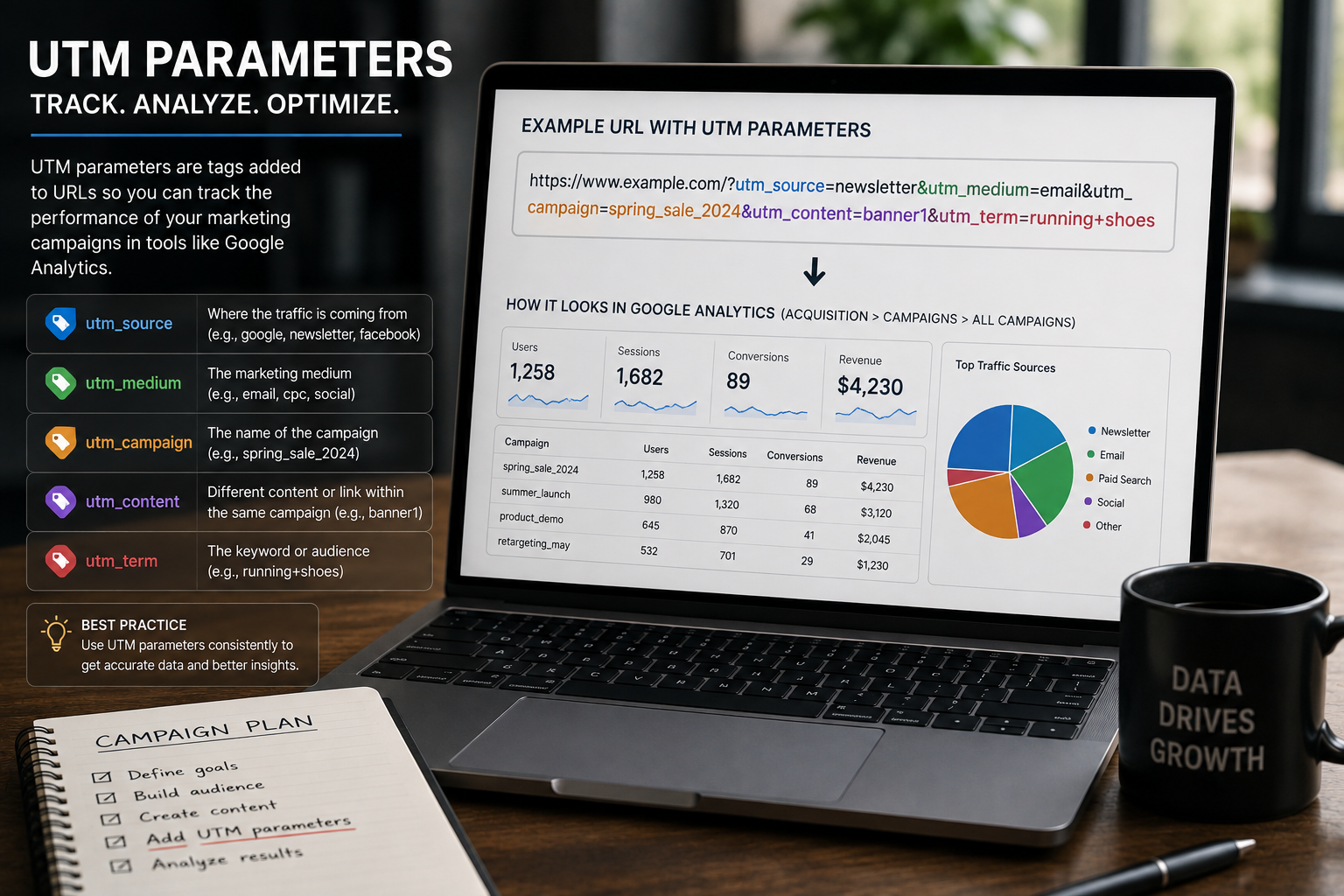
UTM parameters are labels added to a destination URL to describe how a visitor reached a website. They can identify the source, channel, campaign, content variation, or other useful marketing detail connected with a click.
The technical concept is simple. The management challenge is more complex.
A company may have several people creating links, including internal marketers, outside agencies, contractors, social media managers, and event teams. If each person uses different terms, capitalization, spacing, or abbreviations, the data will fragment because utm parameters case sensitive in Google Analytics require a strict naming standard.
For example, the same traffic source might be recorded as:
- linkedin.com
- linkedin_ads
- paid-linkedin
Use lowercase for all parameter values so capitalization does not split reporting into separate sources.
Each label may describe similar activity, but an analytics platform can treat them as different values. The report may divide one channel into several rows, making the results harder to review.
A company-wide standard defines how UTM parameters should be created, approved, documented, and used. It also establishes who owns the process and how exceptions should be handled.
Masterly Tech helps businesses build tracking standards around their real marketing operations. The goal is to make campaign data easier to understand across teams and systems.
UTM Source and UTM Medium Need Distinct Roles
Two of the most important tracking fields are UTM source and UTM medium. They work together, but they should not be used for the same purpose.
UTM source identifies the specific platform, publication, partner, or sender responsible for the traffic, and teams should use only one unique utm_source value per platform. Examples may include a search engine, social network, newsletter partner, or advertising platform.
UTM medium identifies the general type of marketing channel. This may include paid search, organic social, email, referral, or another category selected by the company. In practice, use utm_source, utm_medium, and utm_campaign for tracking because these are the core fields every tracked link should include.
When these fields are confused, campaign reporting becomes fragmented. A team may enter a channel type in the source field for one campaign and a platform name for another. The resulting data becomes difficult to compare because each field no longer has one clear meaning.
A thoughtful tracking structure defines the role of each parameter before campaigns launch. That structure should also reflect the way analytics and CRM reports are organized around source medium and campaign as distinct reporting dimensions, making it easier to evaluate a specific campaign.
Masterly Tech can review how UTM source, UTM medium, campaign names, and related values currently appear across the company’s systems. This review helps identify inconsistencies that may be affecting attribution and reporting.
A Naming Convention Protects Campaign Tracking
A shared naming convention determines how teams label campaigns and related tracking values. It provides a consistent language for every person responsible for publishing tracked links.
Without a naming convention, even careful marketers may make different choices. One team member may use spaces while another uses underscores. One agency may shorten a campaign name while another writes it in full. Dates may appear in several formats. Capital letters may create additional versions of the same value, so teams should keep all parameter values lowercase.
These differences may appear minor when a single link is created. Across hundreds of campaigns, they can make reporting difficult to maintain.
A useful naming convention should reflect the company’s reporting needs. It may account for the campaign, audience, region, service, offer, content format, or other information that matters to the business. Documented utm naming conventions also help teams apply the same format consistently. It should be clear enough for multiple teams to apply consistently.
The convention must also be realistic. A system that is too complicated may encourage users to create their own shortcuts. Masterly Tech helps companies develop standards that provide useful detail without creating unnecessary work.
Campaign Tracking Must Connect With Google Analytics and CRM Reporting
Clean campaign tracking should not stop at the website visit. The company may need to understand what happens after a prospect clicks a link, completes a form, enters the CRM, speaks with sales, and becomes a customer.
This requires coordination between several systems. Use UTM parameters on external links pointing to your own site, not on internal links, to avoid fragmented attribution.
The website must retain and pass the right campaign values. Test each utm tagged url so it reaches the correct landing page and records data properly. Forms must capture the required information. Analytics tools must organize traffic correctly. The CRM must store campaign data in fields that support reporting. Integrations must transfer information without changing or deleting it.
If one part of that path fails, the company may lose the connection between the original campaign and the eventual business result.
For example, analytics may show that a paid campaign generated website sessions, but the CRM may not show which submitted forms came from that campaign. In google ads, native auto tagging can be paired with UTMs for clearer reporting between paid and organic traffic. Marketing can measure traffic, but it cannot clearly connect the campaign to qualified leads or revenue.
Masterly Tech reviews the full tracking path rather than examining each platform in isolation. This helps identify where attribution data is being changed, separated, or lost.
Reliable Attribution Data Supports Better Business Decisions
Attribution data helps a company understand which marketing activities influenced a desired result. While no attribution model answers every question perfectly, consistent UTM parameters provide a stronger foundation for analysis.
Reliable attribution can help leaders evaluate:
- Which sources generate qualified prospects
- Which channels support lead creation
- Which campaigns influence pipeline activity
- Which messages or content formats attract engagement
- Where marketing funds may need to be adjusted
- Whether agency and internal reports agree
Attribution improves when teams define campaign, term, and content values consistently: utm_campaign names the specific marketing initiative or promotion, utm_term tracks the keyword that triggered a paid click, and utm_content distinguishes between different links to the same page, such as an ad creative variation that later appears in utm data.
The value is not simply having more data. The value comes from having data that decision-makers understand and trust.
When tracking is inconsistent, a company may give too much credit to one channel or overlook another. Teams may make budget decisions based on incomplete information. They may also struggle to compare results from one quarter to the next because campaign names and tracking rules have changed.
A governed tracking system creates greater continuity. It allows the business to examine performance using stable definitions rather than rebuilding reports for every campaign.
Common Signs That UTM Parameter Management Needs Attention
A company may need a structured review if campaign reports contain duplicate source names, blank values, unclear campaign labels, categories that do not match the actual marketing channel, or fields like session source and session campaign that look inconsistent.
Other warning signs include:
- Marketing and CRM reports show different lead sources
- Agencies use separate tracking formats
- Team members create campaign links without shared rules
- Old naming conventions remain active
- Forms do not retain original campaign information
- Automation changes or overwrites tracking fields
- Reports require frequent manual cleanup
- Leaders cannot connect campaigns with qualified opportunities
Mismatched source or medium values can distort Google Analytics reports and custom reports used to review campaign performance.
These problems often grow as a company adds channels, platforms, team members, and outside partners. Addressing the tracking structure early can prevent reporting complexity from multiplying.
Masterly Tech can assess the current process and identify the standards, system changes, or governance decisions needed to improve it.
Done-for-You UTM Parameter Support From Masterly Tech
Masterly Tech provides professional support for organizations that need dependable campaign tracking across their marketing systems.
Our work may include reviewing existing UTM parameters, using a url builder for consistent link creation, including google's campaign url builder to build tagged urls accurately, evaluating naming practices, mapping how data moves between platforms, identifying tracking gaps, and developing a consistent governance structure.
We can also help align the tracking approach with the company’s analytics and CRM reporting needs. This may involve reviewing website forms, field mappings, integrations, campaign records, automation rules, dashboards, and documentation.
The right solution depends on the organization. A growing company with one marketing team may need a straightforward naming standard and central tracking process. A larger organization with several departments or agencies may require stronger approval rules, documentation, and oversight.
Masterly Tech builds recommendations around the company’s actual systems, users, and business objectives. The goal is to create a repeatable process that produces cleaner data without adding unnecessary complexity.
Frequently Asked Questions About UTM Parameters
What are UTM parameters?
UTM parameters are tracking values added to a URL. They are pieces of utm information added to a URL for tracking purposes. If teams add parameters manually, they append them to the same url with a question mark first and ampersands between each one.
What is UTM source?
UTM source identifies the specific platform, publication, partner, or sender that referred the visitor to the website, and the source value should consistently name one platform rather than multiple variations for the same referrer—for example, use one label for a partner site and one label for search engines.
What is UTM medium?
UTM medium identifies the general marketing channel, or marketing medium, used to classify traffic types in analytics reports, such as email, paid search, organic social, or referral traffic.
Why does a company need a UTM naming convention?
A naming convention keeps campaign values consistent across teams and platforms. It should cover all relevant UTM parameters, especially utm_source, utm_medium, and utm_campaign, so reports stay consistent. This reduces duplicate categories and makes reporting easier to understand.
Can UTM parameters connect marketing activity with CRM records?
Yes, when the website, forms, integrations, and CRM fields are configured to capture and preserve the data. The full tracking path must work correctly. From there, analytics software such as Google Analytics can tie campaign data to conversions, show how much revenue campaigns generate, and support downstream reporting.
Why do UTM values appear differently in reports?
Differences in spelling, capitalization, spacing, abbreviations, and field usage can create separate values for the same campaign or source. In Google Analytics reports, utm codes are case-sensitive, so inconsistent capitalization creates separate rows.
How often should UTM standards be reviewed?
Standards should be reviewed when teams, agencies, channels, platforms, or reporting requirements change. Regular reviews can also identify outdated or inconsistent values.
Can Masterly Tech review an existing campaign tracking system?
Yes. Masterly Tech can examine current UTM parameters, naming practices, analytics, CRM fields, integrations, Google Analytics explorations, default channel groups, custom channel groups, and reporting processes to identify gaps and recommend a more consistent structure.
Request Help Standardizing Campaign Tracking Across the Company’s Marketing Systems
Masterly Tech can help your organization create a consistent approach to UTM parameters, campaign tracking, analytics, and CRM reporting, including helping teams track UTM parameters consistently across an email campaign, ad campaigns, social posts, a blog post, and other marketing efforts. We review how attribution data moves through your systems and develop standards that support clearer, more reliable decisions.
Cleaner tracking helps teams compare which channels drive the most traffic and supports content strategy decisions.
Call (888) 209-4055 or visit Masterly Tech to request a campaign tracking consultation.