Lead Generation Website: What Must Happen Between a Visit and a Qualified Inquiry
Your website is getting visitors, but the phone is not ringing enough. Contact forms are quiet. Some inquiries are poor fits. Others arrive without enough information for your team to understand what the prospect actually needs.
That is not just a traffic problem.
A lead generation website needs to do more than bring people through the front door. It should help the right visitor understand your services, build confidence in your business, find a clear next step, and become a qualified inquiry your team can act on.
The problem is that many business websites are built around appearance or traffic without enough attention to what happens between the first visit and the first real sales conversation.
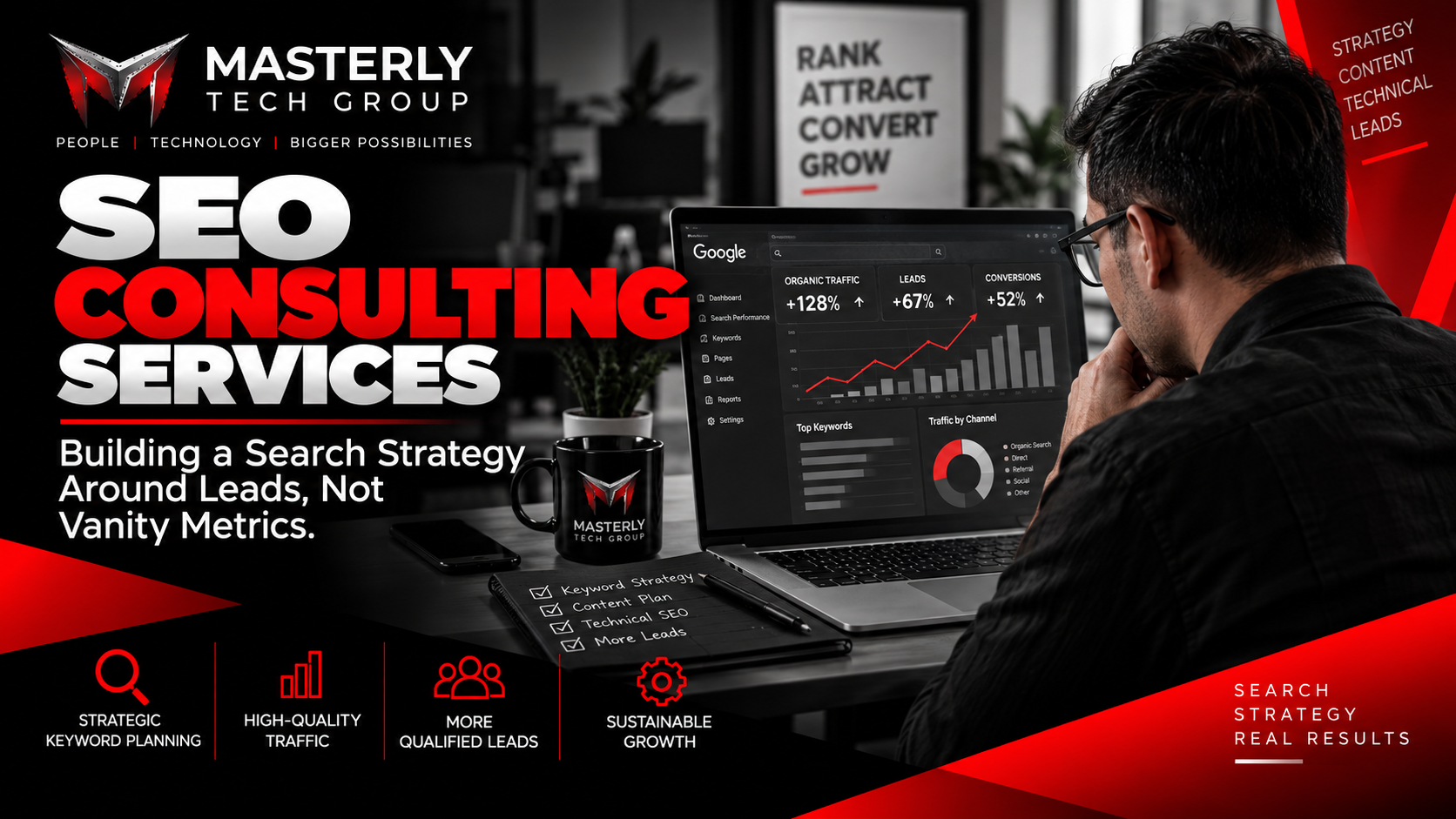
Masterly Tech provides website design and development, website optimization, SEO, digital advertising, and other digital marketing services. The goal is to connect your website with the larger marketing system instead of treating it as an online brochure.
A Lead Generation Website Needs More Than Traffic
Traffic is useful when it brings the right people closer to your business.
Imagine two companies each receive 5,000 website visits.
The first company celebrates the traffic number. Its website has attractive images and several pages explaining its services, but visitors have to search for contact information. Calls are not tracked clearly. The main contact form asks very little about what the prospect needs.
The second company has fewer distractions. Its important pages explain who the company serves, what problems it solves, and what the visitor should do next. The path toward contacting the business is clear.
The difference is not simply website design.
It is purpose.
A lead generation website should be designed around the journey from interest to inquiry. Traffic gets someone to the site. The website still has to help that person decide whether taking the next step makes sense.
Lead Generation Website Design Starts With Message Clarity
Visitors should not have to study your website to understand what your company does.
Clear messaging matters because prospective customers are making decisions as they move through the site.
Is this company relevant to my problem?
Does it serve businesses or people like me?
Can I understand the service?
Do I trust what I am seeing?
What should I do next?
Good lead generation website design helps answer those questions in a logical order, and when the message and path are aligned, optimized lead generation sites often convert 2-5% of visitors into leads.
That does not mean every page should aggressively push a visitor into a form. Some people need information before they are ready to make contact.
The website should support that decision process.
A visitor who reaches an important service page should understand the service, the problem it addresses, why the company may be a fit, and how to take an appropriate next step.
Masterly Tech currently describes its custom website design services as user-friendly, SEO-optimized, and tailored to the client's brand and business needs. Its industry website services also emphasize conversion-focused design and clear calls to action, tying clearer messaging to stronger conversion rates.
The Conversion Path Should Feel Natural
A conversion path is the route a visitor follows from entering the website to taking a meaningful action.
That route may begin on the home page.
It could also begin on a service page found through Google, an article discovered through organic search, or a page connected to an advertising campaign.
This matters because not everyone enters through the front door.
A person searching for a specific service may land deep inside your website. That page needs to provide enough context for the visitor to understand the company and determine what to do next. Businesses should track the full conversion funnel so they can optimize for qualified leads and revenue per visitor rather than pageviews alone.
Every Important Page Needs a Purpose
A strong website gives its important pages a job.
A service page may need to turn existing demand into an inquiry.
An educational article may introduce the business to someone researching a problem.
An industry page may help a prospect understand whether the company has relevant experience.
The calls to action should make sense within that purpose.
The goal is not to place a giant "Contact Us" button after every paragraph. It is to remove unnecessary uncertainty when a qualified visitor becomes ready to act.
A Qualified Inquiry Is More Valuable Than an Empty Form Submission
Not every lead has the same value.
A business may receive many inquiries and still have a lead-generation problem if most are unrelated to its services, outside its market, or otherwise poor fits.
That is why a qualified inquiry is a better focus than form volume alone.
Unlike a lead-generation website, a standard website may only produce a handful of contact submissions each month.
Your website messaging can play an important role.
Clear service descriptions help prospects decide whether your company addresses their problem. Industry or audience information can clarify who you serve. Location information can help visitors understand your service area when geography matters.
The contact experience can also collect useful information.
A professional website should help move the right prospects forward without creating unnecessary friction for everyone else.
The objective is not simply "more forms" but more qualified leads.
It is creating better opportunities for productive business conversations.
Your Contact Form Is Part of the Customer Experience
A contact form may be one of the smallest elements on your website, but it can sit at one of the most important moments in the customer journey.
The prospect has decided to make contact.
Then the form becomes difficult.
It asks for information the visitor does not have. It contains too many fields. Mobile usability matters here because more than half of web traffic now comes from phones. Or the visitor submits it and receives little indication of what happens next.
Fast load times also affect conversion rates directly when someone is trying to submit a form.
That creates friction at the moment when the website should be making the process clear.
On the other hand, a form that asks too little may leave your team without enough context to respond efficiently.
A/B testing form length, field choices, and CTA wording can produce measurable improvements over time.
The right balance depends on the business.
A professional services company may need different information from an emergency home-service provider. A company selling complex business services may need more context than a business handling straightforward consumer appointments.
The form should reflect the sales conversation that follows it.
Phone Leads and Call Tracking Need Attention Too
Forms are only one way prospective customers contact a business.
Many visitors call.
That makes phone activity important when calls are a meaningful source of leads.
Call tracking, when appropriately configured for the business and its marketing systems, can help provide more context about where calls originate. dynamic number insertion can help track which campaigns and sources drove the call, which supports accurate call attribution for campaigns. When businesses can measure calls accurately, call tracking can improve conversion rates by roughly 25 to 30 percent.
The larger principle is measurement.
If your website generates calls, forms, chats, bookings, or other actions, your reporting should be designed around the actions that matter to the business.
Masterly Tech currently lists conversion tracking and analytics among its digital marketing services.
A website should not simply create activity. The business should be able to use call data to identify which channels produce the most qualified leads and make better marketing decisions.
What Happens After the Lead Arrives Matters
The website did its job.
A prospect completed the form.
What happens now?
For many businesses, this is where a hidden problem begins.
The inquiry lands in an inbox. No one is certain who owns it. Someone forwards it to another employee. The prospect waits. Another inquiry receives a response immediately because a different employee happened to see it first.
The website may be generating leads while the business process loses them.
Lead Routing Should Match the Business
Lead routing addresses where an inquiry goes after it enters the organization.
A business with several offices, service lines, sales representatives, or territories may need a different process from a small company where one person handles every inquiry.
The goal is simple: get the right information to the right person through a process the organization can actually manage.
This is part of why lead-generation architecture should be considered beyond the visible website page.
The inquiry is not the finish line.
It is the beginning of the business's response.
Follow-Up Automation Should Support People, Not Replace Them
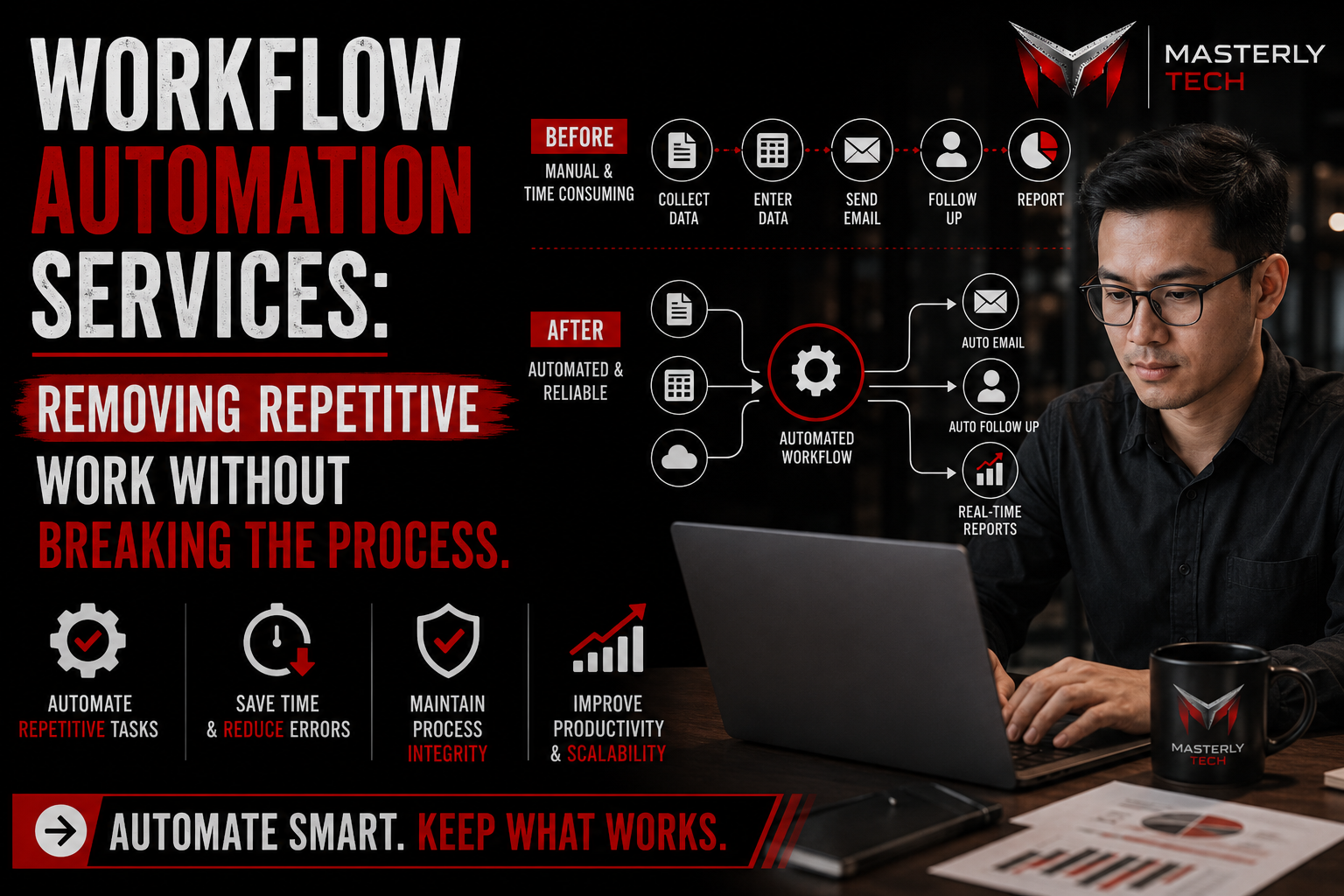
Automation can also become part of the post-inquiry process, and 77% of customers reported improved lead generation after automation.
For example, follow-up automation might support confirmation messages, internal notifications, task creation, or other repeatable workflow steps depending on the systems a business uses.
But automation should have a clear purpose.
A poorly planned automated process can create just as much confusion as no process at all.
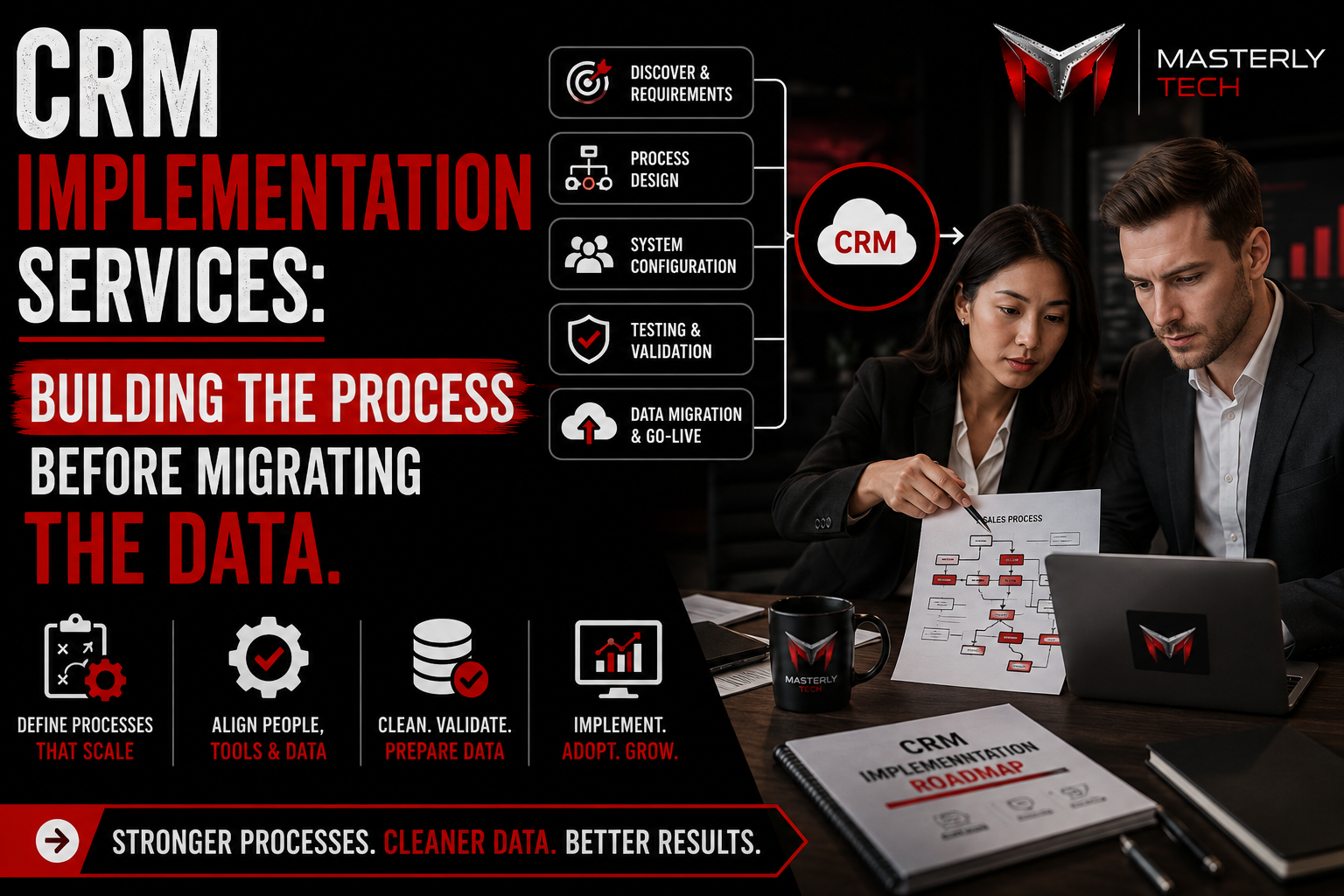
Masterly Tech currently publishes guidance around CRM automation and emphasizes connecting lead generation with routing, follow-up, pipeline management, and the customer journey so the system works as an efficient solution and businesses can use it to its full potential, while still cautioning against treating automation as a collection of random software features.
The website and follow-up process should feel connected.
A polished website followed by a confusing response experience can weaken the trust the website just worked to build.
Lead Generation Website Design Should Protect the Brand
Lead generation and branding are not competing goals.
A website can make it easy to contact your company while still feeling professional, thoughtful, and appropriate for the brand.
In fact, the quality of the website affects the lead-generation experience.
Prospective clients may judge your company based on the clarity of the information, visual quality, ease of navigation, mobile experience, and professionalism of the contact process.
Using social proof like testimonials and case studies can reinforce credibility before a client ever makes contact.
For many businesses, the website is part of the first impression.
A visitor may compare your company with several competitors before speaking with anyone.
That means lead generation website design should support trust before asking for action.
Your company should look like the company the prospect expects to meet after submitting the form, with an experience that also reflects your service quality.
Tracking Should Connect Marketing Performance With Real Inquiries
Website traffic alone cannot tell you whether the site is producing meaningful opportunities.
That is why measurement should extend further into the conversion path.
Which pages attract visitors?
Which pages lead to meaningful actions?
Where are inquiries coming from?
Is marketing performance strong enough to justify ad spend, or are underperforming campaigns wasting budget without producing qualified contacts?
Are important service pages receiving attention without generating the expected next steps?
The exact tracking setup will depend on the business, website, marketing channels, and technology involved.
Call tracking helps reduce wasted ad spend by showing which ads or channels are not producing qualified leads, which also strengthens the marketing data behind campaign decisions.
The point is not to collect every possible number.
It is to collect useful information and data that gives the business better visibility across its marketing efforts, a complete picture of results, and clearer direction on where to allocate resources so its website supports lead generation.
Masterly Tech Builds Websites as Part of a Larger Marketing System
A lead-generating website does not operate by itself.
Search engine optimization may bring people to it. Advertising may send targeted traffic to important pages. Content can answer questions and build trust. Website design shapes the experience. Tracking helps measure what happens through a connected platform that follows performance across channels. The business's internal process determines what happens after an inquiry arrives.
Masterly Tech currently provides custom website design and development, website optimization, SEO, Google Ads and digital advertising, Google Analytics, conversion tracking and analytics, content services, and live web chat. Its website design services emphasize functionality, user experience, SEO, and conversion-focused design.
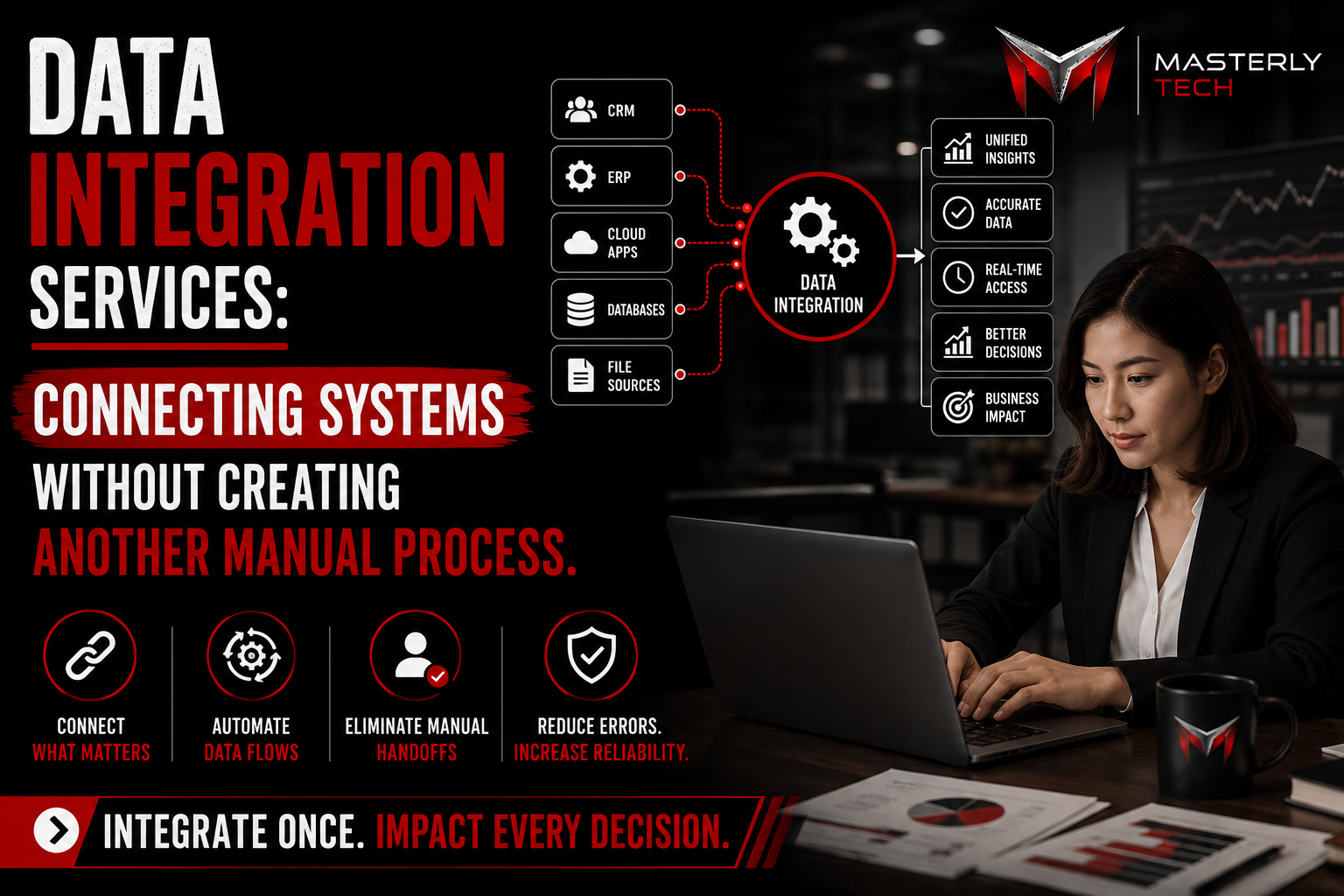
That makes it possible to consider the website as part of the larger customer-acquisition system. Integrated data gives the business access to a more complete picture of performance.
The goal is not simply to build something attractive.
It is to create a professional digital presence that helps the right people understand your business and take the next step.
Better Lead Data Creates a Clearer Path to Qualified Inquiries
A lead generation website should give your business the ability to analyze data and understand what happens between a website visit and a qualified inquiry. Useful metrics, especially those tied to calls, forms, and meaningful visitor actions, can reveal a significant gap between traffic and actual lead quality. Depending on the systems in place, an audit may examine how inquiries move from each device, whether tracking tools enable useful measurement, and whether the business has enough control over its lead data to make informed decisions. Where legally appropriate and properly configured, call recordings may provide additional context about lead quality and customer questions. When developing a stronger measurement system, businesses should also avoid giving the wrong marketing source credit for an inquiry when the available data supports a different customer path. Masterly Tech can help evaluate the website and its measurement strategy so decision-makers have clearer information about which digital efforts are supporting qualified opportunities.

Frequently Asked Questions About Lead Generation Websites
What is a lead generation website?
A lead generation website is designed to help turn relevant website visitors into business inquiries. It connects clear messaging, useful content, conversion paths, contact options, and measurement around the company's goals to improve conversion rates by tracking real actions, including calls, not just page views, with the aim of generating qualified leads rather than general website activity.
What makes lead generation website design different?
Lead generation website design considers what a visitor needs to understand and do before becoming an inquiry. Appearance still matters, but the site is also structured around business objectives and visitor actions.
What is a conversion path?
A conversion path is the journey a visitor follows from arriving on the website to taking a meaningful action, such as calling, submitting a contact form, or requesting a consultation.
What is a qualified inquiry?
A qualified inquiry is a prospective customer whose needs have a meaningful fit with the services, audience, location, or other criteria established by the business.
Should a lead generation website have a contact form?
A contact form can provide a clear way for visitors to reach the company. The form should collect information that supports the business's response without creating unnecessary friction.
Can call tracking be part of website lead generation?
It can be when phone calls are important to the business and the tracking setup is appropriate. Call tracking can provide additional information about the sources of phone inquiries.
What is lead routing?
Lead routing is the process used to direct an incoming inquiry to the appropriate person, team, office, or workflow after it enters the business.
What is follow-up automation?
Follow-up automation uses configured systems to handle appropriate repeatable steps after an inquiry, such as confirmations, notifications, or tasks. It should support the company's sales process by giving sales teams timely context and tasks rather than replace thoughtful human communication.
Does Masterly Tech provide website design?
Yes. Masterly Tech currently provides custom website design, website development, and website optimization, along with SEO and other digital marketing services.
Request a Website Lead-Generation Review Focused on Qualified Inquiries, Not Vanity Traffic
Your business does not need website traffic simply to make an analytics chart look busy.
You need the right visitors to understand what you offer, trust your business, reach the appropriate service, and have a clear way to begin a conversation.
A lead generation website should connect those moments.
Masterly Tech can help businesses examine website design and the larger digital marketing system supporting it, from SEO and traffic generation to conversion-focused pages and performance measurement, using data from calls, forms, and campaign tracking to optimize marketing efforts. Call tracking also plays a crucial role in showing which campaigns drive qualified inquiries and where follow-up can improve results. Where the business's systems require a broader lead-management workflow, routing and follow-up should also be considered as part of what happens after the inquiry.
If your website attracts visitors but produces too few qualified opportunities, the solution may be better visibility, stronger conversion rates, and more deals from the right traffic.
Call Masterly Tech at (888) 209-4055 or visit https://www.masterlytechgroup.com/ to request a website lead-generation review focused on qualified inquiries, not vanity traffic.