If You're Not Using Strategic SEO Content, You're Handing Leads to Your Competition
Every day, people search online for products, services, and businesses that can solve their problems. Those searches represent real opportunities, but they rarely benefit companies that fail to invest in strategic content. If your website is not consistently appearing where customers are looking, someone else's business is earning the attention—and the leads—that could have belonged to you. In today's competitive digital landscape, visibility is no longer optional.
Many business owners assume a professional-looking website alone will generate traffic and conversions. Unfortunately, appearance without strategy often produces disappointing results. Even beautifully designed pages struggle when they lack optimized content that helps search engines understand their purpose. Strong SEO content transforms a website from a digital brochure into a valuable marketing asset that continuously attracts qualified visitors.
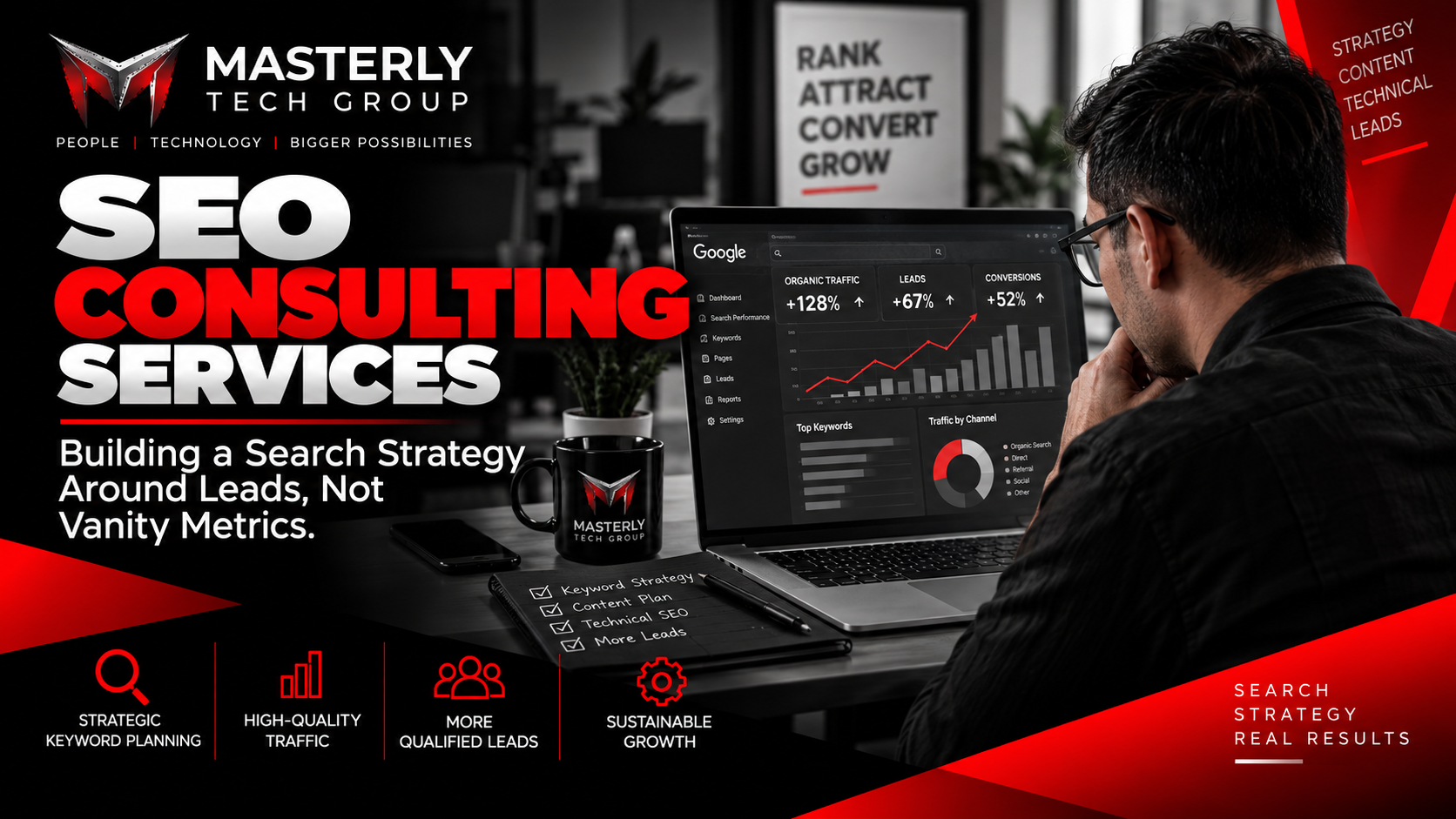
At Masterly Tech Group, we help businesses create content strategies that improve online visibility, strengthen brand authority, and generate measurable business growth. Whether your company serves homeowners, healthcare clients, attorneys, contractors, or real estate agents, strategic SEO content positions your business where prospective customers are already searching.
Online Visibility Determines Business Growth
Consumers rarely purchase services from companies they cannot find. Before making a decision, they compare businesses, review information, and evaluate credibility. If your website fails to appear during those searches, your competitors gain valuable opportunities to build trust first.
SEO content helps businesses become visible during those important decision-making moments. Every optimized page increases the likelihood that qualified visitors discover your services before choosing another provider.
Greater visibility creates more opportunities for meaningful customer relationships.
Your Competition Is Publishing While You Wait
Many companies postpone content creation because they believe they can focus on marketing later. Unfortunately, competitors who publish consistently continue expanding their online presence every week.
Every optimized article, service page, and educational resource strengthens a company's authority within its industry. Businesses that invest consistently often outperform competitors that publish only occasionally.
Waiting too long allows competitors to establish stronger digital momentum.
Content Continues Working Around the Clock
Unlike temporary advertising campaigns, optimized content continues attracting visitors long after publication. A well-written article may generate qualified leads for months or even years.
Strategic SEO transforms every published page into a long-term business asset. Instead of constantly restarting marketing efforts, companies build a growing library of valuable content that supports sustainable growth.
Long-term consistency often outperforms short-term marketing bursts.
Strategic Content Builds Trust Before Sales Conversations Begin
Today's customers prefer researching businesses before contacting them. Educational articles, service pages, and industry resources allow prospective clients to become familiar with your expertise before making an inquiry.
When visitors consistently find valuable information throughout your site, they begin viewing your company as a knowledgeable resource rather than another sales organization. Trust often develops before the first phone call or consultation.
Credibility becomes one of your strongest competitive advantages.
Your Website Should Answer Customer Questions
Every customer begins with questions. They want to understand available services, compare providers, evaluate pricing, and determine whether your company understands their needs.
Strategic SEO content allows your website to answer these questions proactively. Every informative page helps visitors make confident decisions while reducing uncertainty during the buying process.
Helpful information encourages visitors to remain engaged longer.
Search Engines Reward Valuable Information
Modern search engines prioritize websites that consistently provide useful, relevant information. Thin pages containing only promotional language rarely perform as well as comprehensive educational resources.
Publishing thoughtful content demonstrates expertise while helping search engines better understand your business. Higher-quality content often leads to stronger search visibility over time.
Quality always supports long-term SEO performance.
Every Industry Benefits from Strategic SEO
Some business owners mistakenly believe SEO only benefits large corporations or online retailers. In reality, organizations across nearly every industry depend upon online visibility to reach prospective customers.
Healthcare providers, contractors, manufacturers, attorneys, consultants, retailers, and real estate professionals all compete for attention within increasingly crowded digital markets. Strategic content helps businesses stand apart regardless of industry.
Visibility benefits organizations of every size.
Real Estate Websites Face Intense Competition
Few industries demonstrate digital competition more clearly than the real estate industry. Thousands of real estate websites compete daily for local traffic, buyer attention, and seller inquiries.
Without consistent SEO content, even experienced real estate agents may struggle to generate qualified inquiries through their real estate agent websites. Strong content helps professionals distinguish themselves while demonstrating market knowledge and local expertise.
Digital visibility has become essential within today's housing market.
Real Estate Agents Need More Than Property Listings
Many real estate websites rely almost exclusively on property listings. Although listings remain important, they rarely provide enough unique content to consistently outperform competitors.
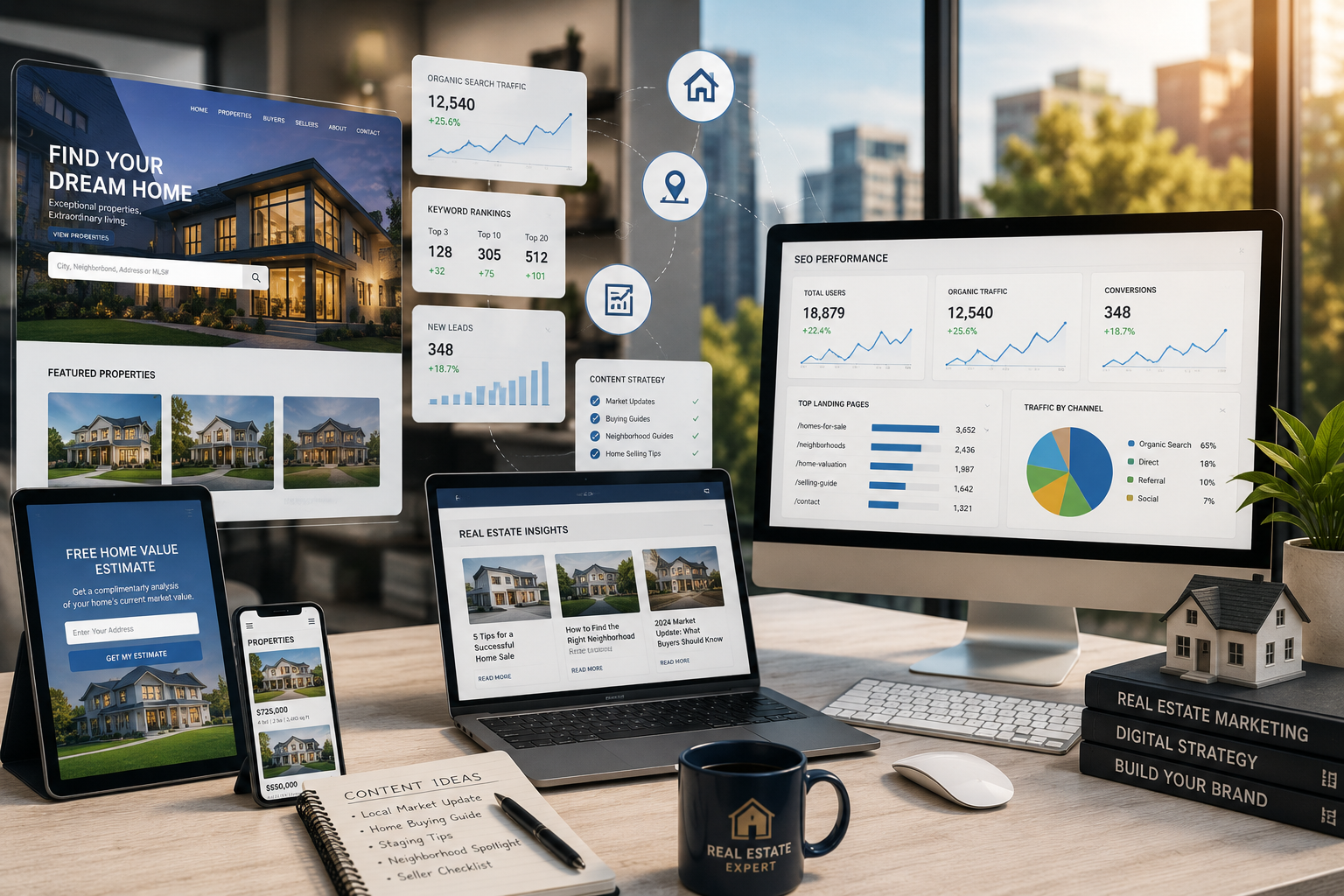
Successful real estate agent websites often include neighborhood guides, market updates, educational articles, buying resources, and seller information that supports ongoing SEO growth. These additional pages expand search visibility while helping buyers and sellers make informed decisions.
Educational content strengthens long-term marketing performance.
Effective Real Estate Websites Create Better Experiences
The most effective real estate websites prioritize both usability and valuable information. Visitors should immediately understand what services are offered while navigating the website easily.
An organized user friendly interface encourages visitors to remain on the site longer while exploring available resources. Clear navigation, educational content, and intuitive design create stronger user experiences.
Positive experiences increase engagement and conversion opportunities.
Agent Websites Should Reflect Professional Expertise
Professional agent websites should communicate credibility from the moment visitors arrive. Strong messaging, informative content, and organized navigation all contribute to positive first impressions.
Every website should clearly demonstrate the experience, specialization, and local expertise that distinguish the business from competing agents. Visitors often decide within seconds whether they will continue exploring a website.
Professional presentation supports stronger conversion rates.
A User Friendly Website Encourages Engagement
Visitors expect modern websites to function smoothly across every device. Fast loading speeds, intuitive menus, and responsive layouts improve satisfaction while encouraging deeper engagement.
A user friendly experience reduces frustration while increasing the likelihood that visitors contact your company. Every improvement supporting usability also contributes to stronger SEO performance.
Convenience influences customer behavior.
Brokerage Websites Represent Entire Organizations
Unlike individual agent websites, brokerage websites often represent multiple professionals working together. These larger platforms require organized content strategies supporting many service areas, specialties, and geographic markets.
Every brokerage benefits from service pages, community information, educational articles, and detailed agent profiles. Comprehensive content helps both customers and search engines understand the organization's strengths.
Larger websites require stronger content planning.
Strong Branding Supports SEO Success
Search rankings alone rarely produce lasting business growth. Businesses also need memorable identities that encourage visitors to remember and recommend them.
A recognizable brand supported by consistent messaging strengthens customer confidence while improving long-term marketing effectiveness. Strategic content reinforces that identity throughout every page of the website.
Consistency builds familiarity over time.
Every Page Supports Your Brand
Each published article contributes to your company's reputation. Visitors evaluate professionalism, knowledge, communication style, and attention to detail through every interaction they have with your content.
Well-written pages reinforce your brand while encouraging visitors to continue exploring your services. Every page becomes another opportunity to strengthen customer confidence.
Small improvements accumulate into meaningful long-term results.
Strategic Content Generates Qualified Leads
Traffic alone does not guarantee business growth. The objective is attracting qualified visitors who are genuinely interested in your products or services.
Thoughtfully optimized content improves lead quality because it aligns closely with customer search intent. Businesses that consistently publish helpful information often generate stronger leads than organizations relying exclusively on paid advertising.
Qualified visitors are more likely to become loyal customers.
Modern Buyers Expect Helpful Information
Today's buyers research extensively before contacting businesses. They compare companies, read educational content, review testimonials, and evaluate expertise before making purchasing decisions.
Providing comprehensive information allows your website to participate in that research process. Instead of waiting for inquiries, your business begins building trust during every customer search.
Helpful content influences purchasing decisions before conversations even begin.
Strategic SEO Helps Businesses Stand Out in Competitive Markets
Every industry becomes more competitive as additional companies invest in digital marketing. Businesses that publish valuable SEO content consistently create more opportunities to stand out while attracting qualified visitors looking for specific solutions.
Rather than competing solely on price, organizations can compete through education, expertise, and trust. Strong content allows your website to demonstrate authority before a customer ever schedules a consultation or requests additional information.
Long-term visibility creates lasting competitive advantages.
Every Website Should Include Lead Capture Opportunities
Generating traffic without collecting contact information limits future marketing opportunities. Every successful website should include thoughtfully placed lead capture opportunities that encourage visitors to continue the conversation.
Whether through consultation requests, downloadable resources, newsletters, or contact forms, effective lead capture transforms anonymous traffic into valuable business opportunities. The easier you make it for visitors to connect, the more qualified leads your business can generate.
Simple improvements often produce meaningful increases in conversions.
Visitors Need Clear Next Steps
Many websites lose valuable opportunities because visitors cannot easily determine what to do next. Every important page should include a clear invitation encouraging users to request information, schedule a consultation, or learn more.
Removing confusion creates smoother customer experiences while increasing the likelihood that visitors become future clients.
Real Estate Agent Websites Should Educate Buyers and Sellers
Modern real estate agent websites should serve as educational resources instead of simple online brochures. Buyers and sellers often have questions regarding financing, negotiations, inspections, pricing strategies, and neighborhood comparisons.
Publishing informative content helps real estate agents demonstrate expertise while improving search visibility. Strong educational resources also encourage prospective buyers to remain on the site longer while building confidence in the realtor they choose.
Knowledge builds trust before conversations begin.
Market Reports Strengthen Local Authority
Regularly publishing market reports demonstrates that your business understands changing conditions within the local market. Buyers and sellers frequently search for current information before making important financial decisions.
Well-written market reports also provide valuable opportunities to target location-specific search phrases while strengthening your authority among local customers. Businesses that consistently share current information often become trusted resources within their communities.
Fresh content supports long-term SEO growth.
Neighborhood Content Creates Local Visibility
Customers rarely search only by city name. Many also search for specific neighborhood information before making purchasing decisions.
Creating dedicated pages discussing schools, amenities, housing trends, transportation, and community highlights improves local relevance. These pages strengthen SEO while helping prospective buyers evaluate different areas more confidently.
Local information creates meaningful value.
Interactive Features Improve User Experience
Visitors appreciate websites offering practical tools that simplify decision-making. Features such as interactive maps, neighborhood guides, and comparison resources help users evaluate options more efficiently.
Including interactive maps encourages longer visits while improving engagement throughout the website. These practical tools benefit both users and search performance by increasing overall interaction.
Convenience supports stronger conversions.
Mortgage Calculators Help First-Time Buyers
Educational tools such as mortgage calculators provide immediate value for visitors who are evaluating purchasing decisions. Many first time homebuyers appreciate the opportunity to estimate monthly payments before contacting an agent.
Adding mortgage calculators helps businesses demonstrate customer-focused thinking while encouraging visitors to remain engaged longer. Helpful resources often increase trust while generating additional leads.
Useful tools encourage return visits.
Helping First Time Homebuyers Build Confidence
Purchasing property can feel overwhelming for first time homebuyers. Educational content explaining financing, inspections, negotiations, and closing procedures reduces uncertainty while encouraging informed decisions.
Businesses that guide customers through every stage of the buying process often create stronger long-term relationships than competitors focused only on transactions.
Education supports confidence.
High Quality Visual Content Improves Engagement
Today's customers expect attractive, informative websites supported by professional imagery. High quality photos and high resolution images help visitors better understand available properties while improving overall presentation.
Whether showcasing residential homes, commercial buildings, land, or investment opportunities, compelling visuals increase engagement throughout the site. Professional photography also strengthens credibility while reinforcing a polished online image.
Presentation influences purchasing decisions.
Showcase Listings with Professional Presentation
Every business should carefully showcase listings using organized layouts, compelling descriptions, and attractive visuals. Whether promoting residential homes, commercial properties, or luxury listings, presentation matters.
Professional content allows potential customers to understand the value of each opportunity before scheduling a showing or requesting additional information. Better presentation supports stronger engagement and increased inquiries.
Well-presented listings create stronger first impressions.
Luxury Listings Require Premium Marketing
Marketing luxury listings requires more than uploading photographs. Affluent buyers often expect detailed descriptions, exceptional visuals, and polished digital experiences reflecting the quality of the property itself.
Strategic SEO content allows luxury properties to reach qualified audiences while reinforcing professionalism and attention to detail.
Premium properties deserve premium marketing.
Brokerage Websites Should Support Every Agent
Growing brokerage websites should provide equal visibility opportunities for every member of the team. Individual profiles, service pages, market expertise, and educational resources strengthen both the organization and its agents.
A coordinated content strategy benefits the entire brokerage by improving overall authority while helping every realtor develop a stronger online presence. Shared success strengthens organizational growth.
Collaboration creates better results.
Strong Features Keep Visitors Engaged
The most successful websites include valuable features that encourage exploration beyond the homepage. Search filters, educational resources, neighborhood information, and service explanations all contribute to stronger engagement.
Every additional feature should support customer decision-making while reinforcing the company's expertise. Practical features improve usability while strengthening SEO performance.
Helpful websites perform better.
Client Testimonials Build Credibility
Nothing reinforces trust quite like authentic client testimonials. Positive experiences shared by previous customers demonstrate reliability while helping prospective clients feel more comfortable contacting your business.
Testimonials also reinforce your brand by highlighting consistent service quality and customer satisfaction. Trust remains one of the strongest conversion factors online.
Modern Website Design Supports Marketing Success
An attractive website should balance visual appeal with functionality. A modern design, clean design, sleek design, and clean lines create professional first impressions without distracting from important information.
Visitors appreciate websites that are easy to navigate while clearly communicating available services. Thoughtful design improvements strengthen both usability and credibility.
Good design supports good marketing.
Build Your Own Real Estate Website with Long-Term Growth in Mind
Every professional should consider investing in their own real estate website rather than relying exclusively on third-party platforms. Building your own real estate website provides greater control over branding, SEO strategy, content creation, and lead generation.
Unlike generic listing portals, a customized website allows real estate agents to establish authority while developing a recognizable online identity. Long-term ownership creates long-term marketing value.
Digital assets should belong to your business.
Customizable Websites Support Business Growth
Many businesses benefit from flexible platforms offering customizable templates that simplify ongoing updates while maintaining consistent branding. Whether working with an independent builder or an experienced marketing agency, flexibility allows companies to adapt as they grow.
Professional customization helps businesses remain competitive while supporting future expansion.
SEO Creates Sustainable Business Success
Paid advertising can generate immediate traffic, but strategic SEO content continues producing results long after publication. Businesses that consistently publish educational resources build authority while attracting qualified leads month after month.
Rather than depending entirely on advertising budgets, organizations create lasting visibility through consistent content development. Sustainable marketing creates sustainable success.
Visibility compounds over time.
Strategic Real Estate Websites Help Attract the Right Buyers
A professionally designed real estate website should do more than display listings—it should attract clients by providing useful information and an exceptional user experience. Whether your business specializes in the real estate market, exclusive properties, residential homes, commercial buildings, or rent opportunities, your website should help home buyers and potential buyers find the information they need with confidence. The best real estate websites combine educational content, local expertise, and a personal touch that makes visitors feel understood rather than pressured. Every page should encourage potential clients to connect directly with your team, turning your website into a powerful tool for long-term lead generation and business growth.
Every Property Page Should Support the Customer Journey
A well-crafted property page is a great example of how strategic SEO content can build trust while improving online visibility. Be sure to note important details that help buyers make informed decisions, including neighborhood highlights, nearby amenities, property features, and financing considerations. Every listing should clearly address the questions customers commonly ask while supporting both the buying and selling process through informative, well-optimized content. When every page provides genuine value instead of simply displaying listings, your website becomes a trusted resource that encourages visitors to return whenever they are ready to make their next real estate decision.
Partner with Masterly Tech Group to Generate More Qualified Leads
Your website should do more than exist—it should actively generate leads, strengthen your brand, and support measurable business growth. Whether you're building one of the best realtor websites, improving existing real estate websites, optimizing agent websites, or expanding digital marketing for another industry, Masterly Tech Group develops SEO strategies designed to deliver long-term results.
Our experienced team works with companies, brokers, independent agents, and growing organizations to create high-performing websites, strengthen online visibility, and improve conversion opportunities. From SEO content and technical optimization to property search functionality, custom landing pages, and Google Ads management by a Google Ads expert, we provide comprehensive digital marketing services that help businesses compete more effectively.
If your business is ready to stop losing opportunities to competitors and start generating more qualified leads, contact Masterly Tech Group today at (888) 209-4055 to schedule your free consultation. We'll evaluate your current digital presence, identify growth opportunities, and develop a customized strategy that helps your website attract more visitors, convert more customers, and build lasting online success.