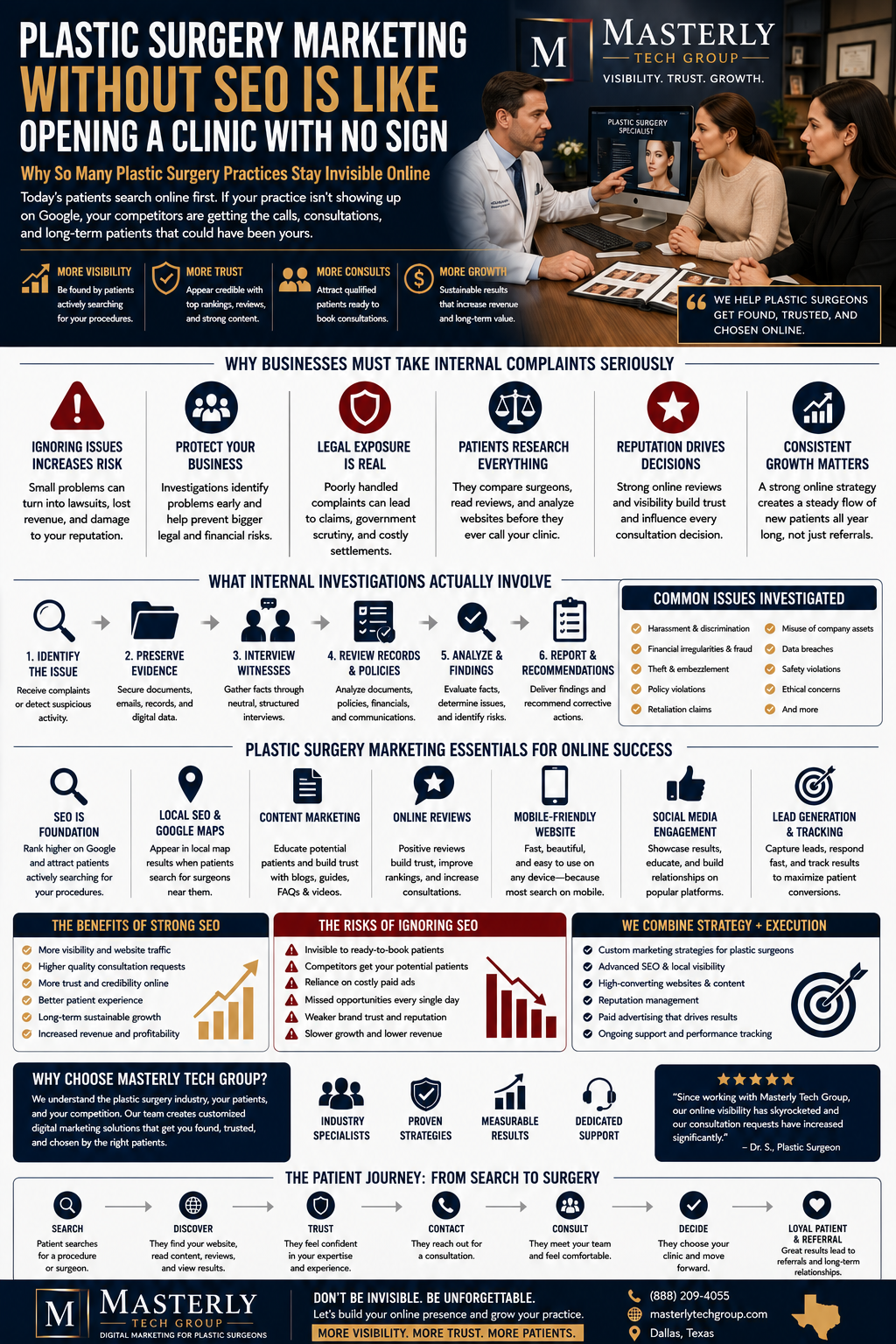
Plastic Surgery Marketing Without SEO Is Like Opening a Clinic With No Sign
Why So Many Plastic Surgery Practices Stay Invisible Online
A beautifully designed office, experienced surgeons, advanced procedures, and a skilled medical team should be enough to attract attention. Unfortunately, in today’s digital world, even outstanding clinics can struggle if people cannot find them online. Many plastic surgeons invest heavily in equipment, staffing, and patient experience while overlooking the one thing that determines whether new people discover the practice in the first place. Visibility on google and other search engines now influences nearly every stage of patient decision-making.
When someone searches for a rhinoplasty specialist, facelift surgeon, or body contouring consultation, they usually begin online. They search on mobile devices, compare reviews, look at photos, and study multiple websites before making contact. If your plastic surgery practice is buried on page three of search results, prospective patients may never know your clinic exists. That means your competitors are booking consultations with patients who could have become your long-term clients.
At Masterly Tech Group, we help plastic surgeons build powerful online visibility through modern digital marketing and strategic seo implementation. Our team understands that a successful plastic surgery brand requires more than attractive photos and social media posts. It requires a focused system that positions your practice where ready-to-book patients are already searching every single day.
Plastic Surgery Marketing Has Changed Dramatically
Years ago, many clinics relied heavily on referrals, print advertising, magazines, or local networking events. While referrals still matter, patient behavior has changed significantly. Today’s cosmetic surgery patients spend hours researching procedures online before they ever call a clinic.
Modern plastic surgery marketing now depends heavily on search visibility, reputation management, content strategy, and local online presence. Patients want to feel informed and confident before scheduling consultations. They compare websites, analyze online reviews, review surgeon credentials, and evaluate before-and-after photos long before they speak to anyone from the clinic.
This shift means marketing for plastic surgeons must focus on online visibility first. Without strong search engine optimization, even highly qualified surgeons can remain invisible to the people actively searching for their services.
Your Website Is Often the First Impression
For many prospective patients, your website becomes the first interaction they have with your practice. Before they ever step into your office, they are evaluating your professionalism, expertise, and credibility online.
An outdated or poorly optimized website creates immediate trust issues. Slow loading pages, confusing navigation, weak content, or missing information can cause visitors to leave within seconds. In a highly competitive market, patients often compare several practices at once, and first impressions matter tremendously.
A modern plastic surgery practice needs a website that is visually appealing, informative, fast, and optimized for google search visibility. Without that foundation, even aggressive advertising campaigns may struggle to generate meaningful results.
Why SEO Matters More Than Ever
Many clinics mistakenly believe paid ads alone will solve their visibility problems. While paid advertising can help generate short-term traffic, long-term growth usually requires strong search engine optimization.
SEO helps your clinic appear organically in search results when potential patients look for procedures or surgeons in their local area. Instead of constantly paying for every click, optimized content and strong local visibility create sustainable online growth over time.
When someone searches phrases like “best facelift surgeon near me” or “breast augmentation consultation,” clinics with strong plastic surgery seo strategies are far more likely to appear first. That visibility directly impacts consultation requests, patient trust, and long-term revenue growth.
Local SEO Is the Modern Version of a Street Sign
Imagine opening a beautiful clinic in a busy city but forgetting to place a sign outside the building. Patients may drive past every day without knowing you exist. That is exactly what happens when clinics ignore local seo.
Local SEO helps practices appear on google Maps, local search listings, and nearby location-based results. When someone searches for a plastic surgeon in their city, Google prioritizes practices with optimized profiles, strong reviews, consistent business information, and relevant website content.
Without local visibility, your clinic becomes nearly invisible to nearby patients actively searching for procedures. That invisibility quietly costs practices consultations every single day.
Google Maps Visibility Influences Patient Decisions
Many patients never scroll past the map listings shown on google search pages. Those top local listings often receive the majority of clicks, calls, and consultation requests.
A properly optimized Google Business Profile helps your clinic appear in local map searches while showcasing reviews, photos, office information, and services offered. This visibility builds trust quickly because patients see your clinic as established and credible.
Strong map optimization is one of the most overlooked areas of plastic surgery marketing, yet it often produces some of the highest conversion opportunities.
Plastic Surgeons Cannot Rely Only on Referrals
Referrals remain valuable, but relying solely on word-of-mouth creates serious limitations for long-term business growth. Patient referral patterns fluctuate, and competition continues increasing in many cities.
A strong online presence creates a more predictable system for attracting new patients consistently. Instead of waiting passively for referrals, strategic marketing helps your clinic actively reach people already researching procedures online.
Successful plastic surgeons now combine referrals with strong SEO, content strategy, reviews, and digital visibility to maintain steady growth.
Why Organic Search Traffic Matters
Organic traffic refers to visitors who discover your clinic naturally through search results instead of paid ads. These visitors are often highly valuable because they are actively searching for procedures, surgeons, or consultations.
Unlike short-term ad campaigns, organic visibility continues working long after content is published. High-ranking pages can generate leads for months or even years when optimized correctly.
Strong organic search visibility also builds credibility. Patients often trust organic rankings more than advertisements because they view top results as more authoritative and established.
Cosmetic Surgery Patients Research Everything
Today’s cosmetic surgery patients rarely make impulsive decisions. They spend significant time researching surgeons, reading reviews, analyzing credentials, and comparing procedures.
Patients often search for:
- Recovery timelines
- Before-and-after photos
- Pricing information
- Surgeon qualifications
- Procedure details
- Patient experiences
- Safety concerns
- Financing options
Clinics that provide useful educational content build trust earlier in the decision-making process. Strong content marketing helps practices become trusted resources instead of just another advertisement online.
Content Marketing Builds Authority
Educational content is one of the most effective tools in modern digital marketing strategies. Patients want answers before booking consultations, and clinics that provide valuable information often earn greater trust.
Blogs, procedure pages, FAQs, recovery guides, and educational videos help patients feel more informed about cosmetic procedures. High quality content also improves SEO performance by helping search engines understand what your clinic specializes in.
At Masterly Tech Group, we help clinics create strategic content that supports both patient education and long-term search visibility.
Marketing for Plastic Surgeons Requires Strategy
Random social media posts and occasional advertising rarely create sustainable results. Effective marketing for plastic surgeons requires a structured long-term strategy designed around patient behavior and search trends.
A strong marketing plan often includes:
- Local SEO optimization
- Website improvements
- Reputation management
- Content development
- Social media marketing
- Google Maps optimization
- Email campaigns
- Paid advertising
- Lead tracking systems
Without a structured plan, practices often waste money on disconnected marketing activities that fail to generate measurable growth.
Why Social Media Alone Is Not Enough
Many clinics focus heavily on Instagram or TikTok while ignoring search visibility. While social media plays an important role in branding and engagement, it should not replace SEO.
Social media platforms can generate visibility, but most patients still use google and other search engines when researching surgeons or procedures seriously. Social media often supports discovery, while search drives high-intent patient inquiries.
A balanced strategy combines SEO, content, advertising, and social engagement together for stronger long-term results.
Social Media Marketing Still Supports Growth
Although SEO is critical, social media marketing still plays an important supporting role in patient engagement and brand awareness. Platforms like Instagram allow surgeons to showcase results, educate patients, and highlight personality.
Strong social content helps humanize the practice while building familiarity and trust. Patients often review social profiles before booking consultations because they want to feel comfortable with the clinic culture.
An effective social media strategy should support your overall digital presence instead of functioning separately from it.
Online Reviews Influence Nearly Every Consultation Decision
Few things affect patient trust faster than reviews. Modern patients carefully analyze online reviews before choosing a surgeon, especially for elective cosmetic procedures.
A clinic with dozens of strong reviews often appears safer, more experienced, and more trustworthy. Meanwhile, practices with limited reviews or unresolved complaints may lose patients immediately.
Encouraging happy patients to leave reviews consistently helps strengthen local search visibility while improving credibility with future patients.
Negative Reviews Can Quietly Hurt Growth
Even a few unresolved negative reviews can discourage prospective patients from contacting your clinic. Patients often interpret silence as avoidance, especially when concerns appear unanswered.
Professional reputation management helps practices respond appropriately while maintaining professionalism and trust. Clinics should monitor reviews regularly and encourage satisfied patients to share positive experiences online.
A proactive review strategy supports both patient trust and local SEO performance.
Patient Testimonials Build Emotional Trust
Strong patient testimonials often influence consultation decisions more than advertising itself. Real stories help prospective patients visualize their own experience and feel more confident moving forward.
Patients want reassurance that others achieved positive results and felt supported throughout the process. Testimonials also humanize the practice by highlighting emotional outcomes instead of just technical procedures.
Trust plays a huge role in cosmetic decision-making, and testimonials help strengthen that emotional connection.
Before and After Galleries Matter
One of the first things patients look for on a plastic surgery website is visual proof of results. Strong before and after galleries help patients evaluate skill, consistency, and aesthetic style.
High-quality galleries also improve engagement time on the website, which may support SEO performance indirectly. Patients who spend more time exploring content often develop stronger trust in the practice.
Professional photography and organized galleries remain essential components of modern plastic surgery marketing.
Mobile Friendly Websites Are Essential
Most cosmetic surgery searches now happen on mobile devices. A site that performs poorly on phones creates frustration immediately.
A mobile friendly website should load quickly, display correctly, and make navigation simple. Patients should easily find contact forms, procedure information, reviews, and consultation options without struggling to use the site.
Google also prioritizes mobile performance in rankings, making mobile optimization critical for SEO success.
Technical SEO Supports Search Visibility
Many clinics focus only on visuals while ignoring technical seo. However, behind-the-scenes website structure strongly affects search performance.
Technical SEO includes:
- Site speed optimization
- Mobile responsiveness
- Secure website structure
- Metadata improvements
- URL organization
- Schema markup
- Crawlability improvements
Without proper technical optimization, even excellent content may struggle to rank effectively in search engines.
Google Rewards Relevant Local Content
Search engines prioritize relevance and location. A clinic serving Dallas patients should have content specifically optimized for that area instead of generic pages copied from competitors.
Localized procedure pages, city-specific blogs, and optimized Google profiles help practices rank more effectively for local searches. Patients searching locally are often closer to booking consultations than broader national audiences.
Strong localized content helps clinics connect with nearby ideal patients actively searching for procedures.
Plastic Surgery Practices Lose Patients Every Day Without SEO
Many surgeons do not realize how many consultations they lose simply because patients cannot find them online. Invisible clinics often assume slow growth is caused by market conditions or seasonal demand.
In reality, competitors with stronger SEO strategies are appearing higher in search results and capturing attention first. Those practices often receive the calls, form submissions, and consultation bookings from patients ready to move forward.
SEO is no longer optional for modern plastic surgery practice growth.
Marketing Activities Should Be Measurable
One major advantage of modern digital marketing is measurable performance tracking. Practices should understand where leads come from, which pages generate consultations, and what campaigns produce results.
Tracking helps clinics improve conversion rates, reduce wasted advertising spending, and make smarter long-term decisions. Effective marketing is not just about visibility. It is about measurable patient acquisition.
Strong analytics also help clinics understand which procedures attract the highest-value patients online.
Paid Advertising Can Support SEO Efforts
While SEO creates long-term visibility, paid advertising can support short-term growth and targeted campaigns. Strategic Google ads help practices appear quickly for high-intent searches.
However, relying entirely on paid ads creates expensive long-term dependence. Once the ads stop, visibility disappears immediately.
Combining SEO with smart advertising creates a stronger balance between immediate leads and long-term organic growth.
Plastic Surgeons Need More Than Generic Marketing
Many general marketing agencies lack specialized understanding of cosmetic medicine. Marketing for plastic surgeons requires a very different strategy than marketing restaurants, retail stores, or general businesses.
Cosmetic patients are highly emotional, research-driven, and cautious. Marketing must balance professionalism, trust, education, compliance, and visual appeal simultaneously.
At Masterly Tech Group, we understand the unique challenges plastic surgeons face in highly competitive markets.
Medical Marketing Requires Compliance Awareness
Healthcare marketing involves legal and ethical considerations many general marketers overlook. Clinics must remain aware of advertising restrictions, patient privacy concerns, and state regulations affecting medical promotion.
An experienced marketing agency understands how to create compliant campaigns without sacrificing effectiveness. Practices should never rely on inexperienced marketers unfamiliar with healthcare advertising rules.
Compliance protects both the clinic’s reputation and long-term business stability.
Email Marketing Still Works
Some clinics underestimate the power of email marketing, but email remains highly effective for patient nurturing and retention. Many prospective patients research procedures for months before scheduling consultations.
Email campaigns help clinics stay visible during the decision-making process by providing educational updates, promotions, testimonials, and reminders.
Well-structured email campaigns often improve patient engagement while increasing repeat procedures and referrals.
Lead Management Improves Conversion Opportunities
Generating traffic is only part of the process. Practices also need strong lead management systems to respond quickly and consistently to inquiries.
Patients often contact multiple clinics before booking consultations. Delayed responses may cause them to move on immediately.
Efficient lead handling improves conversion opportunities and helps practices maximize the value of their marketing investment.
High Quality Content Builds Long-Term SEO Strength
Search engines increasingly reward high quality content that genuinely helps users. Thin or generic pages rarely perform well long-term.
Educational blogs, procedure explanations, recovery information, FAQs, and detailed guides improve both SEO and patient trust. Strong content positions the clinic as knowledgeable and authoritative within the cosmetic surgery space.
Quality content also creates opportunities for long-term organic visibility.
Plastic Surgery Patients Want Transparency
Modern patients expect transparency regarding procedures, recovery expectations, pricing considerations, and surgeon credentials. Clinics that appear vague or overly promotional may struggle to build trust.
Patients appreciate clear communication and realistic expectations. Strong educational content combined with honest messaging helps practices attract more qualified consultations.
Transparency also improves patient satisfaction because expectations are established earlier.
SEO Is a Long-Term Investment
Many clinics expect immediate results from SEO and become frustrated too quickly. Unlike paid ads, SEO builds gradually over time.
However, strong SEO creates sustainable visibility that continues producing traffic long-term. A properly optimized site can generate consultations consistently without depending entirely on paid advertising.
SEO should be viewed as a long-term business investment rather than a quick marketing trick.
Direct Marketing Alone No Longer Works
Traditional direct marketing methods like postcards or generic mailers may still support branding, but they rarely replace digital visibility today.
Patients almost always verify clinics online before booking consultations. Even referrals often lead patients directly to Google searches, websites, and review platforms.
A clinic with poor online visibility may lose referrals simply because the digital experience appears weak.
Direct Mail Can Support Branding
Although digital marketing dominates modern patient acquisition, selective direct mail campaigns may still support branding efforts in certain markets.
Luxury-focused campaigns targeting specific demographics sometimes complement broader SEO and advertising strategies. However, direct mail works best when integrated into a larger multi-channel approach.
Practices relying only on traditional advertising methods often struggle to compete online.
Plastic Surgery Practices Need Consistent Marketing
One common mistake clinics make is inconsistent marketing activity. Some practices invest heavily for a few months, stop entirely, and then wonder why growth slows again.
Consistent visibility matters in competitive markets. SEO, content, reviews, and social media all work best when maintained continuously over time.
Successful practices treat marketing as an ongoing business function rather than a temporary project.
Google Continues Changing Search Behavior
Search behavior changes constantly. Patients now use voice searches, mobile searches, map searches, and AI-driven recommendations more than ever before.
Clinics that fail to adapt often lose visibility quietly over time. Strong SEO strategies evolve continuously based on search trends, patient behavior, and Google algorithm updates.
Practices that stay visible consistently usually outperform competitors long-term.
New Patients Begin With Search
For most clinics, a large percentage of new patients now begin their journey online. Before they ever make a phone call, they search for surgeons, compare reviews, and analyze websites.
This means your digital presence directly affects patient acquisition. A strong website combined with effective SEO creates a more predictable pipeline of consultations and inquiries.
Visibility creates opportunity, and invisible clinics quietly lose business daily.
Marketing Experts Understand Competitive Markets
Working with experienced marketing experts helps practices avoid costly mistakes and wasted spending. A specialized healthcare marketing team understands patient psychology, local search behavior, and cosmetic industry competition.
At Masterly Tech Group, we focus on strategies designed specifically for plastic surgeons and cosmetic clinics. We understand how to create visibility that drives consultations instead of vanity metrics.
Our team focuses on sustainable growth, measurable results, and long-term digital success.
Referrals and SEO Work Together
Referrals remain valuable, but strong SEO amplifies referral effectiveness significantly. Even referred patients often search online before scheduling consultations.
A strong digital presence reassures referred patients and increases confidence in the clinic. Reviews, search rankings, educational content, and visual branding all support trust during that process.
SEO and referrals should support each other rather than compete.
Plastic Surgery Marketing Requires Patience and Precision
Successful plastic surgery marketing requires strategic planning, consistent effort, and realistic expectations. Growth rarely happens overnight, especially in highly competitive cities.
However, clinics that commit to long-term SEO and digital visibility often create stronger and more sustainable patient pipelines over time.
Practices that remain invisible online risk losing ready-to-book patients to competitors every single day.
The Entire Team Influences Patient Experience
Marketing does not stop once a lead becomes a consultation. The entire team affects patient perception, reviews, referrals, and long-term reputation.
Phone interactions, scheduling responsiveness, consultation experience, and follow-up communication all influence whether patients move forward or recommend the practice later.
Strong operations combined with strong marketing create the best long-term growth opportunities.
Why Masterly Tech Group Focuses on Local SEO
At Masterly Tech Group, we understand how important local visibility has become for modern cosmetic clinics. Patients searching for surgeons in their city are often highly motivated and ready to book consultations.
Our team focuses heavily on local SEO implementation, Google Maps optimization, website performance, content development, and long-term organic growth strategies for cosmetic practices.
We help clinics stop relying entirely on expensive ads and start building stronger organic visibility where patients are already searching.
Invisible Practices Lose Revenue Quietly
One of the biggest dangers of poor SEO is that clinics often do not realize how much business they are losing. Invisible practices miss opportunities quietly while competitors continue appearing in top search positions.
Those missed searches represent real people actively looking for consultations, procedures, and expert surgeons. Every day your clinic remains difficult to find online is another day competitors capture attention first.
Visibility matters because patient decisions now begin online.
Speak With Masterly Tech Group About Plastic Surgery Marketing
If your clinic is struggling to appear in Google search results, losing visibility to competitors, or relying too heavily on inconsistent referrals, now is the time to strengthen your digital presence. Modern patients search online before making cosmetic decisions, and practices without strong SEO strategies risk becoming invisible in a highly competitive market.
Masterly Tech Group helps plastic surgeons build stronger online visibility through strategic SEO implementation, Google Maps optimization, website improvements, content development, and targeted digital marketing solutions. Our team understands the unique challenges cosmetic practices face and creates customized strategies designed to attract more leads, increase consultations, and support long-term business growth.
Whether your practice needs stronger local rankings, improved search visibility, better conversion performance, or a complete digital marketing strategy, our team is ready to help. Contact Masterly Tech Group today at (888) 209-4055 to book a free consultation and learn how effective plastic surgery marketing can help your practice attract more patients and grow with confidence.