SEO for Accountants: The Strategic Blueprint for Getting on Google’s First Page
Why Some Accounting Firms Always Appear First on Google
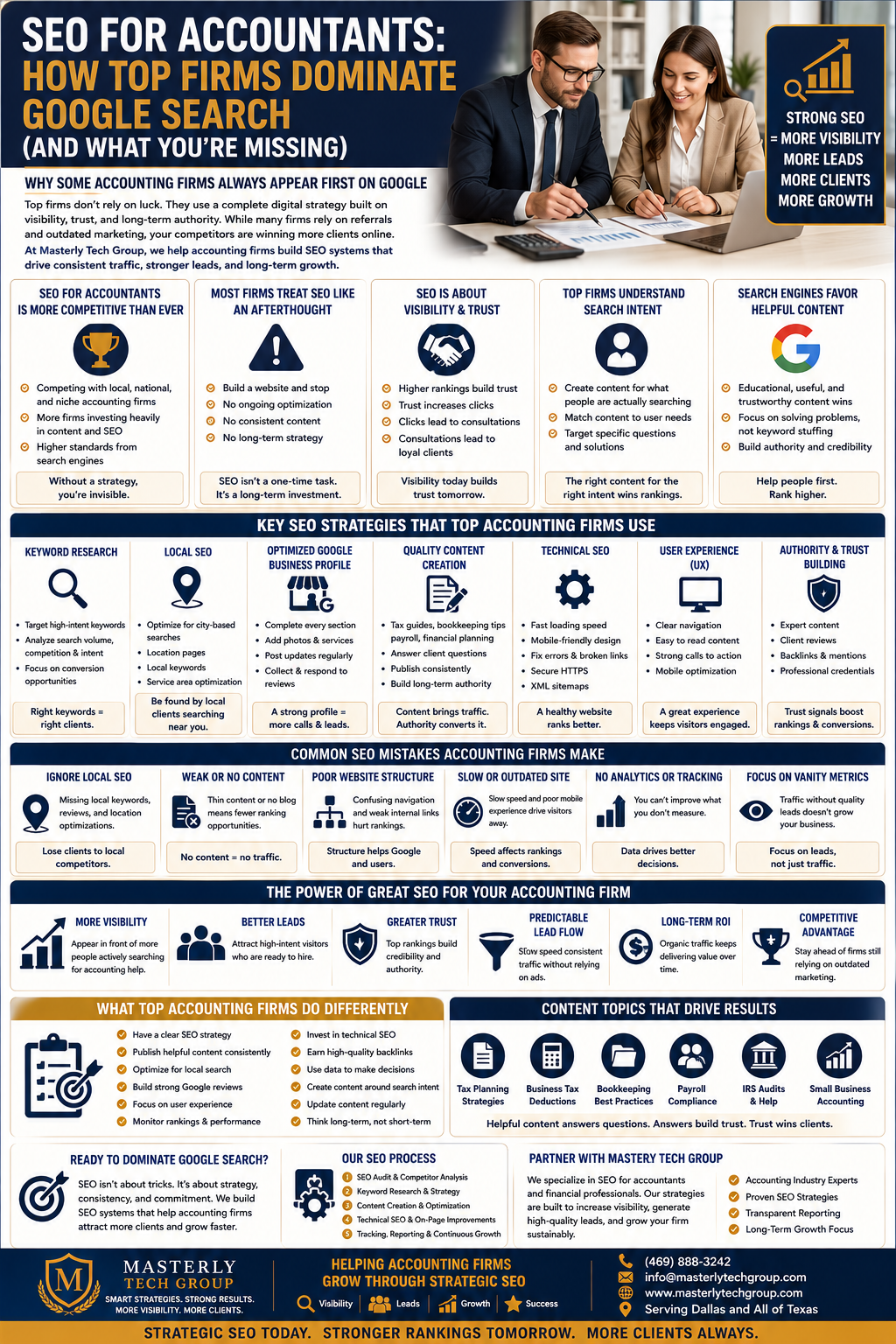
If you search for accounting help online, you will notice something interesting almost immediately. Certain firms consistently appear at the top of Google while others remain buried several pages deep where almost nobody looks. The difference is rarely luck. High-ranking accounting firms usually follow a structured digital strategy built around visibility, trust, and long-term authority online.
At Masterly Tech Group, we spend a great deal of time studying what separates successful accounting websites from firms that struggle to generate online traffic. The reality is that most accounting firms are still using outdated marketing methods while competitors quietly dominate modern search engines through advanced SEO systems. Firms ranking on the first page are not simply writing random articles or adding a few keywords to their website. They are executing a complete digital growth strategy that compounds over time.
SEO for Accountants Is More Competitive Than Ever
The world of seo for accountants has changed dramatically during the last several years. Accounting firms are no longer competing only with local competitors across town. They are competing against national firms, aggressive digital marketers, niche tax specialists, and accounting websites investing heavily in content and technical optimization.
Many firms underestimate how competitive search engine optimization has become inside the accounting industry. Firms appearing on the first page often have dedicated marketing systems running behind the scenes every week. Without a clear SEO strategy, even highly experienced accountants can struggle to appear in relevant search results.
Most Accounting Firms Still Treat SEO Like an Afterthought
One major reason some accounting firms struggle online is because SEO gets treated like a side project instead of a long-term business investment. Many accounting professionals build a website once, add a few service pages, and assume new clients will eventually appear.
In reality, successful SEO requires:
- Continuous optimization
- Ongoing content creation
- Technical website maintenance
- Strategic keyword targeting
- Long-term authority building
The firms dominating google search are usually the ones investing consistently in these areas.
Accountants SEO Is About Visibility and Trust
Strong accountants seo is not just about generating clicks. It is about creating trust before a potential client even makes contact with your firm. When users repeatedly see your accounting firm ranking near the top of search results, they naturally begin viewing the company as more credible and established.
This trust-building process often starts long before the first consultation. Visibility creates familiarity, and familiarity often increases conversion rates.
Top Firms Understand Search Intent
The highest-ranking accounting websites understand something many competitors miss entirely. SEO is not only about keywords. It is about understanding user intent and matching content to exactly what people are searching for.
Someone searching for:
- “Tax planning for small businesses”
- “CPA for startups”
- “IRS audit help”
- “Bookkeeping for contractors”
has very different needs and expectations. Successful accounting firms build content around these highly specific searches rather than targeting only broad accounting terms.
Why Search Engines Favor Helpful Content
Modern search engines reward websites that provide useful, informative, and trustworthy content. Google no longer ranks websites highly simply because they repeat keywords multiple times.
Top accounting firms create educational content that helps users solve real financial and tax problems. This includes:
- Tax planning guides
- Bookkeeping advice
- Payroll compliance articles
- Financial forecasting tips
- Small business accounting strategies
High-quality content helps firms rank while also building authority and trust.
The Best Accounting Websites Are Built for Users First
A successful accounting website is designed around user experience rather than only visual appearance. Many accounting websites look polished but perform poorly because they load slowly, confuse visitors, or fail to answer important questions.
Top-performing accounting websites typically focus on:
- Fast load speeds
- Mobile optimization
- Clear navigation
- Helpful content
- Easy contact options
Google rewards websites that create positive user experiences.
SEO Success Starts With Keyword Research
Strong keyword research sits at the center of every successful accounting SEO campaign. High-ranking firms carefully study what potential clients are searching online before creating content.
Good keyword research identifies:
- Search volume
- User intent
- Competition levels
- Geographic relevance
- Conversion opportunities
Without proper keyword targeting, accounting firms often waste time creating content nobody searches for.
Why Most Accounting Firms Miss Local SEO Opportunities
Many firms fail to fully optimize for local seo, even though most accounting services are location-dependent. Potential clients frequently search using city-based keywords such as:
- CPA in Dallas
- Tax accountant near me
- Bookkeeping services in Houston
Top accounting firms aggressively optimize for local search visibility while competitors ignore these opportunities.
Optimized Google Business Profiles Create Major Advantages
One of the biggest differences between average firms and dominant firms is the quality of their optimized google business profile. Many firms claim their profile but never fully optimize it.
High-ranking firms consistently improve:
- Business descriptions
- Service categories
- Photos
- Client reviews
- Service updates
- Local keywords
This optimization strongly influences local google search results.
Why Google Reviews Matter More Than Firms Realize
Strong google reviews impact both rankings and client trust. Search engines use reviews as trust signals when evaluating local businesses.
Top accounting firms actively encourage satisfied clients to leave reviews because they understand how much reviews influence both local visibility and conversion rates.
Technical SEO Separates Strong Firms From Weak Ones
Many accounting firms completely ignore technical seo, even though technical performance heavily affects rankings. Search engines prefer websites that are fast, secure, easy to crawl, and mobile-friendly.
Common technical SEO problems include:
- Slow load speeds
- Broken pages
- Poor mobile performance
- Weak site structure
- Missing metadata
Technical problems often prevent otherwise strong websites from ranking effectively.
Google Search Console Reveals Hidden Problems
Top accounting firms regularly monitor google search console because it provides valuable information about indexing, rankings, keyword performance, and website errors.
This platform helps firms identify:
- Broken pages
- Mobile usability issues
- Search visibility trends
- Keyword opportunities
- Technical errors
Many accounting firms never review this data at all.
Google Analytics Helps Firms Understand User Behavior
Successful firms also rely heavily on google analytics to study how visitors interact with their website. Understanding visitor behavior helps firms improve conversion rates and content performance over time.
Analytics reveal:
- Traffic sources
- Bounce rates
- User engagement
- Popular pages
- Conversion activity
The best SEO campaigns are driven by data rather than guesswork.
Why Keyword Stuffing Hurts Rankings
Some accounting websites still rely on outdated SEO tactics like keyword stuffing, where keywords are repeated excessively throughout content. Modern search engines penalize this behavior because it creates poor user experiences.
Today’s SEO focuses on natural, useful, human-centered writing rather than repetitive keyword placement.
Content Marketing Drives Long-Term SEO Growth
Strong content marketing is one of the biggest reasons top accounting firms dominate search rankings. Educational content creates opportunities for firms to rank for hundreds of search terms over time.
Effective accounting content may include:
- Tax strategy articles
- Payroll guidance
- Financial planning content
- Business growth tips
- Accounting software comparisons
Content creates long-term visibility that compounds gradually.
Relevant Blog Posts Build Authority
Publishing relevant blog posts helps accounting firms answer common financial questions while improving search visibility. Each article becomes another opportunity to appear in search results.
Top-performing firms publish content consistently because they understand how strongly blogging supports long-term SEO growth.
Internal Links Improve Website Structure
Successful accounting websites use internal links strategically throughout their content. Internal linking helps search engines understand page relationships while guiding users through the website more effectively.
Strong internal links improve:
- User navigation
- Crawlability
- SEO authority flow
- Page relevance
Many weaker accounting websites fail to use internal linking properly.
SEO Agencies Often Focus on the Wrong Metrics
Not every seo agency understands professional service industries like accounting. Some agencies focus heavily on vanity metrics while ignoring lead quality and actual business growth.
Strong SEO campaigns should focus on:
- Qualified traffic
- Lead generation
- Conversion optimization
- Long-term authority
- Revenue opportunities
Traffic alone does not guarantee success.
Social Media Marketing Supports SEO Visibility
Although SEO and social media marketing are different strategies, they often support each other effectively. Strong social media activity increases content exposure, website traffic, and brand recognition.
Top firms use social platforms to amplify educational content and strengthen online authority.
Mobile Devices Changed SEO Permanently
Most users now search online using mobile devices, which means mobile performance significantly affects rankings and conversions. Google prioritizes mobile-friendly websites because poor mobile experiences frustrate users.
Top accounting firms invest heavily in mobile optimization because they understand how much traffic now comes from smartphones and tablets.
Professional SEO Requires Long-Term Commitment
Strong professional seo is not a quick fix. Firms dominating search rankings usually spent months or years building authority through consistent optimization and content creation.
Many accounting firms quit SEO too early because they expect immediate results instead of understanding the long-term nature of organic growth.
Keyword Rankings Fluctuate Constantly
Top firms carefully monitor keyword rankings because search positions change regularly. Competitors update websites, algorithms evolve, and user behavior shifts over time.
Consistent optimization helps firms maintain visibility despite these ongoing changes.
Every Accounting Firm Needs an SEO Audit
One of the first things successful firms do is complete a comprehensive seo audit. Audits reveal technical problems, content weaknesses, keyword gaps, and optimization opportunities.
Without an audit, firms often waste time fixing the wrong problems.
Organic Traffic Creates Better Long-Term Results
Strong organic traffic often converts better than paid advertising because users are actively searching for accounting help when they discover the website.
Organic traffic also creates more sustainable long-term visibility compared to constantly increasing ad spending.
Great Accounting Firms Build Authority Slowly
A great accounting firm usually does not dominate search rankings overnight. Strong authority develops gradually through:
- Consistent content
- Positive reviews
- Technical optimization
- Local SEO
- Trust-building
The firms dominating Google today often started building SEO systems years ago.
Meta Titles and Meta Descriptions Influence Clicks
Successful firms optimize both meta titles and meta description tags carefully because they affect how pages appear in search results.
Strong metadata helps:
- Improve click-through rates
- Increase visibility
- Clarify page topics
- Attract qualified users
Many accounting firms completely ignore metadata optimization.
Link Building Still Matters
Strategic link building remains an important part of SEO success. Search engines view backlinks as signals of authority and trustworthiness.
However, not all backlinks are valuable. In fact, not all backlinks help rankings equally. Low-quality or spammy links may actually damage SEO performance.
Write Guest Posts to Build Authority
Many top firms write guest posts on trusted industry websites to build backlinks and improve authority. Guest posting also increases exposure to new audiences and strengthens online credibility.
This strategy works especially well when accounting firms contribute educational content to respected financial or business publications.
SEO-Friendly Websites Perform Better
A properly seo friendly website helps search engines crawl and understand content more efficiently. Top-performing accounting websites are structured carefully with optimized headings, clean URLs, fast load speeds, and clear navigation.
SEO-friendly design improves both rankings and user experience.
Broken Links Damage SEO Performance
Even small technical issues like broken links can negatively affect SEO performance. Broken pages frustrate users while signaling poor maintenance to search engines.
Successful firms routinely monitor websites for technical problems and fix them quickly.
AI Tools Are Changing SEO Content
Modern ai tools are changing how accounting firms create content, research keywords, and analyze data. However, top firms understand something important that many businesses overlook.
AI-generated content alone is not enough. Human editing, expertise, and strategy still matter greatly for SEO success.
Duplicate Content Creates Problems
Many accounting websites accidentally create duplicate content by repeating the same information across multiple pages. Search engines may struggle to determine which page deserves rankings.
Top-performing firms carefully structure content to avoid duplication while creating unique value on every page.
More Leads Come From Better Strategy
Strong SEO does not just increase traffic. It helps generate more leads from users already searching for accounting services online.
The firms dominating Google usually built systems designed around lead generation rather than vanity traffic numbers.
Local Community Trust Improves SEO
Accounting firms deeply connected to their local community often perform well in local search results because they build stronger trust and reputation signals.
Community involvement, client reviews, local partnerships, and regional authority all contribute to stronger visibility.
Quality Leads Matter More Than Traffic Volume
Many firms focus too heavily on website traffic instead of attracting quality leads. Thousands of irrelevant visitors will not help a business grow.
Top accounting firms focus on attracting users actively searching for accounting solutions rather than simply increasing raw traffic numbers.
New Clients Often Start With Google Search
For many accounting firms, new clients now begin their search online rather than through referrals alone. Firms that fail to appear in search results may lose significant opportunities to competitors with stronger SEO visibility.
Google often becomes the first impression potential clients have of your firm.
Website Content Must Feel Human
Strong website content should sound natural, informative, and trustworthy. Robotic or overly technical content often performs poorly because users struggle to connect with it.
Google increasingly rewards content that feels authentic and genuinely useful.
Form Submissions Depend on User Experience
SEO success ultimately depends on conversions. Strong rankings mean little if users never complete form submissions or contact the firm.
Top accounting websites guide visitors naturally toward consultations through strong calls to action and clear communication.
Monthly Reporting Helps Firms Improve SEO
Successful firms review monthly reporting data carefully to evaluate rankings, traffic, conversions, and keyword growth.
Consistent reporting helps firms refine strategies and identify opportunities for improvement.
Mobile Friendly Websites Win More Traffic
Google strongly favors mobile friendly websites because mobile usage now dominates online search behavior.
Accounting firms with outdated mobile experiences often lose rankings and conversions to competitors with better mobile performance.
SEO Work Never Fully Ends
Strong seo work requires ongoing updates, testing, optimization, and refinement. Competitors continue evolving, algorithms change, and user behavior shifts constantly.
The best firms understand that SEO is an ongoing investment rather than a one-time project.
Quality Content Separates Top Firms From Everyone Else
Top accounting firms consistently publish quality content designed to answer real client questions and provide genuine value.
Content quality often becomes the difference between websites ranking on page one and websites remaining invisible.
SEO for Accountants Requires Specialized Strategy
Strong seo for accountants differs from generic SEO because financial industries require higher trust, authority, and expertise standards.
Accounting firms need specialized SEO strategies focused on credibility, educational value, and long-term client trust.
Why Most Accounting Firms Fall Behind
The reality is simple. Most accounting firms still underinvest in SEO while competitors quietly dominate online visibility through consistent optimization and strategic content development.
Firms that ignore SEO often become increasingly invisible over time.
Masterly Tech Group Helps Accounting Firms Grow Online
At Masterly Tech Group, we understand what top-ranking accounting firms are doing behind the scenes because we study successful SEO systems every day. Strong SEO is not about tricks or shortcuts. It is about building authority, trust, visibility, and long-term digital growth through strategic planning and consistent execution.
Our team helps accounting firms improve:
- Organic visibility
- Website traffic
- Search rankings
- Lead generation
- Local SEO
- Content strategy
- Technical SEO performance
We focus on real business growth, not vanity metrics.
Speak With Masterly Tech Group About Accounting SEO
If your accounting firm is struggling to compete online or missing opportunities in Google search, now is the time to invest in a smarter SEO strategy. Strong visibility can help your firm attract more qualified leads, build stronger authority, and generate long-term growth in an increasingly competitive digital environment.
At Masterly Tech Group, we help accounting firms build customized SEO systems designed around real business goals and sustainable lead generation. Whether your firm needs technical SEO improvements, content development, local optimization, or a complete digital growth strategy, our team is prepared to help.
If you are ready to strengthen your online visibility and improve your accounting SEO strategy, contact Masterly Tech Group today. We are happy to answer your questions, review your current website performance, and help your firm build a stronger digital presence that supports long-term success.
Call Masterly Tech Group at (888) 209-4055 to book a free consultation today.