The Lead-Generation Framework Insurance Agencies Must Use in Today’s Digital Market
Why Lead Generation Has Become a Survival Issue
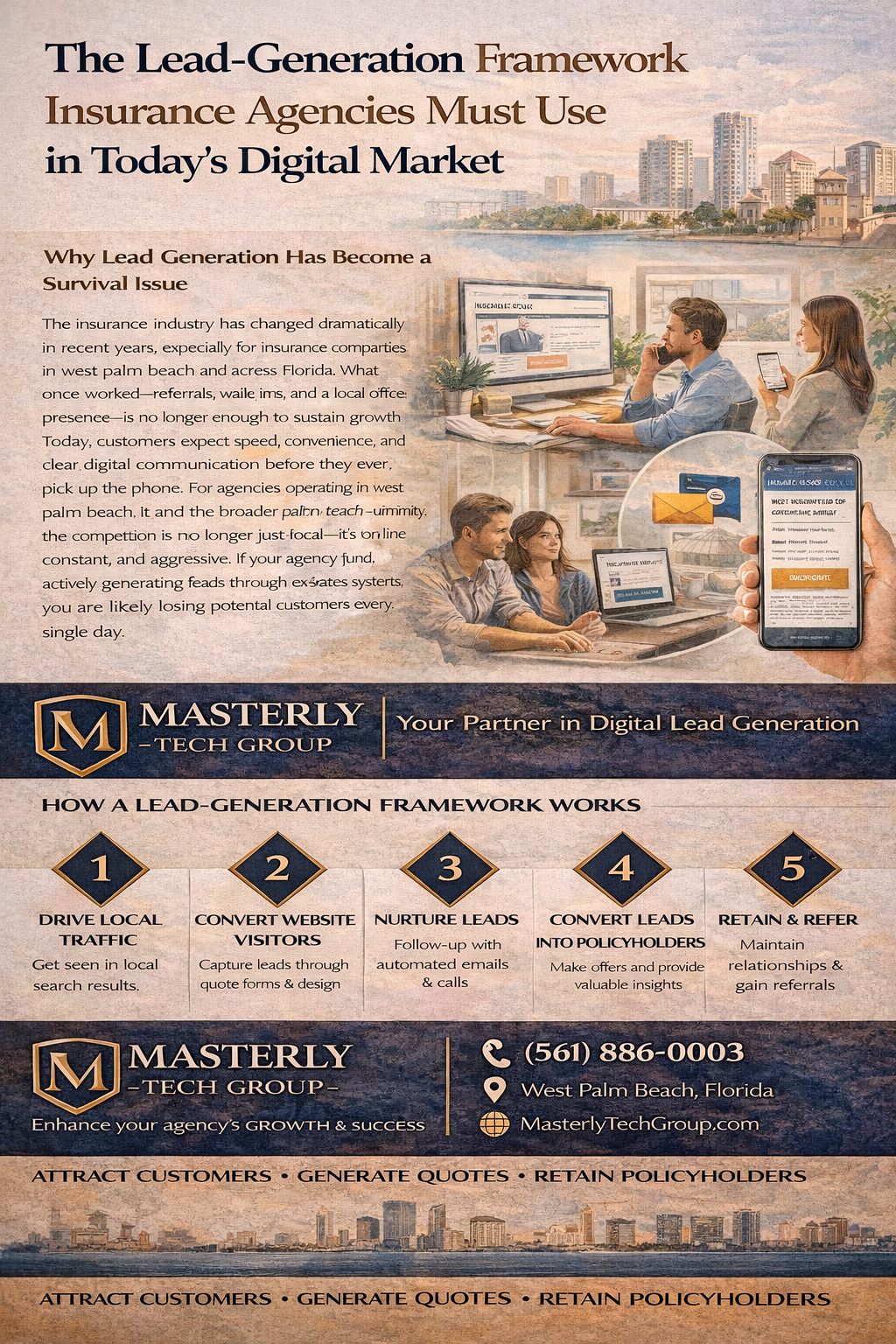
The insurance industry has changed dramatically in recent years, especially for insurance companies in west palm beach and across florida. What once worked—referrals, walk-ins, and a local office presence—is no longer enough to sustain growth. Today, customers expect speed, convenience, and clear digital communication before they ever pick up the phone.
For agencies operating in west palm beach fl and the broader palm beach community, the competition is no longer just local—it is online, constant, and aggressive. If your agency is not actively generating leads through modern systems, you are likely losing potential customers every single day. This is not just about growth anymore—it is about staying relevant in a fast-moving market.
The Shift From Traditional to Digital Insurance Marketing
Insurance companies have traditionally relied on relationships and trust built within a local community. While that still matters, today’s customers begin their search online. Whether they are looking for auto insurance, renters coverage, or homeowners protection, they expect immediate answers.
In west palm and palm beach fl, customers now compare options before ever contacting an agent. They want to find the best coverage, compare price points, and understand what makes one agency different from another. Agencies that fail to adapt to this shift risk falling behind competitors who are actively engaging online.
Understanding the Modern Insurance Customer
Today’s insurance customers are informed, selective, and driven by convenience. They are not just looking for any coverage—they want the right coverage that fits their needs, assets, and lifestyle. This includes everything from auto policies for drivers to renters insurance for apartments and homeowners coverage for growing families.
Customers in west palm beach want:
- Fast access to quotes
- Clear explanations of liability and protection
- Affordable options with flexible payment structures
- Confidence that their assets are secure
If your agency cannot meet these expectations quickly, customers will move on.
What a Lead-Generation Framework Really Means
A lead-generation framework is not just about getting more calls or filling out a contact page. It is a structured system that attracts, engages, and converts potential clients into long-term customers.
For insurance companies in west palm beach fl, this means building a system that works continuously—not just when you are actively marketing. A strong framework ensures that your agency consistently connects with people who are actively searching for insurance solutions.
The Foundation: Visibility in Local Search
If your agency cannot be found online, it cannot compete. Visibility in local search results is critical, especially in areas like west palm, palm beach, and surrounding florida communities.
When customers search for insurance options, your agency must appear in those results. This includes optimizing your online presence so that people searching for auto insurance, general liability, or renters policies can easily find you.
Being visible is the first step toward generating consistent leads.
Building Trust Before the First Contact
Trust used to be built during in-person meetings at a local office. Today, that trust begins online. Customers judge your agency based on your website, reviews, and the information you provide before they ever speak with a person.
To build trust early, agencies must:
- Provide clear, helpful information about coverage options
- Showcase expertise in areas like commercial auto and liability
- Offer easy ways to request a quote
- Maintain a professional and approachable online presence
Trust is no longer earned after the first meeting—it starts the moment someone finds your business online.
The Role of Website Design in Lead Generation
Your website is not just a digital brochure—it is your primary sales tool. For insurance companies in west palm beach, a well-designed website can significantly increase lead conversion.
A strong website should:
- Clearly explain coverage types such as homeowners, renters, and auto
- Make it easy for customers to contact your agency
- Provide quick access to quotes
- Guide users toward taking action
Potential clients will abandon your website before contacting you if it is out-of-date or challenging to use.
Creating High-Intent Entry Points
High-intent entry points are opportunities where customers are ready to take action. These include quote forms, phone calls, and direct inquiries.
For example, a customer searching for “affordable renters insurance in west palm beach fl” is likely ready to purchase. Your system must capture that intent immediately and guide them toward the next step.
The Importance of Local SEO for Insurance Agencies
Local SEO ensures that your agency appears when customers search for services in specific locations like west palm, palm beach, or nearby areas in florida.
This involves optimizing your content, listings, and keywords so that your agency becomes visible to local customers. Without strong local SEO, even the best services may go unnoticed.
Converting Website Visitors Into Leads
Getting traffic is only part of the process. The real goal is converting visitors into leads. This requires clear calls to action and a user-friendly experience.
Customers should be able to:
- Request a quote quickly
- Call your office using a visible phone number
- Submit questions through a contact form
Every step should feel simple and intuitive.
Leveraging Quotes as a Conversion Tool
Offering a fast and easy quote process is one of the most effective ways to generate leads. Customers want to understand their options and compare rates before making a decision.
By simplifying the quote process, agencies can:
- Increase engagement
- Build trust with customers
- Provide immediate value
A streamlined quote system can significantly improve conversion rates.
The Role of Content in Building Authority
Content helps position your agency as a trusted source of information. By providing helpful insights on topics like liability coverage, renters insurance, and auto policies, you can attract and educate potential customers.
Content should be clear, relevant, and focused on answering common questions. This builds credibility and encourages customers to choose your agency over competitors.
Understanding Customer Needs Across Different Insurance Types
Different customers have different needs. Some may be looking for homeowners coverage to protect their home and belongings, while others may need renters insurance or commercial auto policies for their business.
Understanding these needs allows your agency to provide tailored solutions that resonate with customers.
The Power of Personalization in Insurance Marketing
Personalization is key to standing out in a crowded market. Customers want to feel that their unique situation is understood.
This means offering:
- Customized coverage options
- Recommendations based on specific needs
- Clear explanations of benefits
Personalized service builds stronger relationships and increases customer retention.
Using Reviews and Testimonials to Build Credibility
Online reviews play a significant role in decision-making. Positive feedback from satisfied customers can influence potential clients and build trust.
Encouraging reviews and showcasing testimonials can strengthen your reputation in the west palm beach and palm beach fl market.
Integrating Phone and Digital Communication
While digital tools are essential, the phone remains a powerful communication channel. Many customers still prefer speaking with an agent before making a decision.
Providing a visible phone number and responsive service can enhance the customer experience and increase conversions.
Creating a Seamless Customer Journey
The customer journey should be smooth from start to finish. This includes everything from finding your website to completing a policy purchase.
A seamless experience reduces friction and encourages customers to move forward with confidence.
Offering Affordable Options Without Sacrificing Quality
Price is always a factor in insurance decisions. Customers want affordable options, but they also want the best coverage for their needs.
Balancing price and value is essential for attracting and retaining customers.
The Role of Discounts and Incentives
Discounts can be a powerful tool for attracting new customers. Offering incentives such as multi-policy discounts can encourage customers to choose your agency.
These strategies can also increase customer loyalty and long-term value.
Protecting What Matters Most to Customers
Insurance is ultimately about protection. Customers want to protect their assets, their family, and their future.
Your messaging should emphasize how your agency helps secure what matters most.
The Importance of Continuous Optimization
Lead generation is not a one-time effort. It requires ongoing analysis and improvement.
Agencies must regularly review their strategies, adjust their approach, and stay ahead of market trends.
Building Strong Relationships With Clients
Strong relationships are the foundation of long-term success. By providing excellent service and consistent communication, agencies can build trust and loyalty.
Happy clients are more likely to refer others and remain with your agency over time.
Adapting to Changes in the Insurance Market
The insurance market is constantly evolving. Agencies must stay informed and adapt to changes in customer behavior and technology.
Flexibility and innovation are key to maintaining a competitive edge.
How Masterly Tech Group Helps Insurance Agencies Grow
At Masterly Tech Group, we specialize in helping insurance companies in west palm beach and across florida build effective lead-generation systems. Our approach combines technology, strategy, and industry expertise to deliver measurable results.
We understand the unique challenges faced by agencies in west palm beach fl and the surrounding palm beach area. Our solutions are designed to help you attract, engage, and convert customers consistently.
Taking the Next Step Toward Growth
If your agency is ready to grow, now is the time to act. Waiting means losing potential customers to competitors who are already investing in modern lead-generation strategies.
With the right framework in place, your agency can achieve sustainable growth and long-term success.
Why Working With Local Experts Strengthens Your Lead Strategy
Partnering with local experts can give insurance agencies a competitive advantage, especially in markets like west palm beach and palm beach fl. These professionals understand local trends, customer behavior, and what truly drives decisions in the community. By leveraging this insight, agencies can create more targeted campaigns that resonate with customers. This approach not only improves lead quality but also builds trust within the local market.
Building Security Into Your Digital Lead System
Security is a critical factor in today’s digital environment, especially when handling sensitive customer information. Insurance agencies must ensure that their systems protect data while still providing a smooth user experience. Customers want confidence that their personal details are handled safely when requesting a quote or contacting an agent. Strong security measures can enhance trust and encourage more people to engage with your business.
Personalizing the Experience for Every Customer
A personal approach is essential in modern insurance marketing. Customers are not looking for generic solutions—they want coverage that fits their personal needs, whether it involves home, auto, or renters policies. By tailoring messaging and recommendations, agencies can create stronger connections with potential clients. Personalization helps turn initial interest into long-term relationships.
Reaching Contractors and Niche Markets Effectively
Insurance agencies that target specific groups, such as contractors, can expand their reach and improve lead generation. These niche audiences often have unique coverage needs, including liability and business-related policies. By creating tailored content and campaigns, agencies can connect with these audiences more effectively. This focused approach can lead to higher conversion rates and more qualified leads.
Turning Every Inquiry Into a Job Opportunity
Each lead represents a potential job opportunity for your agency to provide value and build a relationship. Whether it is a quick quote request or a detailed inquiry, every interaction matters. Responding promptly and professionally can make a lasting impression on customers. Treating each lead as an opportunity can significantly impact long-term growth.
Connecting Insurance to Real-Life Needs
Insurance decisions are closely tied to real-life situations. Whether customers are protecting their home, planning for their family, or securing their future, these choices affect their life in meaningful ways. Agencies that communicate this connection clearly can build stronger emotional engagement. This approach helps customers see the value beyond just price and coverage.
Expanding Coverage to Include Recreational Assets Like Cruisers
Many customers in florida own recreational assets such as cruisers, which require specialized coverage. Highlighting these options in your lead-generation strategy can attract a broader audience. By addressing these unique needs, agencies can position themselves as comprehensive providers. This also opens the door to additional cross-selling opportunities.
Encouraging Customers to Apply With Confidence
A clear and simple process encourages customers to apply for coverage without hesitation. When forms are easy to complete and instructions are straightforward, more leads will move forward. Reducing friction in the application process is key to improving conversion rates. Agencies should focus on making every step as user-friendly as possible.
Why Agencies Should Recommend the Right Solutions
Taking the time to recommend the right coverage builds trust and credibility. Customers appreciate guidance that helps them understand their options and make informed decisions. By offering thoughtful recommendations, agencies can stand out from competitors who focus only on price. This approach leads to stronger relationships and higher customer satisfaction.
Creating Peace of Mind for Every Customer
At the core of every insurance decision is the desire for peace of mind. Customers want to feel confident that their assets, family, and future are protected. A strong lead-generation framework should emphasize this benefit at every stage of the process. When customers feel secure in their choices, they are more likely to move forward and remain loyal.
How Insurance Companies in West Palm Beach Stay Competitive
Insurance companies in west palm beach must constantly adapt to a fast-changing digital market. With more customers searching online for coverage, agencies can no longer rely solely on referrals or walk-ins. To remain competitive, insurance companies must invest in modern lead-generation strategies that connect with today’s buyers. Building a strong online presence allows agencies to attract, engage, and convert potential customers more effectively.
Why West Palm Beach Is a Key Market for Growth
West palm beach continues to be a growing and competitive area for insurance providers. With a mix of homeowners, renters, and business owners, the demand for coverage remains strong. Agencies that understand the needs of the west palm beach community can better position themselves for long-term success. This includes offering tailored solutions and maintaining a visible presence both online and within the local market.
The Importance of Commercial Auto Coverage in Lead Generation
Commercial auto insurance is a valuable entry point for attracting business clients. Many businesses in west palm and palm beach rely on vehicles for daily operations, making this type of coverage essential. By promoting commercial auto options, agencies can connect with business owners who need reliable protection. This also creates opportunities to offer additional services and expand client relationships.
The Value of a Local Office in a Digital World
Even in a digital-first environment, having a local office still matters. Customers in west palm beach fl often appreciate knowing there is a physical location where they can speak with an agent. A local office builds trust and reinforces credibility within the community. Combining this presence with strong digital tools creates a balanced approach that appeals to a wide range of customers.
Why General Liability Coverage Attracts Business Clients
General liability insurance is another key service that drives leads, especially for small businesses and contractors. Businesses in palm beach and west palm need protection against risks that could impact their operations. By highlighting general liability options, agencies can attract clients who are actively seeking protection for their business activities. This positions the agency as a trusted resource for business insurance needs.
Building a Strong Presence in West Palm Beach FL
Agencies that succeed in west palm beach fl focus on visibility, accessibility, and trust. This includes optimizing online platforms, maintaining clear communication, and offering helpful resources to customers. A strong presence ensures that when people search for insurance companies, your agency stands out. Consistency in branding and messaging is key to building recognition.
Serving the Palm Beach Community With Targeted Solutions
The palm beach market is diverse, requiring agencies to offer a variety of coverage options. From personal policies to business insurance, agencies must address the unique needs of the community. Understanding these needs allows agencies to create more effective marketing strategies. This targeted approach leads to higher engagement and better conversion rates.
Why West Palm Agencies Must Embrace Digital Strategies
West palm agencies that embrace digital strategies are better positioned to grow. Online tools make it easier to connect with customers, provide quotes, and manage relationships. Agencies that invest in these tools can streamline their processes and improve customer satisfaction. This approach ensures long-term success in a competitive market.
How Insurance Companies Can Strengthen Their Lead Systems
Insurance companies that focus on building strong lead systems will see more consistent results. This involves combining digital marketing, customer engagement, and efficient follow-up processes. By creating a structured approach, agencies can capture more opportunities and convert them into loyal clients. A well-designed system supports both growth and stability.
Contact Us for a Free Consultation
If you are looking to improve your lead generation and stand out among insurance companies in west palm beach, Masterly Tech Group is here to help. We work with agencies across west palm beach fl and palm beach to build systems that generate consistent, high-quality leads.
Contact us today at (888) 209-4055 to book a free consultation. Our team will review your current strategy, identify opportunities for growth, and provide clear, actionable recommendations. Whether you want more quotes, better conversion rates, or stronger online visibility, we are ready to assist you in building a system that works.