CRM Strategy: Designing the Client Journey Before You Configure the Software
Why Your Business Needs a Strategic CRM Approach Now
If your sales team is chasing leads through spreadsheets while your marketing campaigns run blind to what customer service interactions reveal, you're leaving revenue on the table every single day. A strategic CRM approach solves the exact problem most growing businesses face right now: scattered customer data, disconnected departments, and rising customer expectations that create missed opportunities to convert potential customers into loyal, long-term accounts.
Customer relationship management is more than CRM software sitting on a server - it's the deliberate alignment of people, processes, and technology around the customer journey. Without that alignment, your business operates with blind spots. Leads go unscored. Support tickets disconnect from sales history. Marketing teams miss chances to deliver more personalized service to customers who already bought. The result? Lower customer retention, inconsistent experiences, and a sales process that leaks deals at every stage.
A strategic CRM approach solves these pain points by creating a unified system to organize customer data, automate repetitive tasks, and surface actionable insights that drive business growth. This guide walks you through exactly how - from mapping customer touchpoints to optimizing your sales pipeline to implementing AI-powered automation that scales with your operations.
This guide is built for businesses that already have some CRM tools or systems in place but need to unify, optimize, and extract real value from them. If you're ready to stop treating your CRM system as a digital Rolodex and start using it as a revenue engine, the time to act is now.
Request a free CRM strategy consultation to identify where your biggest opportunities are hiding.
Why Leading Companies Trust This CRM Strategy Framework
Businesses don't adopt strategic CRM because it sounds good - they adopt it because the numbers prove it works. Here's what the data shows:
- $3.10 return for every $1.00 invested in CRM on average, according to HubSpot's 2024 analysis
- 44% of retailers currently using and expanding CRM systems, with over one-third planning new investments (IDC, late 2025)
- Win rates up 2–5 percentage points, sales cycles shortened by 10–20%, and administrative data entry time reduced by up to 58% in documented implementations
- Customer retention increases of 5% can raise profits by 25–95%, based on Bain & Company's loyalty economy research
These aren't projections - they're measured outcomes from real businesses. Since the 2010s, time-tested methodologies like customer journey mapping, sales pipeline optimization, omnichannel data integration, and predictive scoring have formed the backbone of high-performing CRM strategies. The key components haven't changed - but the technology powering them has accelerated dramatically.
A CRM strategy is essential for aligning sales and marketing teams around shared data, shared goals, and shared accountability for revenue. Companies that adopt this framework see measurable improvements across customer satisfaction scores, deal velocity, and business performance - typically within 9 to 12 months of implementation.
Why This CRM Strategy Outperforms Traditional Approaches
Traditional CRM approaches treat the system as a place to log sales calls and store customer information. Strategic CRM treats it as the operating system for your entire customer lifecycle - connecting every touchpoint from first click to renewal. That fundamental difference changes everything about how your business operates.
- AI-powered insights and automation - Modern CRM technology embeds AI agents and copilots directly into workflows. Instead of manual data entry, the system auto-captures calls, emails, and meeting notes. Predictive lead scoring replaces gut-feel prioritization. Automation can trigger personalized emails based on customer behavior, freeing your sales team to focus on high-value conversations rather than administrative busywork.
- Unified data approach that eliminates silos - When your billing system, support tickets, marketing campaigns, and sales pipeline all feed into a single customer view, every team operates with full context. Your sales manager sees support history before a renewal call. Marketing teams know which customer segments respond to which marketing channels. Service teams see purchase history before a customer speaks. This eliminates the departmental blind spots that cause 82% of executives to cite data integration as the key to AI success.
- Scalable framework that grows with your business - Because this approach includes governance, reporting tools, systematic business processes, and training designed for growth, it handles new channels, higher sales volume, and more complex products without requiring a rebuild. Traditional patchwork CRM systems break under scale. A strategic framework adapts to market changes while maintaining consistent communication across every customer interaction.
Our CRM Strategy Components
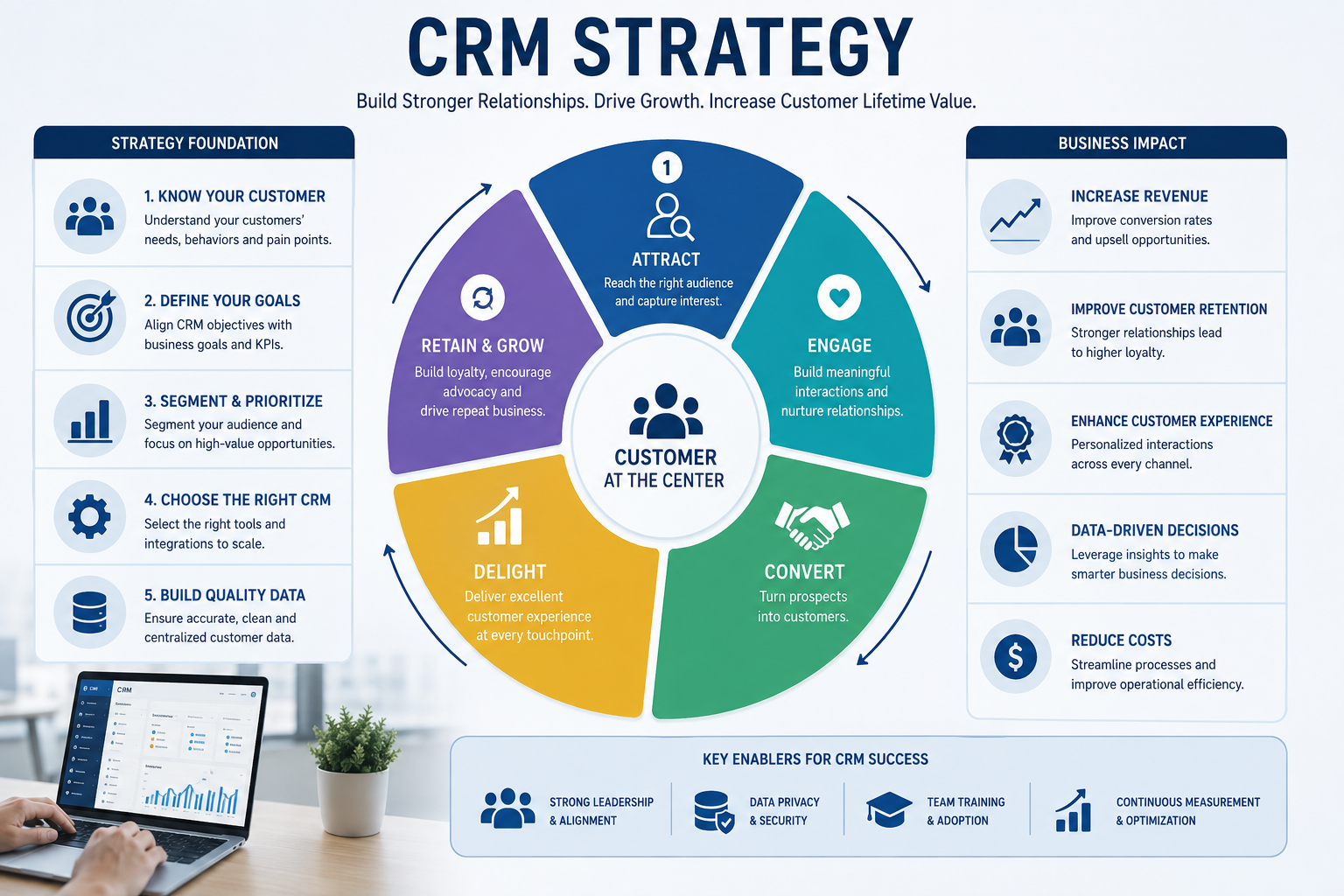
A successful CRM strategy isn't a single tool or tactic - it's an integrated system of key components working together. Each element below addresses a specific business need and delivers measurable outcomes for managing customer interactions at scale.
Customer Journey Mapping and Analysis
Customer journey mapping visualizes every step a customer takes - from first awareness through purchase, onboarding, support, and renewal. It identifies every touchpoint where customers interact with your business, highlights friction points that cause drop-offs, and reveals hidden strengths worth amplifying.
This component benefits marketing, sales, and service teams equally. Marketing teams use journey insights to design campaigns that meet customers where they are. Sales teams identify conversion bottlenecks. Service teams proactively address issues before they escalate. Research-driven mapping reveals hidden friction points in customer journeys that surface-level analytics miss entirely.
Typical results include 20–30% reductions in onboarding drop-offs, improved customer satisfaction scores, and better customer engagement across every stage of the buying process. A journey map identifies customer touchpoints and interactions - and should evolve as customer needs change.
Data Integration and Management
Centralized CRM data is the foundation everything else builds on. This component covers identifying all data sources across your organization, data cleansing and deduplication, establishing master data management, and ensuring privacy compliance with standards like GDPR and CCPA.
Never import messy or outdated data into a new CRM system - establish rules for data cleanliness before migrating. Regular audits of CRM data improve data hygiene and data accuracy, ensuring your team can trust what they see in the CRM dashboard. Automated workflows in CRM improve data management and consistency by eliminating manual errors.
Expected outcomes include a unified customer view across departments, faster decision-making, improved lead management, and the ability to track customer behavior patterns so teams can respond to customer expectations while driving personalized service. For businesses struggling with customer information scattered across disconnected systems, this component alone transforms business operations.
Sales Pipeline Optimization
A systematic approach to tracking and managing every opportunity in your sales pipeline - from qualified lead to closed deal. This includes standardizing deal stages, creating predictive scoring models, enforcing process through data, and removing bottlenecks that slow your sales efforts.
This component is built for sales teams and leadership looking to improve forecasting accuracy, shorten deal cycles, and increase win rates. By giving end-to-end visibility into where deals stall and why, pipeline optimization turns your sales process from reactive to predictive.
Results from documented cases include sales cycles reduced from 72 to 61 days (roughly 15% shorter), win rates improving by 5 percentage points, and average deal sizes increasing by 10%. Your sales manager gets reliable forecasting; your reps get clear priorities.
Marketing Automation and Personalization
Automated marketing campaigns and personalized messaging powered by CRM data and behavioral triggers. This covers lead nurturing sequences, drip campaigns, dynamic content personalization, and predictive timing - all designed to deliver the right message to the right customer segment at the right moment.
73% of customers prefer personalized interactions from companies. CRM data helps identify customer behavior patterns for targeted marketing, supporting more personalized service across marketing touchpoints by enabling you to segment customers based on behavior and engagement level. This means your marketing teams can scale engagement without sacrificing relevance.
Typical outcomes include higher conversion rates, improved lead-to-customer yield, reduced customer acquisition costs, and the ability to measure campaign effectiveness with precision. CRM systems can automate follow-up emails and appointment scheduling, eliminating manual overhead while keeping customer engagement consistent.
How Our CRM Strategy Implementation Works
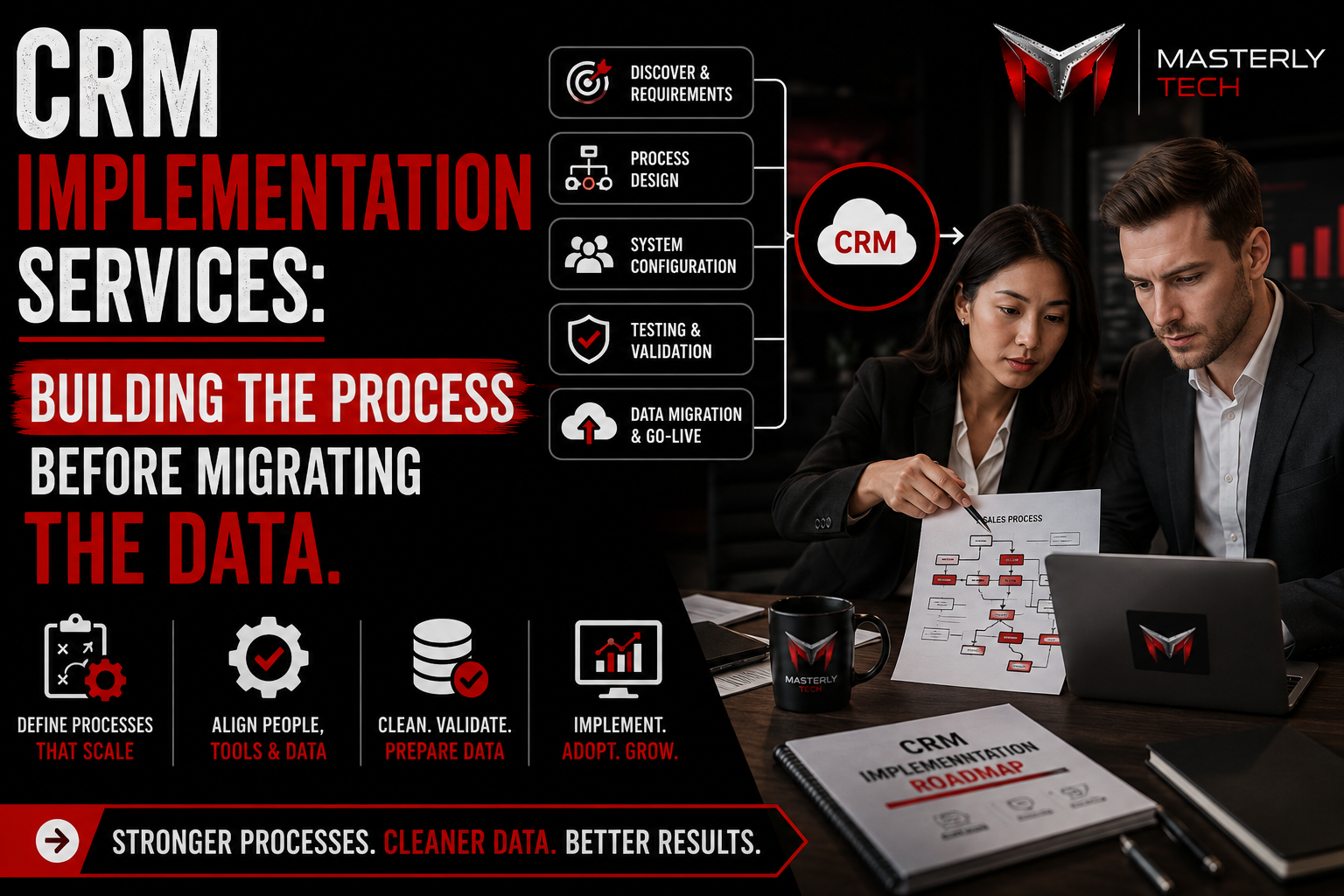
Implementing a CRM system is a major organizational shift - but it doesn't have to be chaotic. Our step by step process takes you from assessment through optimization with clear milestones, defined ownership, and measurable targets at every stage.
Step 1: Business Assessment and Goal Setting
Successful CRM implementation starts with clear business objectives. We begin by mapping your current state - every data source, system, and process - and measuring baseline key performance indicators: current win rate, sales cycle length, customer retention rate, customer satisfaction, and administrative overhead.
From there, we define specific CRM objectives using SMART goals: specific, measurable, achievable, relevant, and time-bound. For example, increasing sales by 10% in the next quarter, or reducing your sales cycle from 70 to 55 days within six months. Defining goals is the first step in creating a CRM strategy. CRM strategies should include clearly defined business objectives that align with revenue, service cost, and operational efficiency targets. Establish measurable goals before choosing a CRM platform.
We engage end-users during the selection and planning phases of CRM to ensure the system fits real workflows - not just executive wish lists.
Step 2: System Design and Integration
Based on your goals, we evaluate CRM software based on business size and integration capabilities, then configure the platform to support your specific needs: API integrations, AI capabilities for analyzing customer behavior, omnichannel touchpoints, and workflow automation.
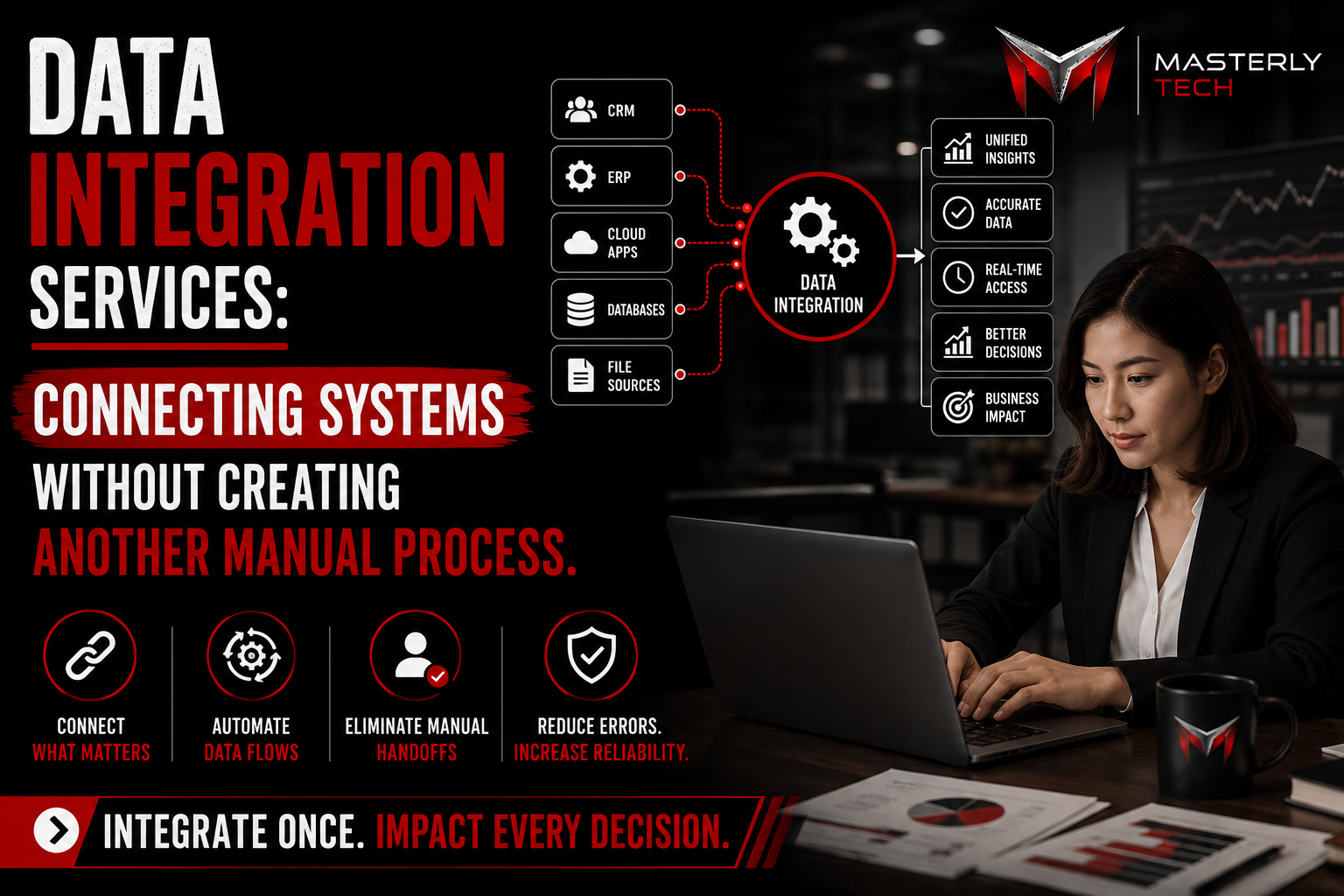
Data migration follows strict cleanliness protocols. We integrate CRM with existing tools for a unified customer view - connecting marketing automation, support ticketing, billing, and product usage systems into a single CRM solution. Privacy and compliance requirements are built into the architecture from day one, not bolted on afterward.
The rollout is modular to limit disruption while ensuring every integration delivers immediate value.
Step 3: Team Training and Optimization
User adoption is one of the biggest determinants of CRM value. We provide ongoing training for CRM users to ensure effective use - covering new processes, data hygiene expectations, and workflow ownership for every team that touches customer data.
Management must lead by example to drive CRM adoption. Train teams to collaboratively use CRM data to enhance the customers experience across departments. A good CRM strategy connects marketing, sales, service, and customer-success teams around shared data and shared goals.
Effective CRM implementation involves a clear 90-day plan with defined goals, with ongoing monitoring through dashboards that track adoption rates, data completeness, lead response times, and business impact. We continuously gather employee feedback after CRM launch for improvement, and measure adoption and business impact continuously after implementing CRM. Gather regular feedback to optimize CRM processes continuously.
Proven CRM Strategy Results
Real performance metrics from CRM strategy implementations demonstrate what's achievable when the approach is systematic and well-executed:
- B2B services company (8 salespeople, ~$4.2M revenue): After 12 months of CRM implementation, win rate improved from 22% to 27%, average deal size increased 10%, sales cycle dropped from 72 to 61 days, weekly administrative time per rep fell by 58%, and churn dropped from 18% to 14%. First-year ROI: approximately 495%.
- Mid-market retention case: Customer retention rate rose from 70% to 85% - a 15-percentage-point gain that drove repeat business and referral increases, contributing to a 20% overall revenue increase.
- Average CRM return: Businesses earn $3.10 for every $1.00 invested in CRM. Conservative improvements across a well-executed implementation include win rates up 2–5 points, deal sizes up 10%, sales cycles reduced 10–20%, and churn reduced by 2–4 points annually.
Administrative time savings and improved lead follow-ups typically appear within 3 to 6 months. More substantive revenue and customer retention gains emerge by 9 to 12 months. The full strategic value - including AI-powered predictive models and analyzing data at scale - may take 12 to 18 months to fully materialize. CRM systems can increase customer retention by 5% year-over-year when effectively implemented.
What Our Clients Say About Their CRM Strategy Success
[Space for genuine client testimonials. Include the client's company name, industry, and specific measurable outcomes achieved through CRM strategy implementation. Focus on concrete improvements - revenue growth percentages, retention rate changes, sales cycle reductions, or efficiency gains - rather than general praise. Each testimonial should reflect a real business transformation story showing how CRM strategy solved specific operational challenges.
Industries and Business Types We Serve
Strategic CRM applies across industries, but each sector has specialized customer needs that require tailored approaches:
- SaaS / Technology - Subscription lifecycle management, churn prediction, product usage signals, and expansion revenue tracking. Key metrics include ARR growth, net retention, and customer success milestones.
- Retail / eCommerce - Omnichannel touchpoint unification, personalized customer interactions based on browsing and purchase history, and combining online and offline behavior data to resolve customer issues faster and increase repeat purchases.
- Manufacturing / B2B Field Sales - Longer sales cycles with multiple stakeholders, complex deal tracking, and integration with ERP and supply-chain systems. CRM helps identify trends across accounts and surface valuable insights for strategic selling.
- Professional Services - Long-term relationship management, project-based engagement tracking, referral optimization, and aligning billing data with customer satisfaction to strengthen strong customer relationships.
Business sizes range from startups establishing scalable CRM foundations, to midsize companies needing to integrate systems and standardize business processes, to enterprise organizations requiring governance, data architecture, multiple integrations, and regulatory compliance. We evaluate every CRM solution recommendation against your specific operational reality.
Effective CRM strategies use data-driven insights to tailor interactions - whether you're serving new customers discovering your brand or deepening relationships with existing customers, each with different customer expectations that shape how you engage and grow revenue.
Frequently Asked Questions
How long does CRM strategy implementation typically take?
For businesses with basic systems but siloed data, a minimum viable implementation - assessment, pipeline redesign, and core integrations - typically takes 30 to 60 days. More complex projects involving multiple departments, AI layers, full data migration, and cross-system integration range from 90 to 180 days for complete rollout. Full ROI realization typically occurs over 9 to 12 months.
Factors that influence speed include your current data quality, number of systems requiring integration, team size, and the complexity of your sales and marketing processes. Clear goals and measurable targets should define CRM implementation efforts from day one.
What's the typical ROI from a well-executed CRM strategy?
Average return is approximately $3.10 for each $1 invested. Conservative metrics across documented implementations show win rates up 2–5 percentage points, deal sizes up roughly 10%, sales cycles reduced by 10–20%, administrative time reduced by 30–60%, and churn reduced by 2–4 percentage points. First-year ROI for well-executed B2B cases often falls in the 200–500% range.
Both financial returns (revenue growth, reduced CRM costs, higher customer lifetime value) and operational benefits (faster response times, better forecasting, enhanced customer engagement) contribute to total ROI.
Do we need to replace our existing systems?
Not always. Many organizations find their existing CRM tools adequate when redesigned with proper integrations and governance. The key factors: whether current systems allow API connections, support data unification, permit automation, and allow customization.
Replacement makes sense when legacy systems are rigid, poorly adopted, or when maintaining them costs more than migrating. In most cases, strategy begins with integration - connecting what you have to create a unified view - and moves toward replacement only when the existing stack fundamentally limits enhancing customer relationships.
How do you ensure data security and compliance?
Security measures include encrypted data storage (in transit and at rest), role-based access controls, comprehensive audit logs, and compliance with regional regulations including GDPR and CCPA. Data retention policies, consent management frameworks, and regular security audits are standard.
We implement data governance structures that assign clear ownership over data quality, cleaning schedules, and permission management. Every integration point is secured, and vendor privacy policies are reviewed before any CRM implementation begins. 73% of customers feel treated as individuals by companies that handle their data responsibly - protecting that trust is non-negotiable.
Discuss a CRM Strategy and Implementation Plan With Masterly Tech Group
Ready to make your CRM work more effectively for your business? Discuss your customer data, workflows, integrations, automation needs, and growth goals with Masterly Tech Group. Call (888) 209-4055 to discuss a CRM strategy and implementation plan built around your business needs.